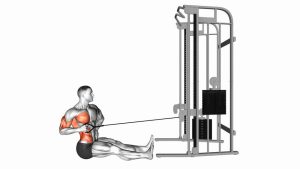
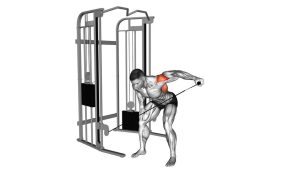
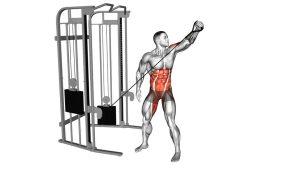
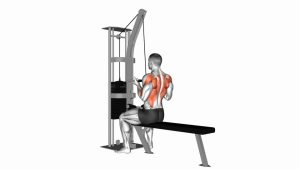
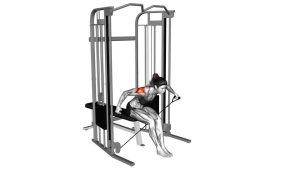
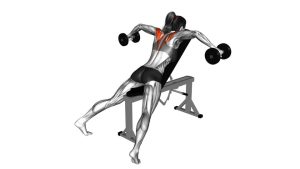
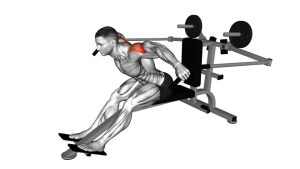
Cable Kneeling Rear Delt Row (Rope): Proper Form, Muscles Worked, Sets, Tips & FAQ
Learn how to perform the Cable Kneeling Rear Delt Row with Rope for stronger rear delts, upper back, and shoulder stability. Includes setup, execution, sets by goal, common mistakes, FAQ, and recommended equipment.
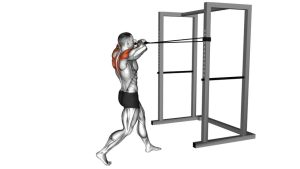
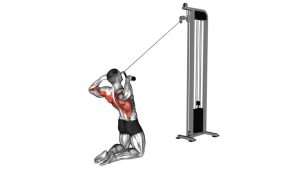
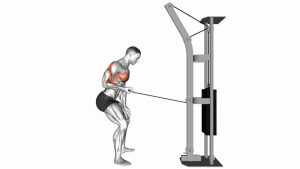
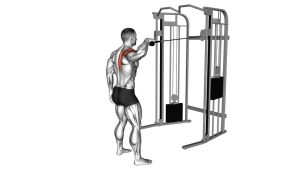
Cable Kneeling Rear Delt Row (Rope)
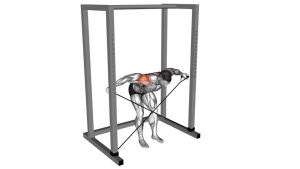
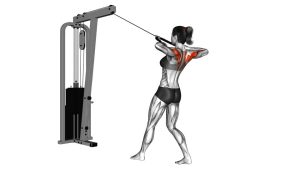
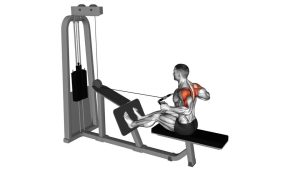
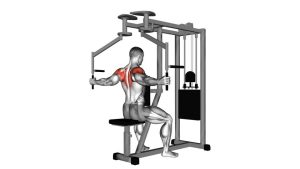
This variation works best when the movement stays smooth and deliberate. You should feel the exercise mainly in the back of the shoulders and upper back, not in the lower back or upper traps. The rope lets you pull with a natural hand position and slightly flare the elbows, which helps increase rear-delt bias. Keep your torso stable, avoid jerking the cable, and focus on quality contractions instead of loading too heavy.
Quick Overview
| Body Part | Rear Shoulders |
|---|---|
| Primary Muscle | Rear deltoids |
| Secondary Muscle | Rhomboids, middle trapezius, rotator cuff, upper back stabilizers |
| Equipment | Cable machine with rope attachment |
| Difficulty | Beginner to Intermediate |
Sets & Reps (By Goal)
- Muscle growth: 3–4 sets × 10–15 reps, 45–75 sec rest
- Shoulder control / posture: 2–4 sets × 12–20 reps, light-to-moderate load, 30–60 sec rest
- Warm-up / activation: 2–3 sets × 12–15 reps, slow tempo, 30–45 sec rest
- Strength-endurance: 3 sets × 15–20 reps, controlled squeeze at the top
Progression rule: First improve control, range, and peak contraction. Then add small weight increases while keeping the elbows wide and the shoulders relaxed.
Setup / Starting Position
- Set the pulley: Attach a rope to a cable set around upper-chest to face height, depending on your machine and line of pull.
- Take a kneeling stance: Use a stable kneeling or half-kneeling position facing the machine.
- Grip the rope ends: Hold each end with a neutral grip and step back enough to create tension.
- Brace your torso: Keep ribs stacked, core lightly engaged, and spine neutral.
- Start with arms extended: Reach forward under control with shoulders set naturally, not shrugged.
Tip: A half-kneeling stance often makes balance easier and helps prevent excessive torso swinging.
Execution (Step-by-Step)
- Initiate the pull: Begin by driving the elbows back and slightly out to the sides.
- Row toward the upper chest / face line: Pull the rope toward your upper chest, chin, or face area based on the cable angle.
- Separate the rope: As you finish the rep, spread the rope ends apart to improve rear-delt and upper-back contraction.
- Squeeze at the top: Pause briefly while keeping the chest proud and shoulders down.
- Return slowly: Extend the arms back to the start without letting the weight yank you forward.
Pro Tips & Common Mistakes
- Lead with the elbows: Think “elbows out and back” instead of “pull with the hands.”
- Do not shrug: Keep the shoulders away from the ears to avoid upper-trap dominance.
- Use the rope correctly: Split the rope slightly at the end for a stronger contraction.
- Avoid leaning back hard: Too much torso movement turns this into a momentum-based row.
- Keep the neck neutral: Don’t jut the chin forward as the rope comes in.
- Control the eccentric: The return phase is valuable for rear-delt tension and shoulder control.
- Don’t overload the stack: Heavy weight often shortens range and shifts tension away from the target muscles.
FAQ
What muscles does the Cable Kneeling Rear Delt Row work most?
The primary target is the rear deltoid. The exercise also trains the rhomboids, middle traps, and smaller shoulder stabilizers that help support posture and shoulder function.
Is this more of a rear-delt row or a face pull?
It sits somewhere between the two, but this version is typically performed with a stronger rear-delt emphasis because of the kneeling setup, elbow path, and rowing motion.
Should I pull to my face or upper chest?
Either can work depending on cable height and body angle. In most cases, aim for a path that lets your elbows flare comfortably and your rear delts stay loaded without shrugging.
Can beginners use this exercise?
Yes. It is beginner-friendly when performed with a light-to-moderate load and strict form. The kneeling position often helps reduce cheating and improve focus.
What is the biggest mistake to avoid?
The most common mistake is turning it into a heavy full-body row. If you lean back, yank the cable, or tuck the elbows too much, the rear delts lose tension.
Recommended Equipment
- Rope Cable Attachment — the main accessory used for this exercise and useful for many cable pulling variations
- Gym Kneeling Pad — adds comfort and stability for kneeling or half-kneeling cable work
- Resistance Bands Set — helpful for rear-delt activation, shoulder warm-ups, and travel-friendly accessory work
- D-Handle Cable Attachment — useful if you want to rotate in single-arm rear-delt rows and other cable variations
- Cable Attachment Set — a practical option for home-gym users who want multiple pulling handles in one kit
Tip: Choose attachments with a secure grip and smooth rotation. Better handle comfort often makes it easier to keep tension where you want it.