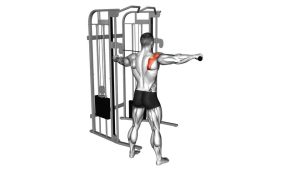
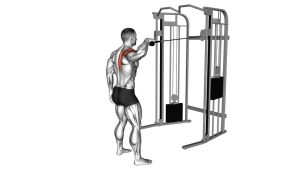
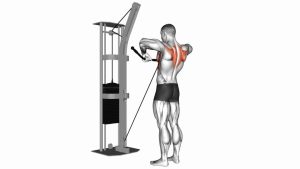
Cable Standing Backhand: Form, Muscles Worked, Sets, Tips & FAQ
Learn the Cable Standing Backhand for shoulder strength, core control, and cross-body cable power with setup, form tips, sets, mistakes, and gear.
Cable Standing Backhand
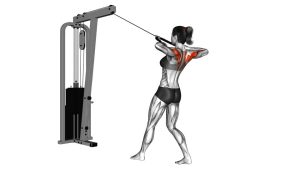
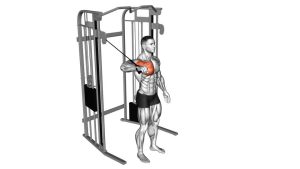
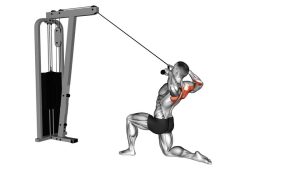
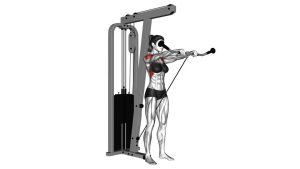
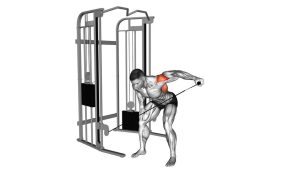
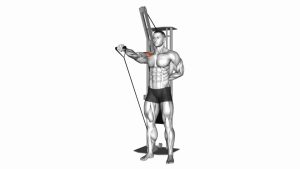
This exercise works best when the movement stays clean, diagonal, and shoulder-driven. Therefore, the cable should travel from low to high without turning into a curl, row, or uncontrolled torso swing. Keep your stance stable, brace your midsection, and let the working shoulder guide the handle across the body. As a result, you can train shoulder strength and rotational control without relying on momentum.
Quick Overview
| Body Part | Shoulders |
|---|---|
| Primary Muscle | Anterior deltoid |
| Secondary Muscle | Upper chest, obliques, rectus abdominis, biceps, and shoulder stabilizers |
| Equipment | Cable machine with single handle attachment |
| Difficulty | Intermediate because the diagonal cable path requires shoulder control and core stability |
Sets & Reps (By Goal)
- Technique practice: 2–3 sets × 10–12 reps per side with a light load and slow tempo.
- Shoulder control: 3–4 sets × 8–12 reps per side with a controlled 2-second return.
- Core and anti-rotation focus: 3 sets × 10–15 reps per side while keeping the torso steady.
- Accessory hypertrophy: 3–4 sets × 12–15 reps per side with constant cable tension.
- Warm-up activation: 1–2 sets × 12–15 easy reps per side before shoulder or upper-body training.
Progression rule: Add reps first, then increase cable weight gradually. However, if the torso starts swinging or the shoulder shrugs, reduce the load immediately.
Setup / Starting Position
- Set the pulley low: Attach a single handle to the lowest cable setting.
- Stand side-on: Position your body beside the cable machine so the working arm starts near the low pulley side.
- Grip the handle: Hold the handle with one hand and let the arm start low, slightly forward, and across the body line.
- Set your stance: Place your feet about shoulder-width apart with soft knees for balance.
- Brace your core: Keep your ribs controlled and avoid leaning away from the cable.
- Prepare the shoulder: Keep the elbow slightly bent, the wrist neutral, and the shoulder down away from the ear.
The starting position should feel stable before the pull begins. In addition, the cable should already have light tension so the first rep does not start with a sudden jerk.
Execution (Step-by-Step)
- Start low and controlled: Begin with the handle near the low pulley side while your arm stays slightly bent.
- Pull diagonally upward: Move the handle across your body and upward in a backhand-style path.
- Lead with the shoulder: Let the front shoulder drive the movement instead of pulling mainly with the hand or elbow.
- Keep the torso quiet: Allow only a small natural rotation if needed, but do not twist aggressively.
- Reach the top position: Finish around upper-chest to shoulder height, depending on your comfortable range.
- Pause briefly: Hold the top position for a short moment while keeping your core tight.
- Return slowly: Lower the handle along the same diagonal path until you reach the starting position again.
- Repeat cleanly: Perform all reps on one side, then switch sides with the same setup and tempo.
Pro Tips & Common Mistakes
- Use a light-to-moderate load: This exercise depends on clean shoulder control, not heavy pulling.
- Avoid turning it into a curl: Keep the elbow angle mostly fixed so the shoulder remains the main driver.
- Do not shrug: Keep the shoulder away from the ear to reduce neck and upper-trap dominance.
- Control the return: The eccentric phase matters because the cable continues pulling you back down.
- Stay tall: Avoid leaning backward as the handle rises.
- Brace before every rep: A stable core helps the shoulder move more cleanly.
- Match both sides: Use the same weight, range, and tempo on the left and right side.
- Keep the path consistent: Each rep should follow the same low-to-high diagonal line.
FAQ
What muscles does the Cable Standing Backhand work?
The main working muscle is the anterior deltoid. In addition, the upper chest, obliques, abs, and shoulder stabilizers assist the movement and help control the cable path.
Is the Cable Standing Backhand a shoulder or core exercise?
It is primarily a shoulder exercise, but the core plays an important support role. Because the cable pulls from one side, your abs and obliques help control rotation and keep your posture steady.
How high should I raise the cable handle?
Raise the handle to about upper-chest or shoulder height. However, stop lower if your shoulder feels pinched, your neck tightens, or your form starts to break.
Should my torso rotate during the movement?
A small amount of natural rotation may happen, especially during the diagonal pull. However, avoid using a big torso twist to throw the weight upward.
Can beginners do the Cable Standing Backhand?
Beginners can use it if the load is very light and the movement stays slow. Still, it is usually better after learning basic cable raises, front raises, and simple core bracing drills.
What is the most common mistake?
The most common mistake is using too much weight and swinging the handle. As a result, the shoulder loses control, the torso twists too much, and the exercise becomes less effective.
Recommended Equipment
- Cable Machine Single Handle Attachment — essential for performing single-arm cable backhand movements comfortably.
- Adjustable Cable Machine — useful for setting the pulley low and training diagonal cable patterns.
- Cable Attachment Strap Set — provides extra handle and strap options for cable exercises.
- Weightlifting Gloves with Grip Support — helps maintain a secure grip during cable pulling exercises.
- Non-Slip Exercise Mat — improves foot traction and stance stability during standing cable work.
Tip: Choose equipment that helps you control the cable path. Better grip, better stance, and smoother pulley adjustment make this exercise safer and more effective.