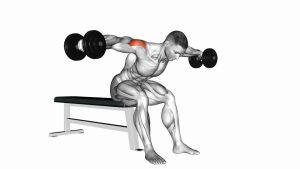
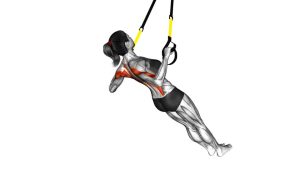
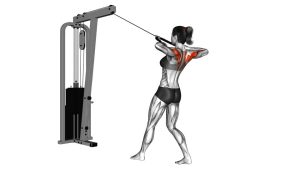
Cable Rear Delt Row: Proper Form, Sets, Tips & FAQ
Learn how to do the Cable Rear Delt Row with proper form to target the rear shoulders and upper back. Includes setup, step-by-step execution, sets by goal, common mistakes, FAQs, and recommended equipment.
Cable Rear Delt Row
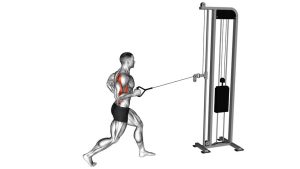
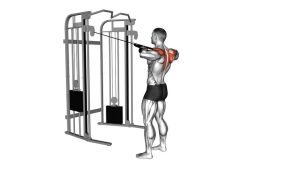
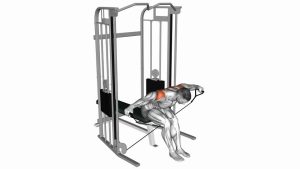
This exercise works best with controlled reps, moderate loading, and a strong focus on rear shoulder tension. You should feel the movement mainly across the back of the shoulders and upper back, not only in the biceps or lower back. The goal is to pull with the elbows while keeping the torso stable and the shoulders from shrugging upward.
Quick Overview
| Body Part | Rear Shoulders |
|---|---|
| Primary Muscle | Rear deltoids (posterior delts) |
| Secondary Muscle | Rhomboids, middle trapezius, upper back stabilizers, biceps |
| Equipment | Cable machine with row handle or cable attachment |
| Difficulty | Beginner to Intermediate |
Sets & Reps (By Goal)
- Muscle growth: 3–4 sets × 10–15 reps with controlled tempo and 45–75 sec rest
- Shoulder development / accessory work: 2–4 sets × 12–20 reps with light to moderate load
- Upper-back activation: 2–3 sets × 12–15 reps before pulling or shoulder sessions
- Technique practice: 2–3 sets × 8–12 reps using slower negatives and strict form
Progression rule: First improve control, range, and rear delt tension. Then increase reps or load gradually without losing elbow position or tempo.
Setup / Starting Position
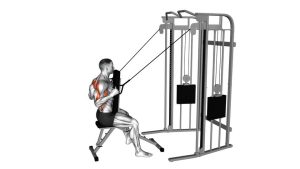
- Adjust the machine: Sit at a cable row station or cable setup with a handle attachment attached securely.
- Set your base: Place your feet firmly on the platform or floor and keep your knees slightly bent.
- Grip the handle: Use a neutral or pronated grip depending on the attachment and setup.
- Start with arms extended: Reach forward until your arms are straight while maintaining a neutral spine.
- Brace the torso: Keep your chest up, core engaged, and shoulders relaxed before starting the pull.
Tip: A stable torso makes it easier to keep tension on the rear delts instead of letting momentum take over.
Execution (Step-by-Step)
- Begin the pull with the upper back: Start by drawing the shoulders back slightly rather than yanking with the arms.
- Lead with the elbows: Pull the handle toward the upper torso while keeping the elbows flared out wider than a standard row.
- Keep the chest proud: Maintain a neutral spine and avoid leaning back to move the weight.
- Squeeze at the top: Pause briefly when the elbows come behind the torso and the rear delts are fully contracted.
- Lower under control: Extend the arms slowly and let the shoulder blades move forward naturally without collapsing posture.
Pro Tips & Common Mistakes
- Pull wide, not low: A wider elbow path helps bias the rear delts more effectively.
- Don’t go too heavy: Excessive load usually turns this into a sloppy upper-back row with momentum.
- Avoid shrugging: Keep the traps from taking over by keeping the shoulders down and controlled.
- Use a pause: A brief squeeze at peak contraction improves mind-muscle connection.
- Control the eccentric: The lowering phase is where a lot of rear delt tension is built.
- Keep the torso quiet: No excessive rocking, leaning, or jerking backward.
FAQ
What muscles does the Cable Rear Delt Row work?
The main target is the rear deltoid. It also trains the rhomboids, middle traps, and other upper-back stabilizers.
Is this different from a regular cable row?
Yes. A regular cable row usually keeps the elbows closer to the body and shifts more work to the lats. The Cable Rear Delt Row uses a wider elbow path to emphasize the back of the shoulders.
Should I use heavy weight on this exercise?
Usually no. This movement works best with strict form, moderate weight, and a clean squeeze rather than maximal loading.
Where should I feel it?
You should mainly feel it in the rear shoulders and across the upper back. If you only feel your biceps or lower back, reduce the load and refine your elbow path.
When should I place this exercise in my workout?
It fits well on shoulder days, pull days, or as an accessory after heavier rows and pulldowns. It also works well as a lighter upper-back activation drill.
Recommended Equipment
- Cable Machine Handles — useful for comfortable grip, control, and cable exercise variety
- Row Handle Cable Attachment — ideal for row variations and smoother pulling mechanics
- Neutral Grip Cable Attachment — helpful for cable rows, upper-back work, and grip comfort
- Lifting Straps — useful when grip fatigue limits rowing performance before the target muscles do
- Resistance Band Set — good for rear delt warm-ups, activation work, and extra shoulder volume
Tip: Choose equipment that improves control and consistency. Rear delt work usually responds better to clean execution than to aggressive loading.