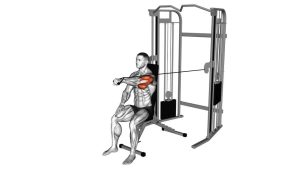
Cable Single-Arm Bench Press: Form, Muscles Worked, Sets, Tips & FAQ
Learn how to do the Cable Single-Arm Bench Press with proper form. Discover muscles worked, setup, execution steps, sets and reps by goal, common mistakes, FAQs, and recommended equipment.
Cable Single-Arm Bench Press
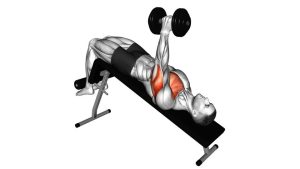
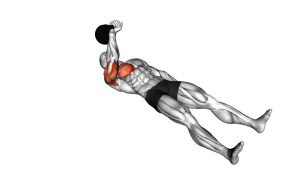
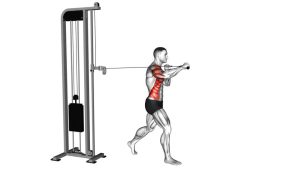
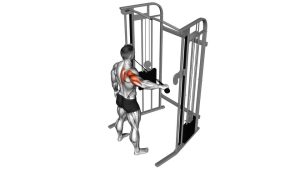
Compared with barbell and dumbbell pressing, the cable setup keeps the chest under tension through nearly the entire rep and makes it easier to emphasize the working side. The single-arm format also teaches you to stay braced and avoid twisting, which can improve pressing control and shoulder positioning over time.
Quick Overview
| Body Part | Chest |
|---|---|
| Primary Muscle | Pectoralis major |
| Secondary Muscle | Anterior deltoid, triceps brachii, serratus anterior, core stabilizers |
| Equipment | Cable machine, flat bench, single D-handle attachment |
| Difficulty | Intermediate |
Sets & Reps (By Goal)
- Muscle gain: 3-4 sets × 8-12 reps per side, 60-90 sec rest
- Strength focus: 4-5 sets × 5-8 reps per side, 90-120 sec rest
- Technique and control: 2-4 sets × 10-15 reps per side, controlled tempo, 45-75 sec rest
- Accessory chest work: 2-3 sets × 12-15 reps per side after heavier pressing
Progression rule: Add reps before adding load. Only increase resistance when you can keep the bench position stable, the wrist neutral, and the cable path smooth from bottom to top.
Setup / Starting Position
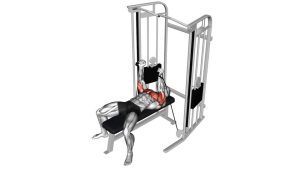
- Place the bench correctly: Position a flat bench so the working cable lines up with your chest press path.
- Grip one handle: Use a single D-handle and lie flat with your head, upper back, and hips supported on the bench.
- Plant your feet: Keep both feet flat on the floor to create a stable base and reduce torso shifting.
- Set the shoulder: Retract and lightly depress the working-side shoulder so it stays packed against the bench.
- Start at the bottom: Hold the handle beside the chest with the elbow bent, forearm vertical, and wrist straight.
Tip: Start with a lighter load than you would expect. Stability and pressing path matter more than load quality on this variation.
Execution (Step-by-Step)
- Brace first: Tighten your abs and keep your ribcage stacked so your torso does not rotate toward or away from the cable.
- Press forward: Drive the handle upward and slightly inward across the chest line until the arm is nearly straight.
- Keep the wrist aligned: Do not let the hand fold backward as you press.
- Squeeze at the top: Pause briefly and contract the chest without aggressively locking the elbow.
- Lower under control: Slowly bend the elbow and return the handle to the start position without losing shoulder tension.
- Repeat evenly: Complete all reps on one side, then switch arms, or alternate sides if that better fits your setup.
Pro Tips & Common Mistakes
- Keep your scapula controlled: Set the shoulder before the rep and do not let it dump forward at the bottom.
- Do not rush the eccentric: The lowering phase is where the cable can pull you out of position.
- Avoid over-flaring the elbow: A moderate elbow angle is usually more shoulder-friendly and keeps the chest loaded.
- Stay square on the bench: Do not let the unilateral load rotate your torso.
- Use full but safe range: Lower until you feel a solid chest stretch, not shoulder strain.
- Match both sides: Give equal attention to tempo, reps, and form quality on left and right arms.
FAQ
What makes the Cable Single-Arm Bench Press different from a dumbbell bench press?
The cable provides more continuous tension across the rep and adds a stronger anti-rotation challenge because only one side is loaded at a time.
Is this exercise good for fixing chest strength imbalances?
Yes. Because each arm presses independently, it can help expose and improve side-to-side differences in strength, control, and stability.
Should I press straight up or slightly across my body?
A slight inward press usually matches the chest’s natural function better than forcing the handle straight up. The exact path should feel strong and smooth, not awkward.
How heavy should I go?
Choose a load that lets you keep the shoulder packed, the wrist neutral, and the torso stable. If the cable pulls you off line, the load is too heavy.
Can beginners do this movement?
Yes, but many beginners should first learn a basic cable chest press or dumbbell bench press before using a unilateral cable bench setup. Start light and master the setup first.
Recommended Equipment
- Single D-Handle Cable Attachment — ideal for a secure one-hand pressing grip and smoother cable control
- Adjustable Weight Bench — useful for flat pressing and other chest training variations
- Home Cable Pulley System — helpful if you want cable-style resistance in a home gym setup
- Wrist Wraps — optional support if your wrists fatigue during pressing work
- Cable Machine Handles Set — useful if you want extra grip options for presses, flies, and rows
These are stable Amazon search links for relevant equipment categories currently available on Amazon. :contentReference[oaicite:0]{index=0}