Dumbbell Bear Crawl Push-Up: Form, Muscles Worked, Sets, Tips & FAQ
A powerful hybrid of bear crawl and push-up using dumbbells for deeper range and wrist-friendly grip. Learn setup, step-by-step form, sets by goal, common mistakes, FAQs, and recommended gear.
Dumbbell Bear Crawl Push-Up
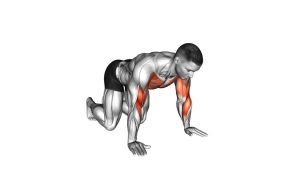
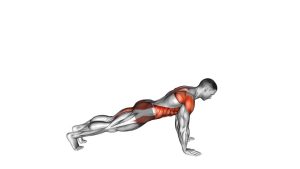
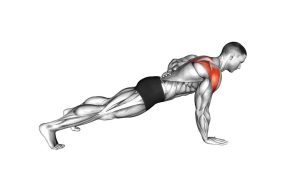
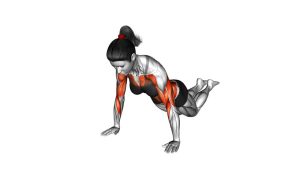
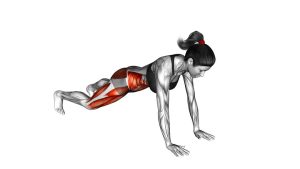
This hybrid movement trains the chest during the press while challenging your core to resist twisting as you crawl. The goal is controlled locomotion: short steps, steady shoulders, and smooth push-up mechanics without losing plank alignment.
Quick Overview
| Body Part | Chest |
|---|---|
| Primary Muscle | Pectoralis major (chest) |
| Secondary Muscle | Anterior deltoids, triceps, serratus anterior, core (anti-rotation), quads/hip flexors (bear position) |
| Equipment | Two dumbbells (hex/anti-roll recommended) + floor space |
| Difficulty | Intermediate (coordination + core stability required) |
Sets & Reps (By Goal)
- Strength: 3–5 sets × 4–8 push-ups (crawl 2–4 steps between reps), 90–150 sec rest
- Muscle/Hypertrophy: 3–4 sets × 8–12 push-ups (crawl 2–3 steps between reps), 60–90 sec rest
- Conditioning (HIIT): 6–12 minutes — 20–30 sec work / 30–60 sec rest (keep reps strict)
- Control & stability: 2–4 sets × 6–10 push-ups (slow tempo + 1 sec pause), 60–90 sec rest
Progression rule: First reduce torso twist and improve push-up depth. Then add reps, steps, or time. Only add speed after you can keep hips stable.
Setup / Starting Position
- Set dumbbells: Place dumbbells shoulder-width apart on a stable surface (hex dumbbells help prevent rolling).
- Grip & stack: Grip handles; shoulders over dumbbells; elbows straight but not hyperextended.
- Bear hover: Lift knees 2–5 cm off the floor; feet hip-width (slightly wider if needed).
- Brace: Ribs down, abs tight, glutes lightly engaged; keep a neutral spine and long neck.
- Ready cue: Think “quiet hips” and “push the floor away” to lock in shoulder stability.
Tip: If wrists feel stressed, dumbbells act like push-up handles and may feel more comfortable than palms-flat push-ups.
Execution (Step-by-Step)
- Crawl (cross-pattern): Step right hand + left foot forward together (short step).
- Alternate: Step left hand + right foot forward. Keep knees hovering and hips level.
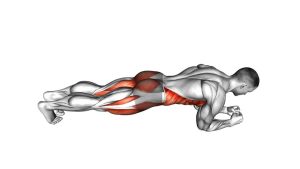
- Stabilize plank: Pause with shoulders stacked and feet set for balance (slightly wider helps control rotation).
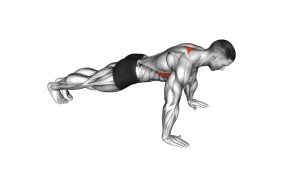
- Lower: Perform a push-up—elbows track ~30–45° from your torso; chest lowers between the dumbbells.
- Press: Push up as a single unit (no hip sag); exhale as you drive up.
- Return to bear: Bring knees back to hover and continue crawling for the next rep/sequence.
Pro Tips & Common Mistakes
Pro Tips
- Short steps: Smaller crawl steps reduce rotation and keep the torso stable.
- Neutral wrists: Keep knuckles stacked and grip the handles firmly (don’t let dumbbells wobble).
- Elbows 30–45°: Avoid extreme flare—this keeps shoulders safer and loads the chest well.
- Slow tempo: 2 sec down, brief pause, controlled press—better quality and stability.
- Scale smart: Use an incline (hands on bench/box) if you can’t maintain a neutral spine.
Common Mistakes
- Hips twisting: Usually from long steps or a narrow stance—shorten steps and widen feet slightly.
- Shoulder collapse: Keep pushing the floor away; don’t sink into the shoulders.
- Partial push-ups: Reduce reps and hit clean depth with control.
- Dumbbells rolling: Use hex dumbbells or place a mat underneath for grip.
- Low-back arch: Ribs down, glutes on; scale volume if your brace breaks.
FAQ
What muscles does the dumbbell bear crawl push-up work?
The push-up targets the chest primarily, with support from triceps and front delts. The crawl heavily challenges your core (anti-rotation) and shoulder stability.
How do I stop my hips from swinging while crawling?
Take shorter steps, widen your stance slightly, and keep your ribs down. Move slower and prioritize a steady torso over speed.
Are dumbbells better than palms-flat for this exercise?
For many people, yes—dumbbells keep wrists more neutral and can feel more comfortable. They can also increase range of motion for the chest compared to hands-flat push-ups.
What dumbbells are best for bear crawl push-ups?
Hex (anti-roll) dumbbells are best because they are more stable and less likely to roll during crawling.
How can I make it easier or harder?
Easier: elevate hands, reduce crawl steps, or do knees-down push-ups. Harder: add more steps between push-ups, slow the tempo, or extend work intervals.
Recommended Equipment (Optional)
- Rubber Hex Dumbbells (Anti-Roll) — stable on the floor and less likely to roll during crawling
- Push-Up Bars / Parallettes — wrist-friendly handles if dumbbells feel too unstable
- Thick Non-Slip Exercise Mat — better traction and comfort for crawling and push-ups
- Workout Knee Pads (Optional) — useful if you scale to knees-down variations or train on rough surfaces
- Wrist Wraps (Optional Support) — extra support if you’re rebuilding wrist tolerance
Tip: If your floor is slippery, prioritize traction first (mat + stable dumbbells). Control keeps the exercise chest-focused and safe.