Elbow Push-Up: Form, Core Benefits, Sets, Tips & FAQ
Learn the Elbow Push-Up with step-by-step form, core stability tips, sets by goal, common mistakes, FAQs, and recommended equipment.
Elbow Push-Up
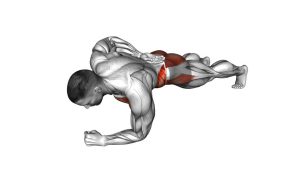
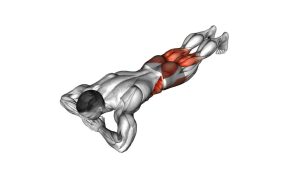
This movement works best when every rep is controlled. Start in a strong forearm plank, press one hand into the floor, follow with the second hand, then return one forearm at a time. During the full repetition, keep your body in a long line from head to heels.
Because the exercise shifts body weight from side to side, your core must resist twisting. Therefore, slow reps are more useful than rushed reps. Keep your ribs controlled, your hips level, and your shoulders stacked over your elbows or hands.
Quick Overview
| Body Part | Core |
|---|---|
| Primary Muscle | Rectus abdominis, transverse abdominis, and deep core stabilizers |
| Secondary Muscle | Shoulders, triceps, chest, serratus anterior, glutes, and lower-back stabilizers |
| Equipment | No equipment required; optional exercise mat for elbow comfort |
| Difficulty | Intermediate because it requires plank strength, shoulder control, and anti-rotation stability |
Sets & Reps (By Goal)
- Core stability: 3 sets × 6–10 reps per side pattern, using a slow and steady tempo.
- Upper-body endurance: 3–4 sets × 10–16 total reps, resting 45–75 seconds between sets.
- Beginner control practice: 2–3 sets × 4–8 total reps, performed slowly with a wider foot stance.
- Conditioning finisher: 2–4 rounds × 20–30 seconds, keeping form clean rather than rushing.
Progression rule: Add reps only when your hips stay level and your shoulders remain controlled. If your hips rotate too much, use fewer reps, slow the tempo, or widen your feet.
Setup / Starting Position
- Start on your forearms: Place both elbows under your shoulders with your forearms flat on the floor.
- Set your feet: Extend both legs behind you. Keep your feet together or slightly apart, depending on balance.
- Create a straight body line: Keep your head, shoulders, hips, knees, and heels aligned.
- Brace your core: Tighten your abs gently as if preparing for movement without holding your breath.
- Keep the shoulders active: Press lightly through the forearms so the chest does not sink toward the floor.
Tip: A wider foot stance can make the exercise more stable. However, a narrow stance increases the anti-rotation challenge.
Execution (Step-by-Step)
- Begin in forearm plank: Keep both elbows under the shoulders and maintain a firm, straight body position.
- Press one hand down: Place one palm where the elbow was and push the floor away.
- Move to high plank: Place the second palm down and extend both arms until you reach a full high plank.
- Stabilize at the top: Keep the hands under the shoulders, the core tight, and the hips from rocking side to side.
- Lower one arm: Return one forearm to the floor with control rather than dropping down.
- Lower the second arm: Bring the other forearm back down until you return to the starting forearm plank.
- Repeat smoothly: Continue the same pattern while keeping your body line steady from head to heels.
Pro Tips & Common Mistakes
- Keep your hips level: The goal is not just to move up and down. Instead, resist rotation as each arm changes position.
- Do not rush the transition: Fast reps often create swinging hips and poor shoulder control.
- Stack your joints: In forearm plank, keep elbows under shoulders. In high plank, keep hands under shoulders.
- Avoid sagging the lower back: Brace your abs and squeeze your glutes lightly to keep your trunk stable.
- Do not shrug your shoulders: Keep the neck long and press the floor away through your arms.
- Alternate the leading arm: Lead with the right arm for one rep, then lead with the left arm for the next rep to train both sides evenly.
- Use a mat if needed: A soft mat can reduce elbow discomfort without changing the exercise pattern.
FAQ
What is an elbow push-up?
An elbow push-up is a plank transition exercise. You start in a forearm plank, push up to a high plank one arm at a time, then lower back to the forearms one arm at a time.
Is the elbow push-up mainly for abs or arms?
It trains both. However, the core is heavily involved because your abs must stop the hips from twisting while your shoulders and triceps move the body between plank positions.
Why do my hips twist during elbow push-ups?
Hip twisting usually happens when the movement is too fast or the stance is too narrow. Widen your feet, slow down, and brace your core before each arm transition.
Can beginners do elbow push-ups?
Beginners can try a modified version from the knees or with fewer reps. Still, the full version is more intermediate because it requires shoulder strength, plank control, and anti-rotation stability.
Should I alternate the leading arm?
Yes. Alternating the leading arm helps reduce imbalance. For example, lead with the right arm on one repetition, then lead with the left arm on the next repetition.
How can I make elbow push-ups harder?
You can slow the tempo, narrow your foot stance, add more controlled reps, or pause briefly in the high plank. Nevertheless, only progress when your hips stay stable.
Recommended Equipment (Optional)
- Exercise Mat — adds comfort for elbows, forearms, knees, and wrists during plank-based training
- Non-Slip Yoga Mat — helps reduce sliding while moving from forearm plank to high plank
- Push-Up Handles — useful for wrist-friendly high plank variations and upper-body training
- Core Sliders — helpful for adding controlled core progressions after mastering plank stability
- Resistance Bands Set — useful for pairing elbow push-ups with shoulder, chest, and upper-back accessory work
Tip: The exercise itself does not require equipment. However, a mat is the most useful option if your elbows feel uncomfortable on a hard floor.