Half Chest Fly: Proper Form, Sets & Reps, Tips
Learn the Half Chest Fly (standing partial-range fly) to build chest contraction and control with minimal joint stress. Step-by-step form, sets by goal, common mistakes, FAQs, and recommended gear.
Half Chest Fly (Standing Partial-Range Chest Fly)
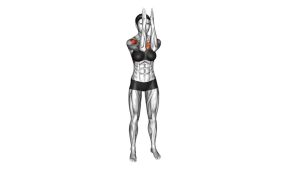
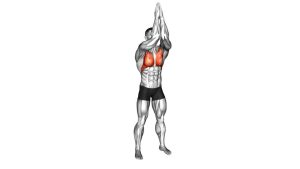
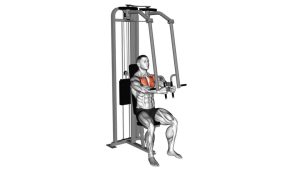
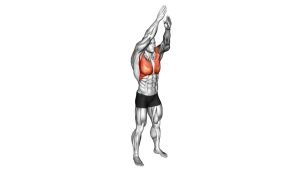
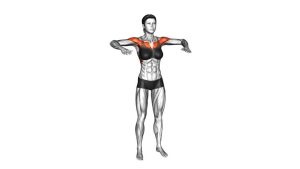
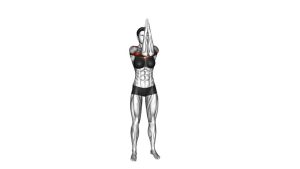
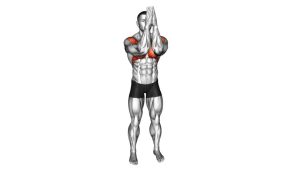
This movement is all about controlled tension, not speed. Keep your ribcage stacked (no big arch), maintain a slight elbow bend, and squeeze your pecs as your arms come together. The “half” range keeps the shoulders in a comfortable position while still letting you train chest contraction and stability.
Quick Overview
| Body Part | Chest |
|---|---|
| Primary Muscle | Pectoralis major (mid/inner emphasis through peak contraction) |
| Secondary Muscle | Anterior deltoids; serratus anterior (stability); biceps (isometric support) |
| Equipment | None (optional: light bands or cables to add resistance) |
| Difficulty | Beginner (easy to learn; harder when you slow tempo and add holds) |
Sets & Reps (By Goal)
- Warm-up / Activation: 2–3 sets × 12–20 reps (1–2 sec squeeze, 30–45 sec rest)
- Hypertrophy “Burnout” (after pressing): 2–4 sets × 15–30 reps (2 sec squeeze, 45–75 sec rest)
- Endurance / Conditioning: 3–5 sets × 20–40 reps (smooth tempo, 30–60 sec rest)
- Mind–Muscle Connection: 2–3 sets × 10–15 reps (3–5 sec squeeze, slower reps)
Progression rule: First increase control (slower reps + longer squeeze). Then add volume. If you add resistance (bands/cables), keep the same clean arc and shoulder comfort.
Setup / Starting Position
- Stand tall: Feet shoulder-width, knees soft, core lightly braced, ribs stacked.
- Set shoulders: Pull shoulders down and slightly back (no shrugging).
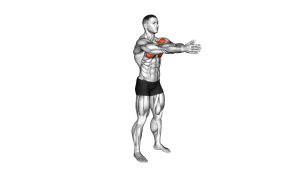
- Arm position: Raise arms to chest height with a soft elbow bend (about 15–30°).
- Open to a comfortable half range: Upper arms out to the sides—stop before you feel a deep shoulder stretch.
- Hand position: Palms facing in (or slightly forward). Keep wrists neutral.
Tip: Imagine hugging a big barrel. Your arms move in a rounded arc—this keeps the fly pattern clean.
Execution (Step-by-Step)
- Brace and breathe: Inhale gently, stay tall, and keep the neck relaxed.
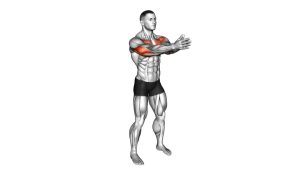
- Fly inward: Bring the arms toward each other in a wide arc (not a press straight forward).
- Squeeze the chest: When hands meet (or nearly meet), hold 1–3 seconds and feel pecs tighten.
- Return with control: Open back to the half range slowly—no bouncing or swinging.
- Repeat smoothly: Keep elbows bent the same amount the entire set.
Pro Tips & Common Mistakes
- Use a squeeze pause: 1–3 seconds at the top makes this exercise work.
- Keep shoulders down: Shrugging turns it into traps/neck tension.
- Don’t turn it into a press: The path is an arc (fly), not straight forward (press).
- Keep elbows “soft” and consistent: Changing elbow bend shifts tension away from the chest.
- Stay stacked: Avoid flaring ribs and arching hard—keep core quietly engaged.
- Go half-range on purpose: The goal is comfort + contraction, not maximum stretch.
FAQ
Where should I feel the Half Chest Fly?
Mainly in the pecs, especially during the closing phase and the peak squeeze. If your front shoulders dominate, reduce range and keep elbows slightly forward.
Is partial range effective for chest growth?
Partial range can be effective when it lets you create high-quality tension and a strong squeeze—especially as an activation or burnout. Pair it with full-range pressing or fly variations for a complete chest routine.
How do I make it harder without weights?
Slow the tempo, add a 2–5 second squeeze, increase reps, or perform “1.5 reps” (close → half open → close = 1 rep). You can also add a light resistance band.
What if I feel shoulder pinching?
Reduce the opening range, keep elbows slightly more forward, and focus on shoulders staying down. If discomfort persists, switch to a band fly with a smaller range or consult a professional.
When should I use this in my workout?
Use it as a warm-up before pressing, between sets as a chest “primer,” or as a finisher for high reps at the end of chest day.
Recommended Equipment (Optional)
- Loop Resistance Bands Set — add light resistance while keeping joints friendly
- Chest Expander / Resistance Band Trainer — helps replicate fly tension more directly
- Cable/Band Handles (Pair) — improves grip comfort if you use bands or cables
- Door Anchor for Resistance Bands — makes band fly variations easy at home
- Massage Ball (Chest/Shoulder Mobility) — helpful for pec tightness that can limit comfortable fly mechanics
Tip: Tools should improve comfort and control—if any setup causes shoulder pain or irritation, reduce range or choose a different option.