Inchworm Exercise: Full-Body Warm-Up, Core Strength, Form & Tips
Learn the Inchworm exercise for core strength, hamstring mobility, shoulder stability, and full-body warm-up. Includes form, sets, tips, FAQs, and equipment.
Inchworm
The Inchworm works well as a warm-up, mobility drill, or bodyweight conditioning movement. It starts from a standing position, moves through a controlled forward fold, then transitions into a strong plank. From there, the body either walks the feet toward the hands or walks the hands back to standing, depending on the version being performed.
This exercise should feel smooth, active, and controlled. You should feel your hamstrings lengthen during the fold, your shoulders support your body during the walkout, and your core stabilize your spine in the plank. Avoid collapsing through the lower back, rushing the steps, or turning the movement into a loose toe-touch.
Quick Overview
| Body Part | Core, Hamstrings, Shoulders |
|---|---|
| Primary Muscle | Rectus abdominis, transverse abdominis, hamstrings |
| Secondary Muscle | Shoulders, triceps, calves, hip flexors, glutes, lower back stabilizers |
| Equipment | Bodyweight only; optional exercise mat |
| Difficulty | Beginner to intermediate, depending on mobility and plank control |
Sets & Reps (By Goal)
- Dynamic warm-up: 1–3 sets × 4–8 reps with a smooth, controlled tempo.
- Core stability: 2–4 sets × 5–10 reps, pausing 1–3 seconds in the plank.
- Mobility focus: 2–3 sets × 4–6 slow reps, emphasizing the forward fold and hamstring stretch.
- Conditioning finisher: 3–5 rounds × 20–40 seconds, while keeping form clean.
- Beginner practice: 1–2 sets × 3–5 reps, using bent knees and shorter walkouts if needed.
Progression rule: First improve control and plank alignment. Then add more reps, longer plank pauses, or a push-up variation only when your hips stay stable and your lower back does not sag.
Setup / Starting Position
- Stand tall: Place your feet about hip-width apart with your weight balanced through the whole foot.
- Set your posture: Keep your ribs stacked over your hips, shoulders relaxed, and neck neutral.
- Prepare your core: Lightly brace your midsection as if you are about to hold a plank.
- Soften the knees: Keep a small bend in the knees if your hamstrings feel tight.
- Clear your space: Make sure you have enough room in front of you to walk the hands forward into a plank.
Tip: If your hands cannot comfortably reach the floor, bend your knees more. The exercise should stay controlled, not forced through the lower back.
Execution (Step-by-Step)
- Fold forward: Hinge at the hips and bring your hands toward the floor. Let the knees bend slightly if needed.
- Place the hands down: Set your palms on the floor in front of your feet with your fingers spread for support.
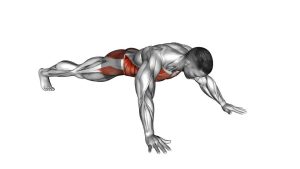
- Walk the hands forward: Move one hand at a time away from your feet while keeping your core active.
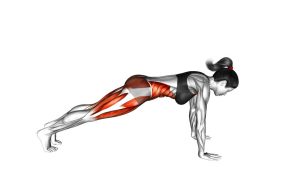
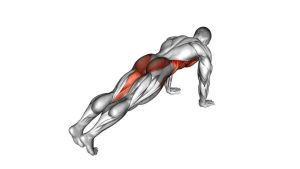
- Reach a high plank: Stop when your shoulders are stacked over your wrists and your body forms a straight line.
- Control the plank: Keep your hips level, glutes lightly engaged, and ribs pulled in.
- Walk the feet forward: Step your feet toward your hands with small controlled steps while the hips rise.
- Return to standing: Once your feet are close to your hands, lift your chest and stand tall with control.
Pro Tips & Common Mistakes
- Move slowly enough to control each step: The Inchworm is more effective when every hand placement and foot step is deliberate.
- Do not lock the knees aggressively: A soft knee bend protects the lower back and allows cleaner movement.
- Keep the plank strong: Avoid letting the hips drop toward the floor during the walkout.
- Relax the neck: Look slightly ahead of your hands in the plank instead of craning your head upward.
- Avoid bouncing in the forward fold: Let the hamstrings lengthen naturally without forcing the stretch.
- Use small steps: Short hand and foot steps create better control than large, rushed movements.
- Brace before the plank: Engage your core before your body becomes fully horizontal.
- Do not rush the return: Stand up with control so the final phase does not become sloppy.
- Modify for wrist discomfort: Use push-up handles or perform fewer reps if your wrists feel overloaded.
- Progress carefully: Add a push-up only after the basic Inchworm feels stable and pain-free.
FAQ
What muscles does the Inchworm exercise work?
The Inchworm works the core, hamstrings, shoulders, triceps, calves, and hip stabilizers. It also trains coordination because the body must move from standing into a plank and back again.
Is the Inchworm good for beginners?
Yes. Beginners can use bent knees, shorter walkouts, and fewer reps. The main goal is to keep the movement controlled and avoid sagging through the lower back during the plank.
Should I walk my hands out or walk my feet in?
Both versions are useful. Walking the hands out emphasizes the transition into plank, while walking the feet in adds more hamstring mobility and coordination. Many standard Inchworm variations use both actions in one full rep.
Why do I feel the Inchworm in my hamstrings?
The forward fold and foot walk-in lengthen the hamstrings. This is normal as long as the feeling is a controlled stretch, not sharp pain or pulling behind the knee.
Can I add a push-up to the Inchworm?
Yes. The Inchworm Push-Up is a harder variation. Add it only when your basic plank position is strong and your shoulders, wrists, and lower back feel stable.
How many Inchworms should I do before a workout?
For a warm-up, 4–8 controlled reps are usually enough. Use fewer reps before heavy training and more reps when you are using it as a mobility or conditioning drill.
Recommended Equipment
- Exercise Mat — provides comfort for hands and improves grip during walkouts.
- Push-Up Handles — useful if your wrists feel uncomfortable during the plank phase.
- Non-Slip Training Mat — helps keep the hands stable during dynamic bodyweight movement.
- Foam Roller — helpful for warming up calves, hamstrings, and upper back before mobility work.
- Resistance Bands Set — useful for pairing the Inchworm with shoulder activation and upper-back warm-up drills.
Tip: The Inchworm does not require equipment, but a stable mat and wrist-friendly support can make the movement cleaner, especially during warm-ups or high-rep bodyweight sessions.