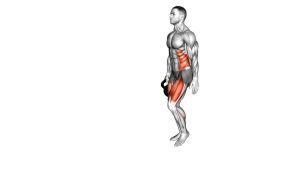
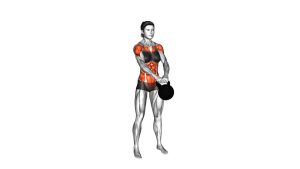
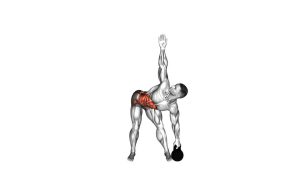
Kettlebell Figure 8: Muscles Worked, Form, Sets, Tips & FAQ
Learn how to do the Kettlebell Figure 8 with proper form. Build core control, grip strength, hip hinge power, coordination, and lower-body stability with this complete guide.
Kettlebell Figure 8
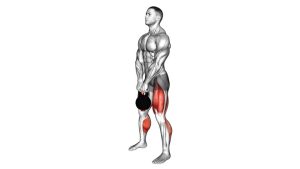
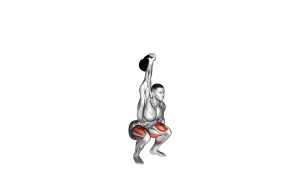
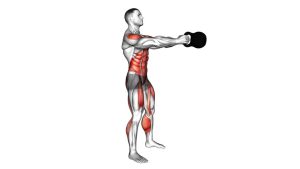
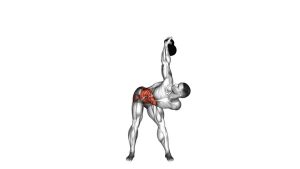
The Kettlebell Figure 8 is useful for athletes, lifters, and anyone who wants to improve body control while training the posterior chain and core. Unlike a basic kettlebell swing, this exercise adds a hand-to-hand transfer behind the legs. Because of that, it challenges timing, balance, grip, and trunk stability at the same time.
During each repetition, the hips shift back into a hinge while the kettlebell travels between the thighs. Then, the opposite hand receives the handle behind the body. A strong rep should feel smooth and controlled. Your lower back should not round, your knees should not collapse inward, and the kettlebell should stay close to your body.
Quick Overview
| Body Part | Core, Glutes, Hamstrings |
|---|---|
| Primary Muscle | Core stabilizers, glutes, hamstrings |
| Secondary Muscle | Forearms, grip muscles, adductors, lower back stabilizers, shoulders |
| Equipment | Kettlebell |
| Difficulty | Intermediate because it requires coordination, timing, grip control, and a clean hip hinge |
Sets & Reps (By Goal)
- Technique practice: 2–3 sets × 8–10 total passes using a light kettlebell.
- Core and coordination: 3–4 sets × 12–20 total passes with smooth rhythm.
- Conditioning: 3–5 rounds × 30–45 seconds with controlled breathing.
- Grip endurance: 3–4 sets × 20–30 total passes using moderate load.
- Warm-up drill: 1–2 sets × 10–16 total passes before kettlebell swings, deadlifts, or lower-body training.
Progression rule: Improve smoothness before increasing weight. Add reps or time first, then move to a heavier kettlebell only when every transfer feels secure.
Setup / Starting Position
- Stand wide enough: Place your feet slightly wider than shoulder-width so the kettlebell can pass safely between your legs.
- Hold the kettlebell in one hand: Start with the bell hanging in front of your body. Keep your grip firm but not tense.
- Brace your core: Pull your ribs down slightly and create light tension around your midsection.
- Set your hinge: Push your hips back while keeping your chest open and spine neutral.
- Keep the shoulders relaxed: Do not shrug. The arms guide the kettlebell, but the hips create the movement space.
- Look slightly forward and down: Keep your neck aligned with your spine rather than looking straight up or dropping your head.
Use a lighter kettlebell than you would use for swings. This exercise requires control and timing, not maximum loading.
Execution (Step-by-Step)
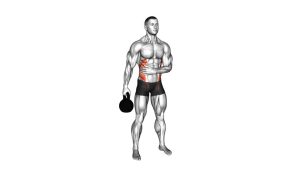
- Begin in an athletic stance: Keep your feet planted, knees soft, and torso tall.
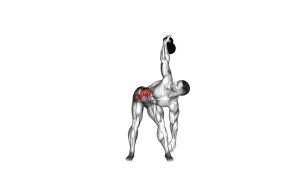
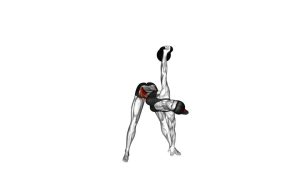
- Hinge at the hips: Push your hips back and guide the kettlebell between your legs.
- Reach the opposite hand behind you: As the kettlebell passes through, bring your free hand behind the opposite thigh.
- Transfer the handle smoothly: Pass the kettlebell from one hand to the other behind your legs. Do not toss it.
- Stand back up with control: Drive through your feet and bring your hips forward while keeping the kettlebell close.
- Repeat to the other side: Hinge again and pass the kettlebell back through the legs in the opposite direction.
- Create the figure-eight path: Continue alternating sides so the kettlebell traces a smooth “8” pattern around your legs.
- Control your breathing: Inhale as you hinge and exhale as you return to a stronger upright position.
Pro Tips & Common Mistakes
Pro Tips
- Use your hips, not your lower back: The hinge should come from the hips while the spine stays neutral.
- Keep the kettlebell close: A close path improves control and reduces unnecessary shoulder strain.
- Start slowly: Practice each hand transfer before turning the movement into a fast flow.
- Grip the handle at the corner: This can make the pass smoother and easier to receive.
- Stay balanced through the full foot: Avoid shifting too much into your toes or heels.
- Brace before each hinge: A firm core helps prevent twisting or collapsing during the transfer.
Common Mistakes
- Rounding the back: This usually happens when the weight is too heavy or the hips do not move back enough.
- Squatting instead of hinging: Your knees bend, but the main movement should come from the hips.
- Throwing the kettlebell: The transfer should be controlled, not tossed from hand to hand.
- Looking up too much: Keep your neck neutral to protect your spine position.
- Letting the knees cave inward: Track your knees in the same direction as your toes.
- Going too fast too soon: Speed only works after your timing, grip, and posture are clean.
FAQ
What muscles does the Kettlebell Figure 8 work?
The Kettlebell Figure 8 works the core, glutes, hamstrings, forearms, grip muscles, lower back stabilizers, and inner thighs. It also trains coordination because you must control the kettlebell while passing it between your legs.
Is the Kettlebell Figure 8 good for core training?
Yes. It trains the core to resist unwanted rotation and keep the torso stable while the kettlebell moves from side to side. It is not a crunch-style ab exercise, but it is excellent for functional core control.
Is this exercise beginner-friendly?
It can be beginner-friendly if you use a very light kettlebell and move slowly. However, because the exercise includes a behind-the-leg hand transfer, many beginners should first learn the hip hinge, kettlebell deadlift, and basic kettlebell pass.
How heavy should the kettlebell be?
Choose a kettlebell that feels easy to control. A light to moderate weight is better than a heavy one because the exercise depends on timing, grip security, and smooth movement.
Why does my lower back hurt during the Kettlebell Figure 8?
Lower back discomfort often comes from rounding the spine, using too much weight, or squatting instead of hinging. Reduce the load, keep your core braced, and push your hips back more clearly.
Can I use the Kettlebell Figure 8 for conditioning?
Yes. Once your form is clean, you can use timed sets for conditioning. Keep the reps smooth and stop before your grip or posture breaks down.
Recommended Equipment
- Cast Iron Kettlebell — the main tool for performing the Kettlebell Figure 8 with stable grip and balanced loading.
- Adjustable Kettlebell — useful if you want several weight options without buying multiple kettlebells.
- Exercise Mat / Gym Flooring — protects your floor and gives your feet a stable training surface.
- Weightlifting Gloves — can help beginners improve handle comfort during repeated passes.
- Gym Chalk Ball — helps reduce slipping when your hands get sweaty during longer sets.
Tip: For this exercise, choose control before load. The best equipment is the kettlebell you can pass smoothly without losing posture, balance, or grip.