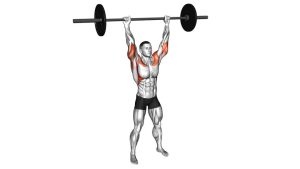
Kettlebell Seated Neutral-Grip Shoulder Press: Form, Sets, Tips & FAQ
Learn the Kettlebell Seated Neutral-Grip Shoulder Press for stronger shoulders and safer overhead pressing. Step-by-step form, sets by goal, common mistakes, FAQs, and recommended equipment.
Kettlebell Seated Neutral-Grip Shoulder Press
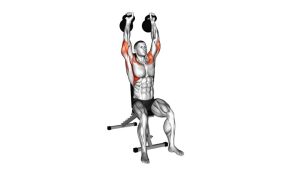
This exercise is best performed with controlled technique and a full, pain-free range of motion. Because kettlebells move independently, each arm must stabilize its own load, which can improve pressing balance and shoulder control. Keep the elbows slightly in front of the body, avoid excessive lower-back arching, and use a load that lets you press smoothly without twisting or losing posture.
Quick Overview
| Body Part | Shoulders |
|---|---|
| Primary Muscle | Anterior deltoids and lateral deltoids |
| Secondary Muscle | Triceps, upper chest, rotator cuff, upper traps |
| Equipment | Two kettlebells and a bench with back support |
| Difficulty | Intermediate |
Sets & Reps (By Goal)
- Muscle growth: 3–5 sets × 8–12 reps with 60–90 seconds rest
- Strength focus: 4–6 sets × 4–6 reps with 90–150 seconds rest
- Shoulder control / clean technique: 2–4 sets × 6–10 reps with moderate load and perfect form
- Accessory pressing work: 2–3 sets × 10–15 reps after your main compound lifts
Progression rule: Add reps before load when possible. Once all sets look strong and stable with clean lockout, increase kettlebell weight gradually.
Setup / Starting Position
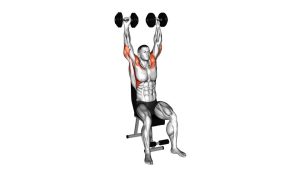
- Set the bench: Sit on a bench with back support adjusted to a near-upright angle.
- Plant your feet: Keep both feet flat on the floor to create a stable base.
- Bring the kettlebells to shoulder level: Hold one kettlebell in each hand with a neutral grip, palms facing inward.
- Stack the joints: Wrists stay straight over the elbows, and elbows remain slightly in front of the torso.
- Brace the torso: Keep your ribs down, chest tall, and head neutral against or close to the bench support.
Tip: Before pressing, think “tall spine, tight core, smooth path overhead.”
Execution (Step-by-Step)
- Start from the rack position: Kettlebells begin at shoulder height with forearms vertical.
- Press upward smoothly: Drive both kettlebells overhead in a controlled line while keeping the neutral grip.
- Finish overhead: Extend the elbows without aggressively jamming the joints. The kettlebells should end above the shoulders.
- Stay braced: Avoid leaning back or turning the movement into an incline press by arching the lower back.
- Lower under control: Bring the kettlebells back down to shoulder level slowly and evenly.
- Repeat with precision: Each rep should look the same from start to finish.
Pro Tips & Common Mistakes
- Keep a neutral grip: This often feels more natural on the shoulders than a fully pronated press.
- Don’t overarch: Keep the ribs down and abs engaged to avoid dumping stress into the lower back.
- Press up, not forward: The bells should travel overhead, not drift too far in front of the body.
- Control the lowering phase: Don’t let the kettlebells crash back to the shoulders.
- Don’t flare the elbows excessively: Slightly forward elbows usually create a stronger and safer press.
- Use manageable loads: Heavy kettlebells can expose stability weaknesses fast, so progress gradually.
FAQ
What muscles does the kettlebell seated neutral-grip shoulder press work?
It mainly targets the anterior and lateral deltoids, with strong assistance from the triceps. The rotator cuff and upper traps also help stabilize the movement.
Why use a neutral grip instead of a standard palms-forward press?
A neutral grip often feels more comfortable on the shoulders because it places the upper arm in a more natural pressing position. Many lifters find it easier to control and less irritating on the joints.
Is this better for muscle growth or strength?
It works well for both. Moderate reps are excellent for shoulder hypertrophy, while lower-rep heavier sets can build pressing strength if your form stays strict.
Can beginners do this exercise?
Yes, but many beginners should start with lighter kettlebells and focus on control first. If stability is a challenge, a dumbbell seated press may be easier before progressing to kettlebells.
Should I use a bench with back support?
Yes, for this variation, back support helps reduce body English and keeps the emphasis on the shoulders. It also makes it easier to maintain consistent pressing mechanics.
Recommended Equipment (Optional)
- Adjustable Kettlebell — a practical option for progressive overload without buying multiple kettlebell pairs
- Cast Iron Kettlebell Pair — ideal for stable bilateral pressing with matched weights
- Adjustable Weight Bench with Back Support — gives you the upright seated position needed for strict shoulder pressing
- Lifting Chalk — helps maintain grip security when kettlebells get slippery
- Light Resistance Bands — useful for shoulder activation and warm-up drills before pressing
Tip: A good bench and the right kettlebell size matter more than pressing heavy too soon. Choose tools that let you move with control.