Handstand Walk: Proper Form, Shoulder Stability, Sets, Tips & FAQ
Learn how to do the Handstand Walk with proper form to build shoulder strength, overhead stability, balance, and full-body control. Includes setup, execution, sets by goal, mistakes, FAQs, and recommended equipment.
Handstand Walk
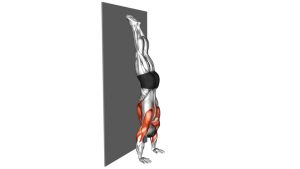
This exercise heavily taxes the shoulders, triceps, upper traps, serratus anterior, and core. It combines overhead pressing endurance with hand-balance skill, making it valuable for calisthenics, gymnastics, and athletic body control. Good handstand walking depends on staying tall through the shoulders, shifting your weight smoothly, and avoiding excessive arching through the lower back.
Quick Overview
| Body Part | Shoulders |
|---|---|
| Primary Muscle | Deltoids |
| Secondary Muscle | Triceps, upper traps, serratus anterior, forearms, core |
| Equipment | Bodyweight only (optional: wall, gymnastics mat, wrist supports) |
| Difficulty | Advanced |
Sets & Reps (By Goal)
- Skill practice: 4–6 sets of 10–20 total steps or 10–20 seconds
- Shoulder endurance: 3–5 sets of 15–30 seconds with 60–90 seconds rest
- Balance development: 5–8 short attempts focused on clean controlled steps
- Conditioning finisher: 3–4 rounds of 15–25 seconds
Progression rule: Add more distance, time under tension, or total step count only when you can maintain straight-arm support, stacked shoulders, and consistent control.
Setup / Starting Position
- Choose a safe practice area: Use an open surface with enough room to move forward and bail safely if needed.
- Warm up thoroughly: Prepare the wrists, shoulders, and core with mobility work and wall-supported handstands.
- Place your hands shoulder-width apart: Spread the fingers wide to create a stable base and improve balance control.
- Kick into a handstand: Enter a vertical inverted position with elbows locked and shoulders pushed up strongly.
- Brace the core: Keep ribs down, glutes tight, and legs together to reduce excessive arching.
Tip: Before learning to walk, you should be able to hold a stable handstand against a wall and shift weight comfortably from one hand to the other.
Execution (Step-by-Step)
- Stack the body: Get tall through the shoulders and keep the elbows locked as you find balance over your hands.
- Lean slightly forward: Shift your center of mass just enough to create forward movement without losing control.
- Transfer weight side to side: Briefly load one arm so the opposite hand can move.
- Take a small hand step: Lift one hand and place it a short distance forward, then repeat with the other hand.
- Keep steps short and smooth: Avoid reaching too far, which can break your line and throw off balance.
- Push the floor away: Maintain active shoulders throughout the walk to avoid collapsing into the neck.
- Finish under control: Either step down carefully or bail safely when balance is lost.
Pro Tips & Common Mistakes
- Push tall through the shoulders: Active shoulder elevation improves stability and reduces collapse.
- Keep your elbows locked: Bent arms waste energy and make balance much harder.
- Use short hand steps: Small steps are easier to control than big reaches.
- Stay tight through the trunk: A loose core often leads to overextension and loss of balance.
- Look slightly between the hands: This helps maintain a more consistent line and head position.
- Do not rush: Speed usually comes after control, not before it.
- Avoid dumping into the wrists: Spread the fingers and use fingertip pressure to help steer balance.
- Practice bail mechanics: Knowing how to come down safely makes training more effective and less intimidating.
FAQ
What muscles does the handstand walk work most?
The handstand walk primarily targets the shoulders, especially the deltoids, while also heavily involving the triceps, upper traps, serratus anterior, forearms, and core.
Is the handstand walk more about strength or balance?
It requires both, but balance and shoulder stability are what allow the strength to be used efficiently. Strong shoulders help, but body awareness and controlled weight shifts are just as important.
Should beginners try handstand walking?
Most beginners should first master wall handstands, shoulder taps, and controlled kick-ups before trying to walk. Handstand walking is generally considered an advanced progression.
Why do my shoulders burn so fast during handstand walks?
Your shoulders stay under constant tension to support your entire bodyweight overhead. This creates a strong endurance demand, especially if your shoulder elevation and balance efficiency are not yet well developed.
How can I improve faster?
Practice consistent handstand holds, wall shoulder taps, box handstand walks, and short controlled walking attempts. Focus on quality, not just distance.
Recommended Equipment
- Gymnastics Exercise Mat — useful for safer practice, bail drills, and handstand work on a more forgiving surface
- Wrist Wraps for Gymnastics or Calisthenics — can provide light support during high-volume hand balancing practice
- Parallettes — helpful for building straight-arm strength and handstand support with reduced wrist extension
- Gym Chalk — improves hand traction and reduces slipping during inverted practice
- Resistance Bands Set — useful for shoulder warm-ups, activation drills, and accessory stability work
Tip: Accessories should support your training, but the biggest gains in handstand walking still come from regular technique practice and good shoulder preparation.