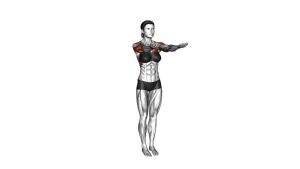
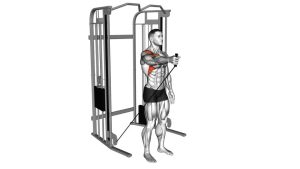
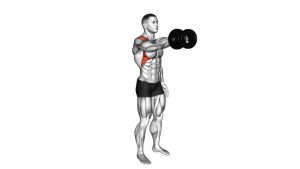
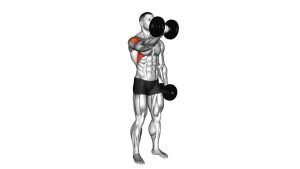
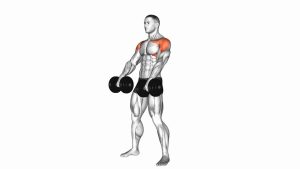
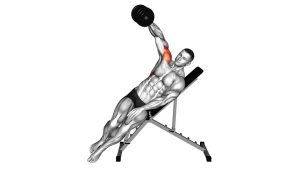
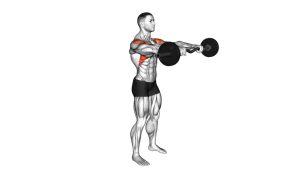
Supported Leaning Single-Arm Dumbbell Front Raise: Form, Sets, Tips & FAQ
Learn the Supported Leaning Single-Arm Dumbbell Front Raise for front delt isolation, better shoulder control, and strict form. Includes setup, execution, sets by goal, common mistakes, FAQs, and recommended equipment.
Supported Leaning Single-Arm Dumbbell Front Raise
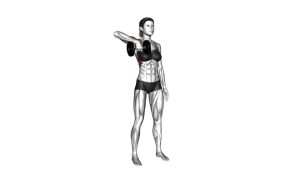
This variation is especially useful for lifters who want better mind-muscle connection, more controlled reps, and less cheating than a traditional standing front raise. The support hand improves balance, while the leaning setup helps the working arm move freely without excess trunk motion. You should feel the exercise mostly in the front of the shoulder, with minimal trap shrugging or swinging.
Quick Overview
| Body Part | Front Shoulders |
|---|---|
| Primary Muscle | Anterior deltoid (front deltoid) |
| Secondary Muscle | Upper chest (clavicular fibers), serratus anterior, rotator cuff stabilizers |
| Equipment | One dumbbell and a stable rack, post, or upright support |
| Difficulty | Beginner to Intermediate |
Sets & Reps (By Goal)
- Muscle building: 3–4 sets × 10–15 reps per arm, 45–75 sec rest
- Shoulder control / technique: 2–3 sets × 8–12 reps per arm, slow tempo, 45–60 sec rest
- Lighter burnout / finisher: 2–3 sets × 12–20 reps per arm, short rest, strict form
- Beginner practice: 2–3 sets × 8–10 reps per arm using a light dumbbell and smooth reps
Progression rule: Increase reps first, then load. If form breaks, traps take over, or you start swinging, reduce the weight and keep the motion cleaner.
Setup / Starting Position
- Grab support: Hold a sturdy rack, pole, or upright with your non-working hand.
- Lean slightly back or away: Position your feet so your body creates a stable angled stance without overextending your lower back.
- Hold one dumbbell: Let the working arm hang down in front of the thigh with a neutral or slightly pronated grip.
- Set your posture: Keep the chest tall, ribs down, shoulders level, and core lightly braced.
- Soften the elbow: Maintain a slight elbow bend and keep it consistent throughout the rep.
Tip: The support should improve stability, not let you twist or yank your body into position. Stay controlled from the start.
Execution (Step-by-Step)
- Start from the bottom: Let the dumbbell hang in front of the thigh with the shoulder packed and neck relaxed.
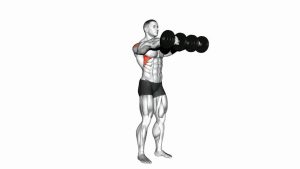
- Raise the dumbbell forward: Lift the arm in a controlled arc directly in front of the body.
- Lead with the shoulder: Keep the torso still and avoid using hip drive or body swing to move the weight.
- Stop around shoulder height: Bring the dumbbell to about parallel with the floor, or slightly below if that feels better on your joints.
- Pause briefly: Squeeze the front delt for a moment without shrugging the shoulder upward.
- Lower slowly: Bring the dumbbell back down under control to the starting position.
- Repeat evenly: Perform all reps on one side, then switch arms.
Pro Tips & Common Mistakes
- Use the support for balance, not momentum: Don’t pull yourself around with the non-working arm.
- Keep the rep strict: A lighter dumbbell with clean tension is better than a heavier one with swinging.
- Stop near shoulder height: Going much higher often shifts stress away from the front delt and into compensation patterns.
- Don’t shrug: Keep the traps quiet so the anterior delt stays the main driver.
- Maintain a slight elbow bend: Too much bend turns the movement into a front curl hybrid.
- Control the lowering phase: The eccentric portion is where a lot of valuable shoulder tension happens.
- Stay square: Avoid rotating the torso open as the dumbbell rises.
FAQ
What muscles does the Supported Leaning Single-Arm Dumbbell Front Raise work?
It mainly targets the anterior deltoid, which is the front part of the shoulder. Secondary muscles include the upper chest and stabilizers that help control the shoulder joint and scapula.
Why use support during a front raise?
External support improves balance and reduces momentum, making it easier to focus on strict shoulder flexion. This often improves front delt activation and overall rep quality.
How high should I lift the dumbbell?
In most cases, lifting to about shoulder height is enough. Going much higher can encourage shrugging or compensation and may reduce the quality of the isolation.
Is this better than a regular standing front raise?
It can be better for lifters who struggle with swinging or want more controlled front delt isolation. The support and lean angle make it easier to stay strict and keep tension where you want it.
Should I train one arm at a time?
Yes. This exercise works very well as a unilateral movement because it helps you focus on one shoulder at a time, spot side-to-side imbalances, and improve control on each rep.
Recommended Equipment (Optional)
- Adjustable Dumbbells — ideal for progressing front raise load gradually without needing a full rack of weights
- Rubber Hex Dumbbell — a stable, easy-to-handle option for strict single-arm shoulder isolation work
- Power Rack — provides the sturdy support point needed for this leaning variation
- Weightlifting Gloves — can improve grip comfort when using one hand for support and one for the dumbbell
- Adjustable Weight Bench — useful for pairing this exercise with other seated or supported shoulder movements in the same workout
Tip: For isolation movements like this, a modest weight jump can change the feel of the exercise a lot. Small load increments usually work best.