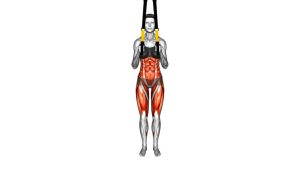
Suspended Jump Squat: Assisted Plyometric Squat Form, Benefits, Sets & Tips
Learn the Suspended Jump Squat to build lower-body power, soft landing control, and squat mechanics using straps for balance and support.
Suspended Jump Squat
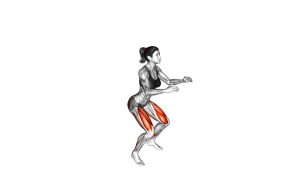
This exercise is useful when you want the benefits of a jump squat while reducing some of the balance demand and impact stress. Because the hands hold the straps, the body can stay more upright during the descent and landing. This makes the movement helpful for beginners learning plyometrics, athletes refining landing control, and lifters adding a conditioning-focused squat variation.
Quick Overview
| Body Part | Legs |
|---|---|
| Primary Muscle | Quadriceps and glutes |
| Secondary Muscle | Hamstrings, calves, hip stabilizers, core, shoulders and arms for strap control |
| Equipment | Suspension trainer / straps |
| Difficulty | Beginner to Intermediate |
Sets & Reps (By Goal)
- Beginner technique: 2–3 sets × 5–8 reps with full control between jumps.
- Power development: 3–5 sets × 4–6 reps with explosive effort and complete recovery.
- Conditioning: 3–4 sets × 10–15 reps at a smooth, repeatable rhythm.
- Landing control practice: 2–4 sets × 5–8 reps with a soft landing and short reset after each rep.
Progression rule: Improve landing quality first. Then increase reps, reduce strap assistance, or increase jump height. Do not progress if the knees cave inward or the landing becomes loud and stiff.
Setup / Starting Position
- Anchor the straps securely: Set the suspension trainer at a stable overhead anchor point.
- Hold both handles: Stand facing the anchor with one handle in each hand.
- Set your feet: Place your feet about shoulder-width apart with toes slightly turned out if comfortable.
- Create light strap tension: Lean back slightly until the straps feel supportive, not overly tight.
- Brace your core: Keep the ribs controlled, chest lifted, and shoulders relaxed.
- Prepare to squat: Keep your weight balanced through the midfoot and heel before starting the descent.
Your arms should guide balance. They should not dominate the movement or turn the jump into an upper-body pull.
Execution (Step-by-Step)
- Lower into a squat: Bend the hips and knees together while keeping the chest tall and the straps lightly tensioned.
- Reach a controlled bottom position: Lower until your thighs approach parallel or until your best pain-free squat depth.
- Drive upward: Push through the floor and extend the hips, knees, and ankles explosively.
- Jump off the floor: Allow both feet to leave the ground while keeping the body aligned and controlled.
- Use the straps lightly: Let the straps assist balance, but avoid pulling aggressively with the arms.
- Land softly: Contact the floor with control, then bend the knees and hips to absorb impact.
- Reset or repeat: Either pause briefly for quality or flow into the next rep with a smooth rhythm.
Pro Tips & Common Mistakes
- Use the straps for balance, not lifting: The legs should produce the jump.
- Land like a spring: Bend the knees and hips immediately after contact.
- Keep knees tracking with toes: Avoid letting the knees collapse inward during takeoff or landing.
- Stay tall through the chest: Do not round the back or fold forward excessively.
- Control the bottom position: Do not bounce loosely into the squat.
- Avoid maximal jump height too early: Master soft landings before jumping higher.
- Keep the rhythm clean: Quality reps matter more than rushing through high reps.
FAQ
What muscles does the Suspended Jump Squat work?
The Suspended Jump Squat primarily works the quadriceps and glutes. It also trains the hamstrings, calves, core, and hip stabilizers. The arms and shoulders help maintain strap tension and balance.
Is the Suspended Jump Squat good for beginners?
Yes. It can be beginner-friendly because the straps provide balance and reduce some landing stress. Beginners should start with low jumps, slow landings, and controlled reps before increasing speed or height.
Should I pull hard on the suspension straps?
No. The straps should assist balance, not replace leg power. If your arms are doing most of the work, reduce the jump height and focus on pushing through the legs.
How deep should I squat?
Squat to a depth you can control without pain or knee collapse. Many people use a depth around parallel, but a slightly higher squat is acceptable when learning the movement.
Is this exercise good for fat loss or conditioning?
It can be useful in conditioning circuits because it combines leg power, repeated jumping, and full-body coordination. Keep the reps smooth and controlled rather than turning the movement into sloppy bouncing.
Who should avoid this exercise?
People with current knee, ankle, hip, or lower-back pain should be cautious with jumping exercises. If impact causes discomfort, use a regular suspension squat or assisted squat before adding the jump.
Recommended Equipment
- Suspension Trainer System — the main tool for performing suspended jump squats with balance support.
- Suspension Trainer Door Anchor — useful for setting up straps at home when a secure overhead anchor is not available.
- Non-Slip Exercise Mat — helps provide stable foot contact and light cushioning during landing practice.
- Cross-Training Shoes — supportive footwear for jumping, landing, and lower-body conditioning drills.
- Foam Roller — helpful for warming up the quads, glutes, calves, and hips before plyometric training.
Tip: Choose equipment that improves control and safety. A secure strap setup and stable floor surface are more important than jumping higher.