Dumbbell Plyo Squat: Explosive Form, Sets, Tips & FAQ
Learn the Dumbbell Plyo Squat to build explosive leg power, stronger glutes, and athletic conditioning with safe form, sets, tips, and equipment.
Dumbbell Plyo Squat
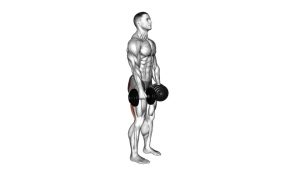
This exercise begins in a standing position with a dumbbell held in each hand at the sides. You lower into a controlled partial-to-moderate squat, then drive through the floor and jump vertically using strong hip, knee, and ankle extension. The dumbbells stay close to the body, the torso remains controlled, and the landing should be quiet, balanced, and athletic.
Quick Overview
| Body Part | Legs |
|---|---|
| Primary Muscle | Quadriceps and Glutes |
| Secondary Muscle | Hamstrings, Calves, Core, Adductors, Spinal Stabilizers, Forearms / Grip |
| Equipment | Pair of Dumbbells |
| Difficulty | Intermediate — best for users with good squat form and landing control |
Sets & Reps (By Goal)
- Explosive power: 3–5 sets × 3–6 reps, resting 90–150 seconds between sets.
- Athletic conditioning: 3–4 sets × 8–10 reps, resting 60–90 seconds between sets.
- Lower-body finisher: 2–3 sets × 10–12 reps with light dumbbells and clean landings.
- Beginner progression: Start with bodyweight jump squats before adding dumbbells.
Progression rule: Improve jump quality before increasing weight. If jump height drops, landing becomes noisy, or posture breaks, the dumbbells are too heavy or the set is too long.
Setup / Starting Position
- Stand tall: Place your feet about shoulder-width apart with toes slightly turned out.
- Hold the dumbbells: Keep one dumbbell in each hand with arms hanging naturally at your sides.
- Brace your core: Keep your ribs controlled, chest lifted, and spine neutral.
- Set your knees: Keep knees aligned with toes before you begin the descent.
- Prepare to move fast: Stay relaxed but athletic. The movement should feel springy, not stiff.
Use a lighter load than a normal dumbbell squat. Plyometric exercises depend on speed, coordination, and clean landing mechanics.
Execution (Step-by-Step)
- Lower into the squat: Bend your knees and hips together while keeping the dumbbells stable at your sides.
- Load the legs: Descend to a partial or moderate squat depth where you can still explode upward quickly.
- Drive through the floor: Push hard through the midfoot and extend the hips, knees, and ankles.
- Jump vertically: Leave the floor with control while keeping the torso tall and the dumbbells close to your body.
- Land softly: Touch down on the balls of the feet, then let the heels settle as the knees and hips bend.
- Absorb the landing: Drop back into a controlled squat position and prepare for the next repetition.
- Repeat with rhythm: Keep each rep powerful, stable, and quiet. Do not rush sloppy jumps.
Pro Tips & Common Mistakes
- Use light dumbbells: Heavy loads reduce jump speed and increase landing stress.
- Do not squat too deep: A moderate depth is usually better for explosive power.
- Land quietly: Loud landings usually mean poor force absorption.
- Keep the knees tracking out: Avoid letting the knees cave inward during takeoff or landing.
- Do not swing the dumbbells: Keep the arms long and stable so the legs produce the power.
- Keep the torso controlled: Avoid excessive forward lean, back rounding, or over-arching.
- Stop before fatigue ruins form: Plyometric quality matters more than high-rep exhaustion.
FAQ
What is the Dumbbell Plyo Squat good for?
It is useful for building explosive leg power, improving lower-body athleticism, training jump mechanics, and adding intensity to dumbbell leg workouts.
Is the Dumbbell Plyo Squat the same as a Dumbbell Jump Squat?
Yes. Both names describe a weighted squat jump performed with dumbbells held at the sides. “Plyo squat” emphasizes the explosive plyometric nature of the movement.
How heavy should the dumbbells be?
Use light-to-moderate dumbbells. The load should allow you to jump quickly, land softly, and keep your knees and spine controlled on every repetition.
Should beginners do this exercise?
Beginners should first master bodyweight squats, bodyweight jump squats, and soft landing mechanics. Add dumbbells only when control and balance are consistent.
Where should I feel this exercise?
You should feel strong work in the quads, glutes, calves, and core. You should not feel sharp knee pain, lower-back pain, or uncontrolled impact during landing.
Recommended Equipment
- Hex Dumbbells — stable, durable dumbbells for loaded jump squat training
- Adjustable Dumbbells — useful for changing load as power and control improve
- Non-Slip Exercise Mat — adds grip and comfort for home plyometric workouts
- Cross-Training Shoes — supportive footwear for jumping, landing, and lateral stability
- Foam Roller — helpful for warming up and recovering the quads, glutes, and calves
Tip: Choose equipment that helps you move safely and explosively. For this exercise, lighter dumbbells and better landing control are more valuable than heavy weight.