Dumbbell Cross-Body Hammer Curl: Proper Form, Sets, Tips & FAQ
Learn the Dumbbell Cross-Body Hammer Curl for stronger forearms, brachialis development, and thicker arms. Includes form tips, sets by goal, common mistakes, FAQs, and recommended equipment.
Dumbbell Cross-Body Hammer Curl
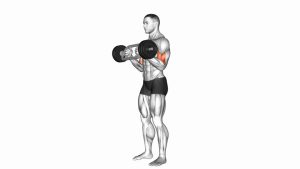
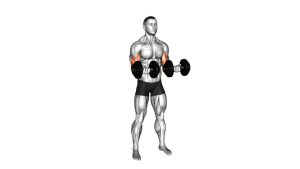
This exercise works best when the torso stays still, the wrist stays neutral, and the elbow remains close to the side. The goal is not to swing the weight, but to create steady tension through the forearm and upper arm as the dumbbell travels across the body. A controlled eccentric and a brief squeeze near the top can make each rep more effective.
Quick Overview
| Body Part | Forearms |
|---|---|
| Primary Muscle | Brachioradialis |
| Secondary Muscle | Brachialis, Biceps Brachii |
| Equipment | Dumbbell |
| Difficulty | Beginner to Intermediate |
Sets & Reps (By Goal)
- Muscle growth: 3–4 sets × 8–12 reps per arm, 60–90 sec rest
- Forearm strength: 4–5 sets × 6–10 reps per arm, 75–120 sec rest
- Technique practice: 2–3 sets × 10–15 reps per arm, light load, slow tempo
- Arm-finisher work: 2–3 sets × 12–15 reps per arm, short rest, controlled squeeze
Progression rule: Add reps first, then increase dumbbell weight once you can keep the elbow stable, avoid torso sway, and control the lowering phase on every rep.
Setup / Starting Position
- Stand tall: Place your feet about hip- to shoulder-width apart and brace your core.
- Hold one dumbbell at your side: Use a neutral grip with the thumb pointing forward.
- Keep posture clean: Chest up, shoulders relaxed, and head in a neutral position.
- Set the elbow: Let the working elbow stay close to the ribcage without drifting forward too early.
- Start fully lengthened: Arm extended at your side with no aggressive lockout and no wrist bend.
Tip: Slightly squeezing the handle can improve control, but avoid over-gripping so hard that the forearm tenses before the rep even begins.
Execution (Step-by-Step)
- Brace and stay still: Tighten your core and keep the torso upright.
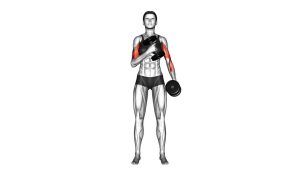
- Initiate the curl: Bend the elbow and begin lifting the dumbbell diagonally across the body.
- Keep the grip neutral: Do not rotate the wrist into a supinated curl; keep the thumb-up hand position.
- Guide the dumbbell toward the opposite shoulder: The path should be smooth and slightly inward, not wide and sloppy.
- Squeeze near the top: Pause briefly when the forearm is fully curled without letting the shoulder take over.
- Lower under control: Reverse the motion slowly along the same path until the arm is nearly straight again.
- Repeat evenly: Complete all reps on one side or alternate arms while keeping the same tempo on both.
Pro Tips & Common Mistakes
- Keep the wrist neutral: Avoid curling the wrist up or letting it fold backward.
- Do not swing: Momentum reduces tension on the target muscles and shifts work away from the arm.
- Don’t flare the elbow too much: A little natural movement is fine, but excessive shoulder takeover weakens the curl.
- Control the eccentric: Lowering too fast wastes one of the most productive parts of the rep.
- Use full useful range: Start from a stretched bottom and curl high enough to feel a strong contraction without cramming the shoulder forward.
- Train both arms evenly: Match reps and tempo from side to side to avoid strength imbalances.
- Pair it intelligently: This move works well after standard curls, reverse curls, or other forearm-focused training.
FAQ
What muscles does the dumbbell cross-body hammer curl work most?
It mainly targets the brachioradialis and brachialis, with additional contribution from the biceps brachii. It is a great option for building thicker-looking upper arms and stronger forearms.
Is this better than a regular hammer curl?
Not necessarily better for everyone, but the cross-body path can feel more comfortable and can emphasize the forearm-focused curl pattern in a slightly different way. It is excellent as either a main hammer-curl variation or a secondary accessory movement.
Should I do this one arm at a time or alternating?
Both options work. One arm at a time often makes it easier to focus on clean technique, while alternating reps can be efficient in higher-volume arm sessions.
How heavy should I go on cross-body hammer curls?
Use a weight that lets you keep your torso quiet, your wrist straight, and the lowering phase controlled. If you need to swing or lean back, the dumbbell is too heavy.
Where should I place this exercise in my workout?
It fits well in an arm day, upper-body session, or after heavier pulling work. Many lifters place it after standard curls or rows to add focused forearm and brachialis volume.
Recommended Equipment
- Adjustable Dumbbells — the most practical choice for progressive overload as your curl strength improves
- Thick Dumbbell Grips / Fat Grips — useful if you want extra grip and forearm demand during hammer curl variations
- Wrist Wraps — can help support wrist position if your wrists fatigue before your arms do
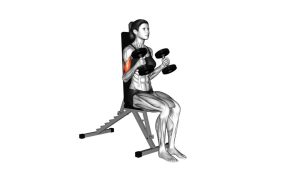
- Adjustable Weight Bench — helpful for seated dumbbell curl work and other arm-training variations in the same session
- Weightlifting Gloves — optional comfort tool for lifters who want more grip padding during high-volume dumbbell work
Tip: For this exercise, the best first investment is usually a solid dumbbell setup. Thick grips can be a useful second add-on if your goal is even more forearm and grip emphasis.