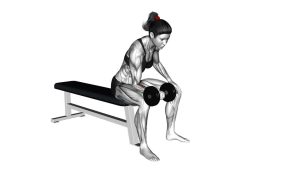
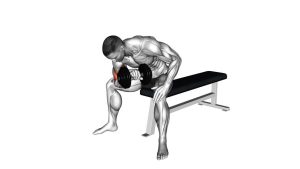
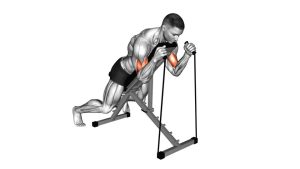
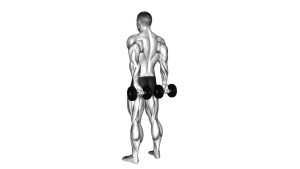
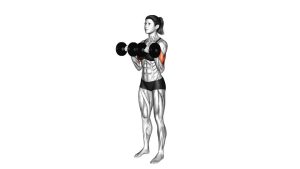
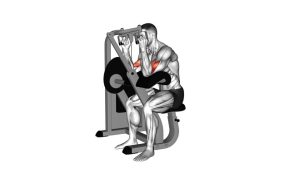
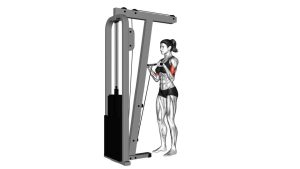
Dumbbell Preacher Hammer Curl: Proper Form, Sets, Tips & FAQ
Learn the Dumbbell Preacher Hammer Curl with proper form, forearm-focused technique, sets and reps by goal, common mistakes, FAQs, and recommended Amazon equipment for better arm training.
Dumbbell Preacher Hammer Curl
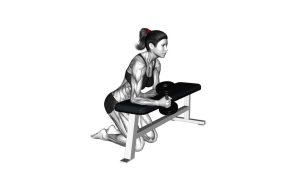
This variation works best when performed with strict form and moderate loads. Because the upper arm is supported on the pad, cheating is minimized and the elbow flexors have to do more of the work. You should feel tension through the front of the upper arm and the top/outer area of the forearm, not strain in the wrist or shoulder.
Quick Overview
| Body Part | Forearms |
|---|---|
| Primary Muscle | Brachioradialis |
| Secondary Muscle | Brachialis, Biceps Brachii |
| Equipment | Dumbbell, preacher bench |
| Difficulty | Beginner to Intermediate |
Sets & Reps (By Goal)
- Muscle growth: 3–4 sets × 8–12 reps with controlled tempo and 60–90 sec rest
- Forearm emphasis: 3–4 sets × 10–15 reps with a 2–3 sec lowering phase
- Strength-focused accessory work: 3–5 sets × 6–8 reps with heavier weight and full control
- Finisher / pump work: 2–3 sets × 12–20 reps using light-to-moderate weight
Progression rule: Add reps first while keeping the wrist neutral and the upper arm glued to the pad. Increase load only when you can control both the top squeeze and the eccentric.
Setup / Starting Position
- Adjust the bench: Set the preacher pad so your armpit sits comfortably near the top edge while the upper arm stays fully supported.
- Grab one dumbbell: Hold it with a neutral grip so your palm faces inward.
- Plant your body: Sit tall with your chest against the bench and your working arm draped over the pad.
- Start near full extension: Let the arm extend downward without aggressively locking out the elbow.
- Set the wrist: Keep it straight and stacked with the forearm before starting the curl.
Tip: A proper bench height makes a huge difference. If your elbow feels jammed or your shoulder lifts, adjust the seat or pad before you begin.
Execution (Step-by-Step)
- Brace and stay still: Keep your torso quiet and your upper arm fixed against the preacher pad.
- Curl the dumbbell upward: Bend at the elbow only, bringing the weight up in a smooth arc while keeping the hammer grip.
- Keep the wrist neutral: Do not curl the wrist or let it bend backward as the dumbbell rises.
- Squeeze at the top: Pause briefly when you reach peak contraction without lifting the elbow off the pad.
- Lower under control: Slowly return the dumbbell to the starting position and maintain tension through the descent.
- Repeat evenly: Use the same range of motion and tempo on every rep instead of rushing the bottom half.
Pro Tips & Common Mistakes
- Keep the upper arm pinned: Lifting the elbow off the pad reduces isolation and turns the rep sloppy.
- Use a true hammer grip: Don’t rotate into a fully supinated curl if your goal is forearm and brachialis emphasis.
- Control the eccentric: The lowering phase is where a lot of the growth stimulus comes from.
- Don’t overload too early: Heavy dumbbells often cause wrist bending and shortened range of motion.
- Avoid bouncing off the bottom: Start each rep smoothly instead of jerking out of the stretched position.
- Train both arms evenly: Match reps and tempo side to side to avoid strength imbalances.
FAQ
What muscles does the Dumbbell Preacher Hammer Curl work most?
It primarily emphasizes the brachioradialis and brachialis, while the biceps still assist with elbow flexion. The hammer grip shifts more attention toward the forearm-side elbow flexors than a standard supinated curl.
Is this more of a biceps exercise or a forearm exercise?
It trains both, but this variation is especially useful when you want more forearm and brachialis involvement. The preacher pad keeps the movement strict, and the hammer grip helps bias the forearm side of the arm more than a traditional curl.
Should I use one arm or both arms?
One arm at a time is often easier for focus and control, especially if you’re trying to perfect technique or correct side-to-side differences. A bilateral version can also work if you have the right setup.
How heavy should I go?
Use a weight that lets you keep the wrist straight, the upper arm fixed, and the eccentric controlled. If you need to swing, twist, or shorten the rep, it’s too heavy.
Can beginners use this exercise?
Yes. It’s a beginner-friendly isolation movement as long as the load stays manageable and form stays strict. Start light, learn the path of motion, and progress gradually.
Recommended Equipment (Optional)
- Dumbbells — the main tool for performing the exercise with progressive loading
- Preacher Curl Bench — provides upper-arm support to reduce cheating and isolate the curl
- Fat Grips / Thick Grip Adapters — can increase grip demand and make the forearms work even harder
- Wrist Wraps — useful if you want extra wrist support during heavier arm training
- Adjustable Weight Bench — helpful for home gyms and pairs well with arm isolation accessories
Tip: For the cleanest form, prioritize a stable bench and a dumbbell weight you can lower under full control.