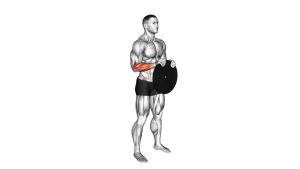
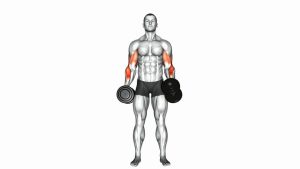
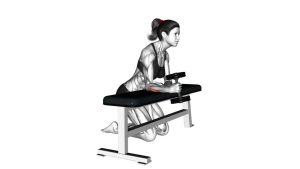
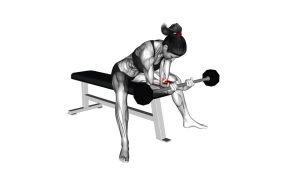
Dumbbell Seated Neutral Wrist Curl: Form, Sets, Benefits & FAQ
Learn how to do the Dumbbell Seated Neutral Wrist Curl with proper form. Discover forearm muscle focus, setup, execution steps, sets and reps by goal, common mistakes, FAQs, and recommended equipment.
Dumbbell Seated Neutral Wrist Curl
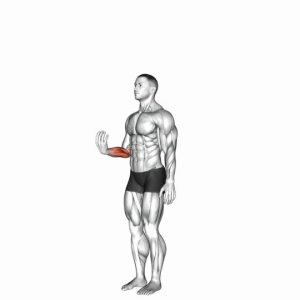
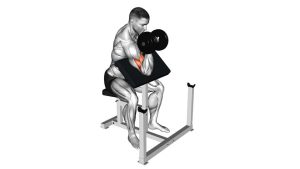
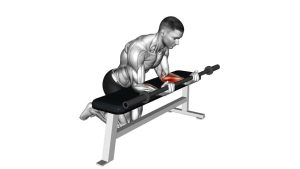
This exercise works best with strict positioning and deliberate tempo. The upper arm and forearm should stay quiet while the wrist does the work. You should feel the effort in the forearm muscles, not in the shoulder or lower back. Because the range of motion is small, quality matters more than load. A controlled dumbbell and a full stretch at the bottom usually produce a better stimulus than using too much weight.
Quick Overview
| Body Part | Forearms |
|---|---|
| Primary Muscle | Forearm flexors |
| Secondary Muscle | Wrist stabilizers, brachioradialis, grip muscles |
| Equipment | Single dumbbell and a bench or seated thigh support |
| Difficulty | Beginner |
Sets & Reps (By Goal)
- Muscle growth: 3–4 sets × 10–15 reps per arm with 45–75 seconds of rest
- Forearm endurance: 2–4 sets × 15–25 reps per arm with 30–60 seconds of rest
- Strength emphasis: 3–5 sets × 6–10 reps per arm with 60–90 seconds of rest
- Finisher work: 2–3 sets × 12–20 reps per arm using slow eccentrics and constant control
Progression rule: First improve range of motion, tempo, and control. Then increase reps. Add load only when you can keep the forearm planted and move the dumbbell without momentum.
Setup / Starting Position
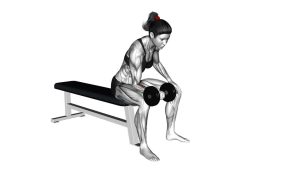
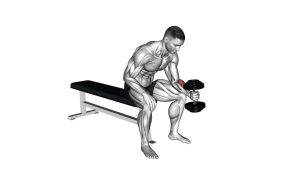
- Sit on a bench: Sit tall with your feet flat and posture stable.
- Hold one dumbbell: Grip the dumbbell in a neutral position so the thumb points upward.
- Brace the forearm: Rest the working forearm on your thigh near the knee so the wrist can move freely off the edge.
- Set the wrist at the bottom: Let the dumbbell hang into a controlled stretch without losing your grip.
- Stabilize the body: Keep the shoulder relaxed and the elbow quiet throughout the set.
Tip: Keep the wrist just beyond the knee or edge of the thigh so the joint can move through a full, clean range.
Execution (Step-by-Step)
- Start from the stretch: With the forearm supported, allow the wrist to extend slightly downward under control.
- Flex the wrist upward: Curl the dumbbell by moving only at the wrist joint.
- Squeeze at the top: Pause briefly when you reach peak contraction without twisting the hand.
- Lower slowly: Return the dumbbell to the bottom with a smooth eccentric phase.
- Repeat evenly: Keep every rep controlled and avoid using body English to help the weight up.
Pro Tips & Common Mistakes
- Keep the forearm planted: The more stable the arm, the more isolated the forearm work becomes.
- Use wrist motion only: Do not turn it into an elbow curl or shoulder-assisted lift.
- Control the bottom stretch: Don’t let the dumbbell drop fast into extension.
- Stay neutral through the grip: Avoid unnecessary twisting or rotating during the rep.
- Don’t overload too soon: Wrist curls respond well to precision, not sloppy heavy reps.
- Train both sides evenly: Match reps and technique from arm to arm for balanced development.
- Use slower negatives: A 2–3 second lowering phase can increase tension without needing more weight.
FAQ
What does the dumbbell seated neutral wrist curl work?
It primarily targets the forearm flexors while also training the wrist stabilizers and grip-supporting muscles. The neutral grip slightly changes the feel compared with a fully supinated wrist curl.
Is this exercise good for bigger forearms?
Yes. When performed with full control, enough weekly volume, and progressive overload, it can be very effective for building forearm size and improving local muscular endurance.
Should I use heavy or light dumbbells?
Start lighter than you think. Forearm isolation exercises usually work best when you can control the stretch, the top squeeze, and the eccentric without swinging.
Can beginners do this exercise?
Yes. It is beginner-friendly because the setup is simple and the movement is easy to learn, provided you keep the load manageable and focus on strict wrist motion.
How is this different from a regular wrist curl?
The main difference is the neutral grip. Instead of turning the palm fully upward, you hold the dumbbell with the thumb up, which changes the hand position and can feel more natural for some lifters.
Recommended Equipment
- Adjustable Dumbbell — ideal for gradually increasing load as forearm strength improves
- Adjustable Weight Bench — gives you a stable place to sit and support your arm position
- Grip Strength Trainer — useful for extra hand and forearm work outside your main lifts
- Wrist Support Wraps — optional support if your wrists feel unstable during higher-volume training
- Fat Grip Dumbbell Attachments — can increase grip demand and add variety to forearm-focused training
Tip: For this exercise, a simple dumbbell and a stable seated setup are usually all you need. Extra accessories are helpful, but strict technique matters most.