Dumbbell Standing Hands Torsion: Forearm Rotation Form, Sets, Tips & FAQ
Learn the Dumbbell Standing Hands Torsion to train forearm pronation, supination, wrist control, and grip stability with proper form, sets, tips, FAQs, and equipment.
Dumbbell Standing Hands Torsion
This exercise is excellent for building stronger, more coordinated forearms because it trains rotation under load. The movement may look small, but it demands control from the wrist stabilizers, pronators, supinators, grip muscles, and elbow-supporting forearm tissues. It is especially useful for lifters, climbers, racket-sport athletes, combat-sport athletes, and anyone who wants better wrist control during pulling, gripping, curling, and pressing movements.
The key is to use a light-to-moderate dumbbell and move with intention. If the weight is too heavy, the elbows will bend, the shoulders will swing, or the wrists will collapse. A clean rep should look calm, compact, and controlled from start to finish.
Quick Overview
| Body Part | Forearms |
|---|---|
| Primary Muscle | Forearm pronators and supinators |
| Secondary Muscle | Wrist stabilizers, brachioradialis, finger flexors, grip muscles |
| Equipment | Dumbbells |
| Difficulty | Beginner to Intermediate — simple movement, but requires strict control |
Sets & Reps (By Goal)
- Forearm control: 2–3 sets × 10–15 slow rotations per side
- Grip and wrist stability: 3–4 sets × 8–12 reps with a 1–2 second pause at each end range
- Warm-up before upper-body training: 1–2 sets × 10–12 easy reps with light dumbbells
- Forearm hypertrophy accessory work: 3–4 sets × 12–20 controlled reps
- Rehab-style motor control: 2–3 sets × 6–10 reps using very light weight and slow tempo
Progression rule: Increase control before increasing weight. Add slower tempo, longer pauses, or extra reps first. Only use heavier dumbbells when the wrist stays neutral and the elbow does not move.
Setup / Starting Position
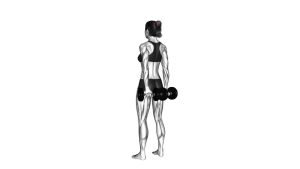
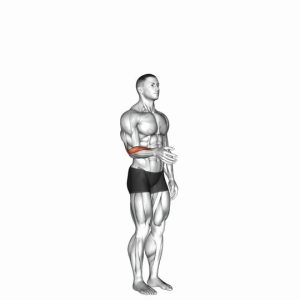
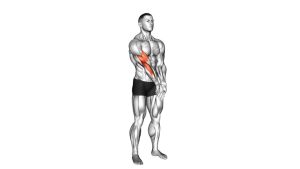
- Stand tall: Place your feet about hip-to-shoulder width apart with your ribs stacked and core lightly braced.
- Hold the dumbbells at your sides: Let your arms hang naturally with one dumbbell in each hand.
- Use a neutral grip: Start with palms facing inward and thumbs pointing forward.
- Lock in the elbows: Keep the elbows close to the body and slightly soft, not aggressively locked.
- Set the wrists: Keep the wrists straight. Avoid bending them upward, downward, or sideways.
- Relax the shoulders: Keep the traps down and avoid shrugging as the dumbbells rotate.
A lighter dumbbell usually works better for this exercise. The resistance becomes challenging because of the rotational control, not because you are lifting the dumbbell through a large range.
Execution (Step-by-Step)
- Begin from neutral: Stand tall with the dumbbells hanging at your sides and palms facing inward.
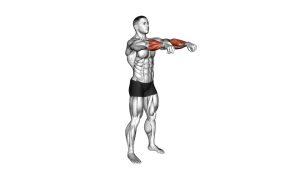
- Rotate the hands outward: Slowly turn the dumbbells so the palms begin to face forward. This is the supination portion of the movement.
- Pause briefly: Stop at a comfortable end range without forcing the wrist or twisting aggressively.
- Return through neutral: Rotate the hands back with control until the palms face inward again.
- Rotate the hands inward/backward: Continue the torsion pattern by turning the palms slightly backward or toward a pronated position, depending on your available range.
- Control the dumbbells: Keep the dumbbells from wobbling, swinging, or pulling your wrists out of alignment.
- Repeat smoothly: Move from supination to neutral to pronation with a slow, controlled rhythm.
Pro Tips & Common Mistakes
- Use light weight first: This is not a max-strength lift. Too much load usually causes compensation.
- Keep elbows still: If your elbows bend and straighten, the exercise turns into a curl instead of a torsion drill.
- Do not bend the wrists: The wrist should stay firm while the forearm rotates.
- Move slowly: A slow rotation builds more control than fast twisting.
- Avoid shoulder swing: Keep the upper arms quiet and the shoulders relaxed.
- Control both directions: Do not only focus on the twist out. The return phase should be just as strict.
- Stay within a pain-free range: Forearm rotation varies from person to person. Do not force extra range.
- Grip firmly but not excessively: Hold the dumbbells securely without crushing the handles so hard that the forearms fatigue too early.
FAQ
What muscles does the Dumbbell Standing Hands Torsion work?
This exercise mainly works the forearm pronators and supinators, including the pronator teres, pronator quadratus, and supinator. Supporting muscles include the wrist stabilizers, brachioradialis, finger flexors, and grip muscles.
Should I use heavy dumbbells for this exercise?
Heavy dumbbells are not recommended. Choose a light-to-moderate load that allows smooth rotation without elbow bending, shoulder swinging, or wrist collapse.
Where should I feel this movement?
Most of the effort should stay in the forearms and grip. Different areas may activate depending on whether you rotate into pronation or supination, but sharp wrist or elbow pain should not occur.
Is this exercise good for wrist stability?
Yes. Since the dumbbell creates rotational resistance, your wrist stabilizers must work to keep the wrist straight and controlled throughout the movement.
Can beginners do Dumbbell Standing Hands Torsion?
Beginners can perform this exercise safely by using very light dumbbells, shortening the range of motion, and focusing on slow, clean control before adding more reps or load.
What is the most common mistake?
The most common mistake is turning the movement into a curl or wrist bend. Keep the elbow mostly still and rotate from the forearm while the wrist stays straight.
Recommended Equipment
- Adjustable Dumbbells — ideal for changing resistance gradually as your forearm control improves
- Light Hex Dumbbells — stable, beginner-friendly option for strict wrist and forearm rotation drills
- Forearm Wrist Roller — useful for building additional wrist, grip, and forearm endurance
- Hand Grip Strengthener — supports grip strength that carries over to dumbbell control
- Wrist Wraps / Light Wrist Support — optional support for lifters who need extra wrist awareness during training
Tip: For this exercise, choose dumbbells that allow clean rotation without wrist collapse. Precision matters more than load.