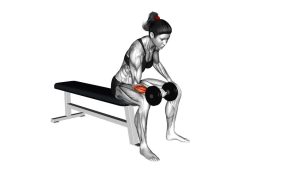
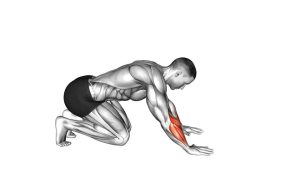
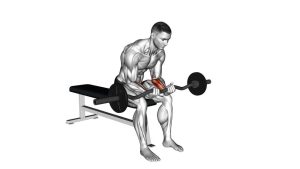
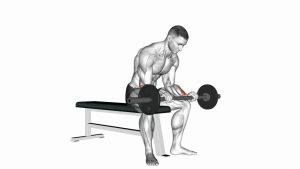
Cable Reverse Wrist Curl: Proper Form, Sets, Tips & FAQ
Learn how to do the Cable Reverse Wrist Curl with proper form to build stronger forearm extensors and improve wrist stability. Includes setup, execution, sets by goal, mistakes, FAQs, and recommended equipment.
Cable Reverse Wrist Curl
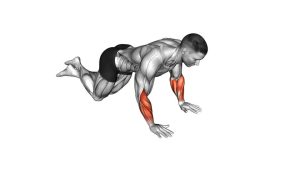
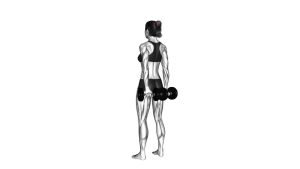
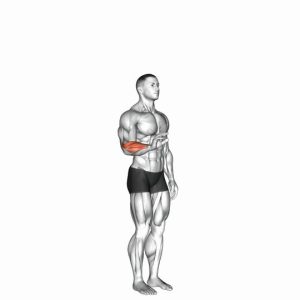
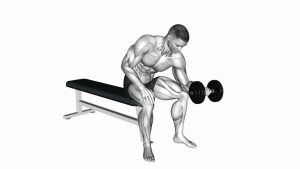
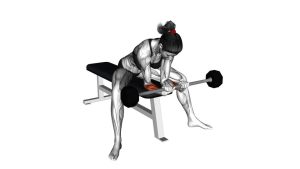
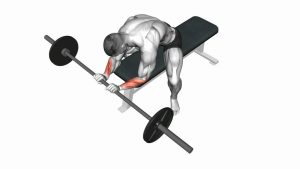
This exercise is best performed with precision rather than heavy weight. You should feel the work mainly across the top of the forearms as the wrists extend upward against cable resistance. Because the range of motion is naturally short, quality matters more than load. A smooth rep with a brief squeeze at the top will usually train the wrist extensors better than swinging or using momentum.
Quick Overview
| Body Part | Forearms |
|---|---|
| Primary Muscle | Forearm extensors |
| Secondary Muscle | Wrist stabilizers, brachioradialis, grip musculature |
| Equipment | Low cable machine with straight bar attachment |
| Difficulty | Beginner to Intermediate |
Sets & Reps (By Goal)
- Forearm muscle growth: 3–4 sets × 10–15 reps with controlled tempo and 45–75 sec rest
- Wrist strength and endurance: 2–4 sets × 12–20 reps with light-to-moderate load and 30–60 sec rest
- Warm-up or accessory work: 2–3 sets × 15–20 reps with very strict form
- Grip balance support: 2–3 sets × 12–15 reps paired with wrist curls or reverse curls
Progression rule: First improve rep quality, then add reps, then increase load slightly. Small muscles respond better to clean tension than aggressive loading.
Setup / Starting Position
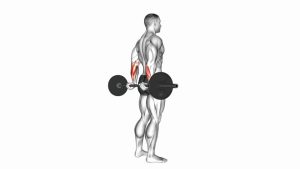
- Attach a straight bar to a low cable pulley and stand facing the machine.
- Take a pronated grip (palms down) around shoulder width apart.
- Stand tall with chest up, shoulders relaxed, and feet about hip-width apart.
- Let the bar rest near your upper thighs with arms extended and elbows close to the body.
- Start with neutral wrists and light tension from the cable before beginning the first rep.
Tip: Use a lighter load than you think you need. Wrist extension work becomes sloppy quickly when the weight is too heavy.
Execution (Step-by-Step)
- Brace your posture: Keep your torso still, elbows quiet, and bar close to the thighs.
- Lift with the wrists: Extend your wrists upward without bending the elbows or swinging the shoulders.
- Squeeze at the top: Pause briefly when your wrists reach peak extension and feel the forearm extensors contract.
- Lower under control: Slowly return the bar to the starting position instead of letting the cable pull it down.
- Repeat smoothly: Maintain even tempo and tension on every rep.
Pro Tips & Common Mistakes
- Use a short, clean range: Wrist extension exercises do not need a huge motion to be effective.
- Keep the bar close: Letting it drift away from the body makes control harder.
- Don’t turn it into a reverse curl: The elbows should stay mostly fixed throughout the set.
- Control the eccentric: Lowering slowly can improve tension and forearm engagement.
- Avoid excessive weight: Heavy loading often causes momentum and wrist irritation.
- Train balance: Pair reverse wrist curls with wrist flexion work and grip training for better forearm development.
FAQ
What muscles does the Cable Reverse Wrist Curl work?
It mainly targets the forearm extensors, which are responsible for extending the wrist. It also involves stabilizing muscles that help control grip and wrist alignment.
Is this better than doing reverse wrist curls with a barbell?
The cable version can provide more consistent tension through the rep, especially near the top. Many lifters also find it easier to control with lighter, more precise loading.
How heavy should I go on this exercise?
Start light. This is a small-muscle isolation movement, so clean reps and controlled tempo matter more than using a heavy stack.
Should I feel this in the top or bottom of my forearm?
You should mostly feel it on the top side of the forearm, where the wrist extensor muscles are located.
Can beginners do Cable Reverse Wrist Curls?
Yes. Beginners can use this exercise effectively as long as they keep the load light, use a strict wrist-only motion, and avoid swinging or overextending the wrists.
Recommended Equipment
- Straight Bar Cable Attachment — the most direct attachment for performing cable reverse wrist curls with stable hand placement
- Adjustable Wrist Wraps — useful for extra support during higher-volume forearm work if your wrists fatigue quickly
- Forearm Blaster Roller — a strong accessory tool for building wrist strength and forearm endurance outside cable work
- Hand Grip Strengthener Set — complements extensor work by improving grip strength and overall lower-arm development
- Resistance Bands Set — useful for wrist warm-ups, forearm activation, and light recovery work between heavier sessions
Tip: Choose tools that help you improve control and consistency. For forearm training, small progress done regularly works better than chasing heavy resistance too soon.