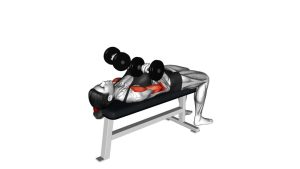
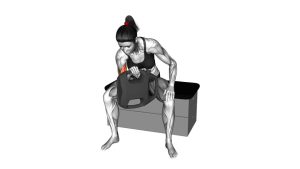
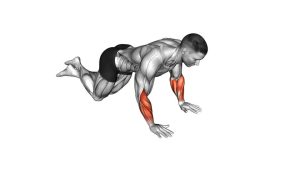
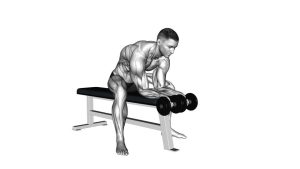
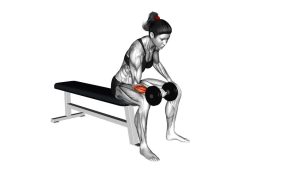
Dumbbell Over Bench Wrist Curl: Forearm Form, Sets, Tips & FAQ
Learn the Dumbbell Over Bench Wrist Curl to build forearm flexor strength, wrist control, and grip support with proper setup, execution, sets, mistakes, FAQs, and equipment.
Dumbbell Over Bench Wrist Curl
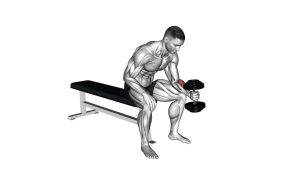
This exercise is excellent for building forearm size, improving wrist control, and supporting stronger grip performance in pulling movements, carries, curls, and deadlift variations. Because the bench stabilizes the forearm, the movement places direct tension on the wrist flexors without needing heavy weight.
Quick Overview
| Body Part | Forearms |
|---|---|
| Primary Muscle | Forearm flexors |
| Secondary Muscle | Finger flexors, wrist stabilizers, grip muscles |
| Equipment | Dumbbell and flat bench |
| Difficulty | Beginner |
Sets & Reps (By Goal)
- Forearm hypertrophy: 3–4 sets × 12–20 reps per side, 45–75 sec rest
- Grip support: 2–4 sets × 10–15 reps per side, controlled tempo
- Wrist control/endurance: 2–3 sets × 15–25 reps per side with light weight
- Beginner practice: 2 sets × 10–12 reps per side, slow and strict
Progression rule: Add reps first, then increase weight gradually. Wrist curls work best with control, not heavy swinging.
Setup / Starting Position
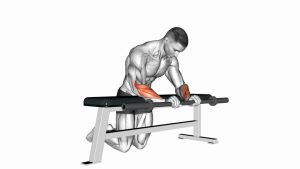
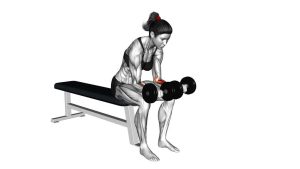
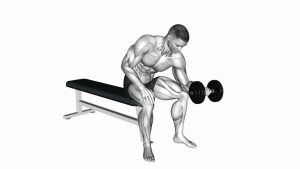
- Place a flat bench in front of you and stand or kneel behind it comfortably.
- Hold one dumbbell with an underhand grip, palm facing upward.
- Rest your working forearm on the bench with your wrist hanging just off the edge.
- Keep the elbow and forearm fully supported so only the wrist can move.
- Allow the dumbbell to lower slightly toward the floor for a controlled stretch in the forearm.
Your wrist should be free beyond the bench edge. If the wrist is resting on the bench, the range of motion will be blocked.
Execution (Step-by-Step)
- Start in the stretch: Let the wrist extend downward under control while keeping the forearm still.
- Curl the wrist up: Flex the wrist and lift the dumbbell using only your forearm muscles.
- Squeeze at the top: Pause briefly when the wrist reaches its highest comfortable position.
- Lower slowly: Return the dumbbell to the bottom position without dropping or bouncing.
- Repeat smoothly: Keep every rep strict, controlled, and isolated at the wrist.
Pro Tips & Common Mistakes
- Use a full but comfortable range: Lower into a stretch, then curl up without forcing the wrist.
- Keep the forearm pinned: Do not let the elbow lift from the bench.
- Avoid momentum: Swinging reduces forearm tension and can irritate the wrist.
- Control the lowering phase: The eccentric portion should be slow and deliberate.
- Do not overgrip: Hold the dumbbell securely, but avoid excessive hand tension that limits wrist motion.
- Train both sides evenly: Match reps and tempo on each arm to avoid strength imbalance.
FAQ
What muscles does the Dumbbell Over Bench Wrist Curl work?
It primarily targets the forearm flexors, which bend the wrist upward. It also involves the finger flexors and grip muscles as secondary stabilizers.
Should I use heavy weight for wrist curls?
Not usually. This exercise is most effective with a light-to-moderate dumbbell, controlled reps, and a strong squeeze at the top. Heavy weight often causes swinging and wrist discomfort.
How far should I lower the dumbbell?
Lower the dumbbell until you feel a comfortable stretch in the forearm. Do not force the wrist into an extreme position.
Can beginners do this exercise?
Yes. It is beginner-friendly when performed with light weight and strict form. Start with higher reps and slow tempo before increasing load.
Is this exercise good for grip strength?
Yes, it supports grip strength by strengthening the forearm and wrist flexor muscles. However, it works best when combined with carries, rows, pull-ups, and other grip-demanding exercises.
Recommended Equipment
- Adjustable Dumbbells — ideal for gradually progressing wrist curl resistance
- Flat Weight Bench — provides stable forearm support and proper wrist positioning
- Neoprene Dumbbell Set — great for beginners and higher-rep forearm training
- Wrist Wraps — useful for general lifting support, but avoid relying on them during isolation control work
- Grip Strengthener — complements wrist curls by improving hand and finger strength
Tip: For this exercise, a stable bench and a light dumbbell are enough. Choose equipment that allows smooth, pain-free wrist motion.