Cable Side Bend: Proper Form, Oblique Benefits, Sets, Tips & FAQ
Learn how to do the Cable Side Bend with proper form to train the obliques, improve lateral core strength, and build waist control. Includes setup, execution, mistakes, FAQs, and equipment.
Cable Side Bend
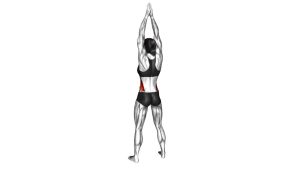
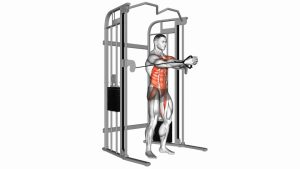
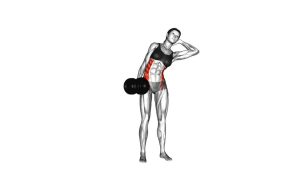
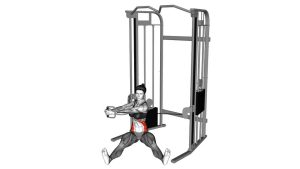
The Cable Side Bend is especially useful for targeting the external obliques, internal obliques, and deeper lateral core stabilizers. In the video, the movement starts from a tall standing position beside a low cable pulley. The athlete bends sideways away from the machine with control, reaches a short-to-moderate range of motion, then returns to a tall neutral position by contracting the obliques on the loaded side.
This exercise should feel controlled and precise. The cable handle should stay close to the side of the body, the arm should remain mostly straight, and the hips should stay square. If the body starts twisting, rocking, or using momentum, the load is too heavy or the range is too large. For the best result, treat the Cable Side Bend as a core isolation drill, not a heavy full-body pull.
Quick Overview
| Body Part | Obliques |
|---|---|
| Primary Muscle | External obliques and internal obliques |
| Secondary Muscle | Quadratus lumborum, transverse abdominis, rectus abdominis, spinal stabilizers, grip muscles |
| Equipment | Cable machine with single handle attachment |
| Difficulty | Beginner to Intermediate |
Sets & Reps (By Goal)
- Core control and technique: 2–3 sets × 10–12 reps per side using a slow tempo and light weight.
- Oblique hypertrophy: 3–4 sets × 10–15 reps per side with moderate resistance and a controlled squeeze at the top.
- Waist endurance: 2–4 sets × 15–20 reps per side with lighter weight and continuous smooth motion.
- Strength-focused core work: 3–5 sets × 8–10 reps per side using a heavier but still controlled load.
- Finisher option: 1–2 sets × 20 reps per side at the end of an ab or core workout.
Progression rule: Increase reps first, then add a small amount of cable weight. Do not increase the load if it causes twisting, hip shifting, shoulder pulling, or lower-back discomfort.
Setup / Starting Position
- Set the pulley low: Attach a single D-handle to the lowest cable setting. This creates the correct angle of resistance for a standing side bend.
- Stand beside the machine: Position your body sideways to the cable stack. The handle is usually held in the hand farthest from the machine, depending on the variation and cable direction you want to use.
- Grip the handle firmly: Keep the arm long and relaxed. Your hand should hold the cable, but the arm should not actively pull the weight.
- Set your stance: Place your feet about hip-width to shoulder-width apart. Keep your knees softly bent and your weight balanced across both feet.
- Brace your core: Keep your ribs stacked over your pelvis. Avoid flaring the ribs, arching the lower back, or leaning forward before the rep begins.
- Keep the shoulders level: Relax the traps and avoid shrugging. The torso should be tall, controlled, and ready to move sideways.
- Start from neutral: Begin fully upright with tension already in the cable. Do not start with slack in the cable line.
Setup quality matters. If your feet, hips, and ribs are not stable before the first rep, the movement will usually turn into a twist or swing instead of a clean side bend.
Execution (Step-by-Step)
- Begin tall: Stand upright with your chest open, shoulders relaxed, and the cable handle held close to your side.
- Bend sideways with control: Slowly allow your torso to move into lateral flexion. The movement should happen through the waist, not by shifting your hips or rotating your chest.
- Keep the hips stable: Your pelvis should stay square. Do not push one hip out aggressively or turn your body toward the cable machine.
- Reach a comfortable bottom position: Stop when you feel a strong stretch and tension through the obliques. Do not force extra range.
- Pause briefly: Hold the bottom position for a short moment to remove momentum and keep the movement strict.
- Pull back to upright: Contract the obliques on the loaded side to bring your torso back to neutral.
- Finish stacked: End each rep tall with the ribs over the pelvis. Do not lean past neutral in the opposite direction.
- Repeat smoothly: Continue for the target reps, then switch sides and match the same weight, reps, and tempo.
Pro Tips & Common Mistakes
Pro Tips
- Use a slow tempo: Lower for 2–3 seconds, pause briefly, then return to upright under control.
- Keep your arm passive: The hand holds the handle, but the obliques should drive the movement.
- Train both sides evenly: Match reps and load on each side to avoid strength imbalance.
- Brace before each rep: A light abdominal brace helps protect the lower back and keeps the motion cleaner.
- Use moderate range: You do not need an extreme side bend to make the exercise effective.
- Keep the neck neutral: Let your head follow your torso naturally without dropping or twisting.
Common Mistakes
- Going too heavy: Heavy weight often turns the movement into a shoulder pull or hip swing.
- Twisting the torso: Rotation changes the target and reduces direct oblique tension.
- Over-bending the spine: Excessive range may irritate the lower back, especially under load.
- Shrugging the shoulder: Keep the traps relaxed so the obliques do the work.
- Rushing the return: Snapping back to upright removes tension and increases injury risk.
- Leaning forward or backward: Stay in the frontal plane. The torso should bend sideways, not diagonally.
FAQ
What muscles does the Cable Side Bend work?
The Cable Side Bend mainly works the external obliques and internal obliques. It also involves the quadratus lumborum, transverse abdominis, rectus abdominis, spinal stabilizers, and grip muscles.
Is the Cable Side Bend good for building obliques?
Yes. Because the cable provides constant resistance, it can be very effective for oblique hypertrophy and lateral core strength. Use controlled reps, moderate weight, and avoid swinging to keep the tension on the waist.
Should I go heavy on Cable Side Bends?
You can use moderate resistance, but very heavy loading is usually not necessary. The goal is clean lateral flexion, not maximum weight. If heavy weight causes twisting, hip shifting, or lower-back discomfort, reduce the load.
How far should I bend during the exercise?
Bend only as far as you can while staying controlled and pain-free. A short-to-moderate range is usually enough. Do not force your spine into an extreme side bend just to increase range.
Can beginners do Cable Side Bends?
Yes. Beginners can perform this exercise safely when using light weight and slow reps. Start with 2–3 sets of 10–12 reps per side, and focus on posture, balance, and smooth control.
Is the Cable Side Bend better than dumbbell side bends?
Both exercises can train the obliques. The cable version offers smoother, more adjustable resistance and can keep tension more consistent. Dumbbell side bends are simpler, but cable side bends often feel more controlled when performed correctly.
Can Cable Side Bends reduce love handles?
Cable Side Bends strengthen and build the obliques, but they do not directly burn fat from one specific area. To reduce body fat around the waist, combine strength training with nutrition, full-body workouts, and consistent activity.
Recommended Equipment
- Single D-Handle Cable Attachment — the best basic handle for Cable Side Bends and many other cable exercises.
- Adjustable Cable Machine — useful for training cable side bends, rows, pulldowns, triceps work, and core exercises at home.
- Cable Attachment Strap Set — helpful for expanding cable exercise options beyond standard handles.
- Weightlifting Gloves — improves grip comfort when holding cable handles during higher-rep core work.
- Exercise Mat — useful for pairing Cable Side Bends with floor-based ab work such as planks, crunches, and leg raises.
Tip: For this exercise, the most important equipment is a smooth cable pulley and a comfortable single handle. Expensive gear is not required, but stable cable tension makes the movement easier to control.