Lever Back Extension: Proper Form, Muscles Worked, Sets, Tips & FAQ
Learn how to do the Lever Back Extension with safe form, proper setup, step-by-step execution, sets by goal, common mistakes, FAQs, and recommended equipment.
Lever Back Extension
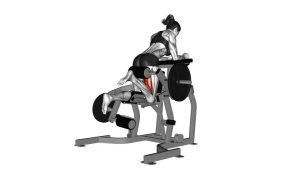
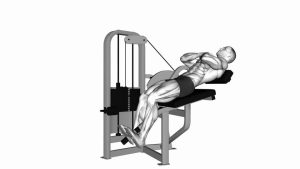
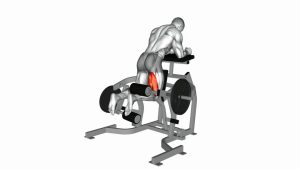
This exercise works best when the movement is steady, moderate, and deliberate. Instead of trying to throw the torso upward, focus on driving through the hips while keeping the spine long. As a result, the lower back works with the glutes and hamstrings rather than taking all the stress alone. In the video, the repetition starts from a slightly forward-flexed position, rises smoothly to neutral, and returns without dropping or bouncing.
Quick Overview
| Body Part | Lower Back |
|---|---|
| Primary Muscle | Erector spinae |
| Secondary Muscle | Glutes, hamstrings, deep spinal stabilizers, core stabilizers |
| Equipment | Lever back extension machine |
| Difficulty | Beginner to Intermediate |
Sets & Reps (By Goal)
- Lower-back endurance: 2–3 sets × 12–20 reps with light to moderate resistance.
- Strength development: 3–4 sets × 8–12 reps with controlled resistance and a brief top pause.
- Hypertrophy: 3–4 sets × 10–15 reps with a slow 2–3 second lowering phase.
- Warm-up activation: 1–2 sets × 10–12 reps using a light load before deadlifts, rows, or hip hinges.
- Technique practice: 2 sets × 8–10 reps with a smooth tempo and strict neutral-spine control.
Progression rule: First improve control, tempo, and range quality. Then, add resistance gradually only when every rep stays smooth.
Setup / Starting Position
- Adjust the machine: Set the pad so your hips can hinge comfortably without your lower back feeling compressed.
- Secure your lower body: Place your feet firmly on the platform and keep your hips stable against the support pads.
- Set the torso pad: Position the chest or upper-body pad so it supports your movement without forcing your shoulders to round.
- Brace lightly: Tighten your core as if preparing for a controlled hinge, but avoid holding your breath too early.
- Start forward: Begin with your torso slightly lowered, your spine long, and your neck aligned with the rest of your back.
A proper setup allows the hips and spine to move together. Therefore, do not rush the adjustment phase, especially when using the machine for the first time.
Execution (Step-by-Step)
- Begin from the lowered position: Keep your torso slightly forward while maintaining control through your hips and lower back.
- Start the lift smoothly: Drive your torso upward by extending through the hips and lower back together.
- Keep your head neutral: Look in line with your torso instead of pulling the chin up or dropping the head down.
- Reach neutral alignment: Stop when your shoulders, hips, and legs form a strong, straight line.
- Pause briefly: Squeeze the glutes lightly and feel the lower back engage without leaning too far backward.
- Lower under control: Return to the starting position slowly, allowing the posterior chain to lengthen under tension.
- Repeat cleanly: Begin the next rep only after the machine settles and your torso is stable.
Pro Tips & Common Mistakes
- Stop at neutral: Do not lean far backward at the top, because excessive hyperextension can irritate the lower back.
- Control the lowering phase: A slow eccentric makes the exercise more effective and reduces bouncing.
- Use your glutes: Lightly squeeze the glutes at the top so the lower back does not dominate every rep.
- Avoid momentum: If the machine swings or your torso snaps upward, the load is probably too heavy.
- Keep the ribs down: Over-flaring the ribs often turns the movement into a lower-back crank instead of a controlled extension.
- Do not round aggressively: A small forward lean is fine, but deep spinal rounding is not needed for most lifters.
- Breathe with control: Exhale as you rise, then inhale as you lower back to the starting position.
- Match the load to the goal: For endurance, use lighter resistance. For strength, use moderate resistance with stricter pauses.
FAQ
What muscles does the Lever Back Extension work?
The main target is the erector spinae, which runs along the spine and helps extend the back. However, the glutes and hamstrings also assist, especially when you drive through the hips and stop at a neutral top position.
Is the Lever Back Extension good for lower-back strength?
Yes. When performed with control, it can build lower-back endurance, spinal stability, and posterior-chain strength. Additionally, the machine support makes it easier to practice the movement without balancing on a free-standing hyperextension bench.
Should I go all the way back at the top?
No. For most people, the safest and most effective top position is neutral alignment. Going far past neutral may increase compression in the lower back without adding much benefit.
How heavy should I go on the Lever Back Extension?
Use a load that allows smooth reps, a controlled pause, and a slow lowering phase. If you need to jerk the machine upward or lose your neutral position, the resistance is too heavy.
Can beginners do this exercise?
Yes, beginners can use this exercise if the machine is adjusted correctly and the resistance is light. Nevertheless, beginners should prioritize small controlled reps before adding weight or increasing volume.
Is this exercise the same as a 45-degree back extension?
It trains a similar pattern, but the lever machine provides a guided resistance path. A 45-degree back extension uses bodyweight and gravity more directly, while the lever version allows more controlled loading.
Recommended Equipment
- Back Extension Machine — useful for lower-back and posterior-chain strength training at home or in a gym setup.
- 45-Degree Hyperextension Bench — a practical alternative for bodyweight back extensions and glute-focused variations.
- Adjustable Roman Chair — allows back extensions, side bends, and posterior-chain accessory work.
- Weight Plate — helpful for progressing back extensions once bodyweight reps become easy.
- Thick Exercise Mat — useful for warm-ups, mobility drills, and floor-based lower-back activation work.
Choose equipment that matches your space, training level, and stability needs. Also, avoid loading the movement heavily until your technique stays consistent.