Nordic Hamstring Curl: Form, Benefits, Sets, Tips & FAQ
Learn the Nordic Hamstring Curl for stronger hamstrings, better knee control, and injury prevention with setup, form cues, sets, tips, FAQs, and equipment.
Nordic Hamstring Curl
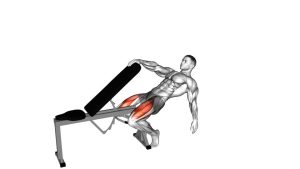
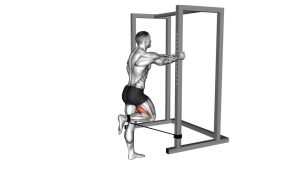
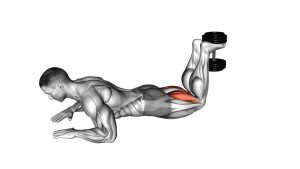
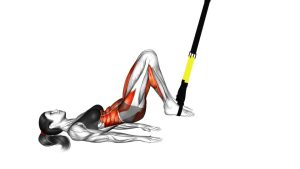
This exercise is best known for building strong, resilient hamstrings because it challenges the muscles while they lengthen under tension. It is commonly used by athletes to improve sprinting strength, knee control, posterior chain durability, and hamstring injury resistance. The most important technique rule is simple: keep a straight line from the knees to the head and avoid bending at the hips.
Quick Overview
| Body Part | Hamstrings |
|---|---|
| Primary Muscle | Hamstrings — biceps femoris, semitendinosus, and semimembranosus |
| Secondary Muscle | Glutes, calves, spinal erectors, and core stabilizers |
| Equipment | Bodyweight, ankle anchor, partner support, Nordic bench, or padded surface |
| Difficulty | Advanced — suitable after building basic hamstring strength and knee-control capacity |
Sets & Reps (By Goal)
- Strength development: 3–5 sets × 3–6 controlled reps with 90–150 seconds rest
- Eccentric hamstring control: 2–4 sets × 4–8 slow negatives with 2–5 seconds lowering time
- Injury-prevention training: 2–3 sets × 3–5 quality reps, 1–2 times per week
- Beginner progression: 2–3 sets × 3–6 partial-range reps using hands, band assistance, or an elevated catch surface
Progression rule: First improve control and range of motion. Add more reps only when you can lower slowly without hip bending, back arching, or collapsing early.
Setup / Starting Position
- Anchor your ankles: Secure your feet under a stable object, Nordic bench pad, barbell setup, or have a partner hold your ankles firmly.
- Kneel on padding: Place your knees on a soft mat or pad to reduce pressure and improve comfort.
- Start tall: Keep your knees, hips, shoulders, and head in one straight line.
- Brace lightly: Tighten your glutes and core to prevent your hips from folding backward or your lower back from arching.
- Prepare your hands: Keep your hands in front of your chest so you can safely catch yourself near the bottom.
Tip: If the full version is too difficult, place a box, bench, or stack of pads in front of you to shorten the range of motion.
Execution (Step-by-Step)
- Set the body line: Begin in a tall kneeling position with your ankles anchored and your torso upright.
- Lean forward slowly: Let your body move forward from the knees while keeping the hips extended.
- Resist the fall: Use your hamstrings to slow the descent for as long as possible.
- Keep the hips locked: Avoid sitting back, hinging at the hips, or bending the spine to make the movement easier.
- Catch with your hands: When you can no longer control the descent, place your hands on the floor to absorb the landing safely.
- Assist the return: Push lightly with your hands and use your hamstrings to help bring your body back to the starting position.
- Reset each rep: Return to a tall kneeling position before starting the next repetition.
Pro Tips & Common Mistakes
- Move slowly: The lowering phase is the main benefit. Do not drop quickly just to complete more reps.
- Keep your hips extended: Squeezing the glutes helps maintain a straight line from knees to shoulders.
- Use assistance when needed: A resistance band, hands, or elevated catch surface can make the movement safer and more productive.
- Do not chase full range too early: Partial reps with control are better than uncontrolled full reps.
- Avoid excessive lower-back arching: Brace your core and keep your ribs down.
- Protect your knees: Use a thick pad or folded mat under the knees.
- Limit frequency: This exercise can create strong soreness, so avoid doing it hard every day.
- Warm up first: Perform light hamstring curls, glute bridges, or dynamic leg swings before heavy Nordic work.
FAQ
What muscles does the Nordic Hamstring Curl work?
The Nordic Hamstring Curl primarily works the hamstrings, especially during the eccentric lowering phase. The glutes, calves, core, and spinal stabilizers also help keep the body aligned and controlled.
Is the Nordic Hamstring Curl good for injury prevention?
Yes. It is widely used in athletic training because it strengthens the hamstrings eccentrically, which is important for sprinting, deceleration, and knee-control demands. It should be progressed gradually because it is very intense.
Why do I fall forward near the bottom?
Falling near the bottom is normal because the lever arm becomes harder as your body gets closer to the floor. Use your hands to catch yourself and build more control over time.
Should beginners do Nordic Hamstring Curls?
Beginners can use modified versions, but the full Nordic Curl is usually advanced. Start with partial range, band assistance, or a raised landing surface before attempting the full movement.
How often should I train Nordic Curls?
Most people should start with 1–2 sessions per week. Because the eccentric load is high, give your hamstrings enough recovery time between sessions.
What is the biggest mistake during the Nordic Curl?
The biggest mistake is bending at the hips instead of keeping the body straight. This reduces hamstring tension and changes the movement into a less effective pattern.
Recommended Equipment (Optional)
- Nordic Hamstring Curl Bench — provides a stable ankle anchor and knee support for safer Nordic Curl training
- Nordic Curl Strap — a compact option for anchoring the feet under a door or stable setup
- Thick Exercise Knee Pad — protects the knees and improves comfort during kneeling exercises
- Resistance Bands Set — helps reduce bodyweight load and makes Nordic Curl progressions easier
- Thick Exercise Mat — adds floor comfort and cushioning for the knees, hands, and landing position
Tip: Choose equipment that allows a secure ankle anchor and comfortable knee position. Stability is more important than using maximum range too early.