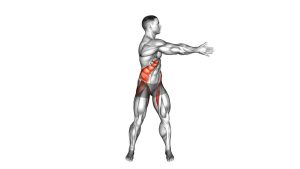
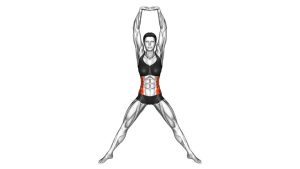
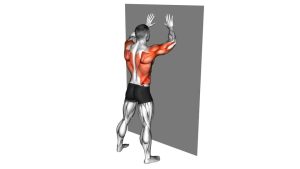
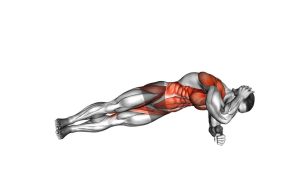
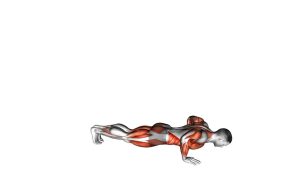
Standing Two-Side Bend: Form, Benefits, Sets, Tips & FAQ
Learn the Standing Two-Side Bend to stretch obliques, improve lateral core mobility, and build better posture with safe form, sets, tips, FAQs, and equipment.
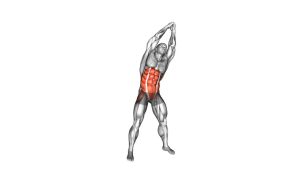
Standing Two-Side Bend
This exercise is useful as a warm-up, cool-down, desk-break reset, or beginner core mobility drill. Because it uses bodyweight only, it is easy to perform almost anywhere. However, the movement still requires good control. Each side bend should feel smooth, light, and balanced. You should feel a gentle stretch through the opposite side of your waist, not sharp pressure in the spine.
The standing two-side bend works best when the movement stays clean. Keep both feet grounded, avoid twisting, and return to the center with control after each side. A small range of motion is enough if you feel the side body lengthen and the core stay active.
Quick Overview
| Body Part | Obliques |
|---|---|
| Primary Muscle | Obliques |
| Secondary Muscle | Quadratus lumborum, intercostals, lower back stabilizers, transverse abdominis |
| Equipment | No equipment required |
| Difficulty | Beginner |
Sets & Reps (By Goal)
- Mobility warm-up: 2–3 sets × 8–12 reps per side with a slow, controlled tempo.
- Side-body flexibility: 2–4 sets × 20–30 seconds per side with relaxed breathing.
- Posture reset: 1–2 sets × 6–10 reps per side during desk breaks or light movement sessions.
- Core control practice: 3 sets × 8–10 reps per side, pausing briefly at the deepest comfortable position.
- Cool-down stretching: 2 sets × 20 seconds per side after core, back, or full-body workouts.
Progression rule: Improve control before increasing range. Once the movement feels smooth, you can slow the tempo, add a longer pause, or perform the exercise with one arm reaching overhead.
Setup / Starting Position
- Stand tall: Place your feet about hip-width apart with your weight balanced evenly.
- Set your posture: Keep your chest lifted, ribs gently stacked, and shoulders relaxed.
- Engage lightly: Brace your core just enough to keep the movement controlled.
- Position your arms: Keep your arms by your sides, place your hands near your hips, or raise one arm overhead for a deeper stretch.
- Look forward: Keep your head aligned with your spine instead of dropping the chin or looking down.
Tip: Start with a small range of motion. A controlled side bend is better than a deep bend with twisting, hip shifting, or lower-back compression.
Execution (Step-by-Step)
- Begin from center: Stand upright and take a calm breath before starting the movement.
- Bend to one side: Slowly lean your torso sideways while keeping both feet planted.
- Lengthen the opposite side: Feel a stretch through the ribs, waist, and obliques on the side moving away from the bend.
- Avoid rotation: Keep your chest facing forward. Do not twist toward the floor or open the torso backward.
- Pause briefly: Hold the deepest comfortable position for one to two seconds.
- Return to center: Use your core to bring your torso back to the upright position slowly.
- Repeat on the other side: Bend in the opposite direction with the same tempo and control.
- Continue alternating: Move side to side without bouncing or rushing the transition.
Pro Tips & Common Mistakes
Pro Tips
- Move slowly: A slow tempo helps you feel the obliques and avoid using momentum.
- Keep your chest open: Imagine your torso sliding between two walls so you do not rotate forward or backward.
- Breathe into the stretch: Inhale before the bend, then exhale gently as you move deeper.
- Use both sides evenly: Match the range, speed, and control on the left and right side.
- Reach through the arm: If one arm is overhead, reach long without shrugging the shoulder.
- Keep the core active: Light core tension protects the lower back and improves movement quality.
Common Mistakes
- Twisting the torso: Rotation changes the exercise and reduces the side-body focus.
- Shifting the hips too much: Large hip movement can reduce oblique engagement and create poor alignment.
- Bouncing at the bottom: Ballistic movement may irritate the lower back or ribs.
- Overarching the lower back: Keep the ribs controlled instead of flaring them forward.
- Shrugging the shoulders: Keep the neck relaxed, especially when reaching overhead.
- Forcing depth: A deeper bend is not always better. Smooth control matters more than range.
FAQ
What muscles does the Standing Two-Side Bend work?
The Standing Two-Side Bend mainly targets the obliques. It also involves the quadratus lumborum, intercostals, transverse abdominis, and lower-back stabilizers. When performed slowly, it helps improve side-body mobility and trunk control.
Is the Standing Two-Side Bend good for beginners?
Yes. It is beginner-friendly because it requires no equipment and uses a simple movement pattern. Beginners should start with a small bend, keep the feet grounded, and avoid forcing the range.
Should I feel this exercise in my lower back?
You may feel light activity around the side of the lower back, especially near the quadratus lumborum. However, the exercise should not cause sharp pain, pinching, or pressure. If it does, reduce the range and check that you are not twisting or leaning backward.
Can I do Standing Two-Side Bends every day?
Yes, many people can perform this movement daily at low intensity. It works well as a posture reset, warm-up drill, or gentle mobility exercise. Keep the effort light and avoid aggressive stretching.
Is this exercise for stretching or strengthening?
It can support both, depending on how you perform it. Slow reps improve core control and side-body awareness. Longer holds create more of a stretch through the obliques and ribs.
Should I add weight to this exercise?
Beginners should perform it without weight first. Once your form is consistent, you may use a light dumbbell or kettlebell for loaded side bends. However, heavy loading is not needed for basic mobility work.
Recommended Equipment
- Exercise Mat — useful for warm-ups, stretching sessions, and floor-based core work after side bends.
- Yoga Blocks — helpful for supported mobility routines and modified stretching positions.
- Resistance Bands Set — great for pairing with posture drills, rows, pull-aparts, and upper-back activation.
- Light Dumbbells — optional for more advanced loaded side bend variations once bodyweight control is solid.
- Foam Roller — useful for thoracic mobility, rib-cage opening drills, and recovery work.
Tip: Equipment is optional for this exercise. The best starting point is clean bodyweight control, steady breathing, and equal movement quality on both sides.