Resistance Band Half-Kneeling Chop: Core Form, Sets, Tips & FAQ
Learn the Resistance Band Half-Kneeling Chop for stronger obliques, core rotation, and trunk control with step-by-step form, sets, tips, FAQ, and gear.
Resistance Band Half-Kneeling Chop
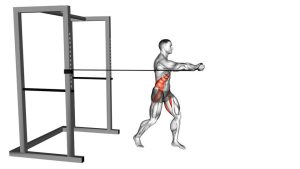
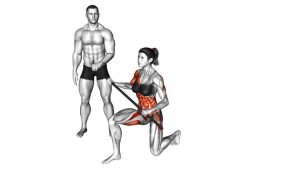
This movement works best when the body stays tall, the front foot remains planted, and the band travels on a smooth high-to-low diagonal path. Although the arms hold the band, the goal is not to pull only with the shoulders. Instead, the core should guide the rotation while the lower body creates a stable base. As a result, the exercise becomes useful for core strength, athletic rotation, posture control, and anti-rotation training.
Quick Overview
| Body Part | Core |
|---|---|
| Primary Muscle | Obliques |
| Secondary Muscle | Rectus abdominis, transverse abdominis, hip stabilizers, shoulders |
| Equipment | Resistance band and a secure high anchor point |
| Difficulty | Beginner to Intermediate |
Sets & Reps (By Goal)
- Core control: 2–3 sets × 8–10 reps per side with slow, clean reps.
- Strength endurance: 3–4 sets × 10–15 reps per side with moderate band tension.
- Warm-up activation: 1–2 sets × 8–12 reps per side before lifting or sport practice.
- Rotational training: 3 sets × 6–10 reps per side with a stronger brace and controlled tempo.
Progression rule: First improve control, then increase reps, and only after that increase band resistance. If the hips shift or the torso rushes, reduce the band tension.
Setup / Starting Position
- Anchor the band high: Attach the resistance band above shoulder height to a secure anchor.
- Move into half-kneeling: Place one knee on the floor and the opposite foot forward with the front knee bent.
- Face slightly away from the anchor: Position your body so the band can travel diagonally across your torso.
- Hold the band with both hands: Keep both hands together and start with the arms reaching up toward the anchor.
- Brace your core: Keep the ribs stacked over the pelvis and avoid arching the lower back.
- Set your base: Keep the front foot flat, the back knee grounded, and the hips steady before starting.
A pad under the back knee can make the half-kneeling position more comfortable, especially during longer sets.
Execution (Step-by-Step)
- Start tall: Hold the band high with both hands while keeping your chest lifted and shoulders relaxed.
- Begin the chop: Pull the band diagonally downward and across your body in a smooth motion.
- Rotate with control: Let the torso rotate slightly, but keep the hips stable and the front foot planted.
- Finish near the front thigh: Bring the hands toward the outside of the front thigh or knee area without collapsing forward.
- Pause briefly: Hold the end position for a moment while keeping tension through the core.
- Return slowly: Guide the band back up to the starting position instead of letting it snap back.
- Repeat with rhythm: Complete all reps on one side, then switch sides and repeat evenly.
Pro Tips & Common Mistakes
- Keep the hips steady: The half-kneeling stance should not wobble or twist excessively.
- Control the return: The eccentric phase matters because the band wants to pull you back quickly.
- Avoid shrugging: Keep the shoulders down so the core, not the traps, leads the movement.
- Do not over-rotate: Rotate enough to follow the diagonal chop, but do not twist aggressively through the spine.
- Use moderate resistance: Too much band tension usually causes leaning, pulling, or rushed reps.
- Stay tall: Avoid folding forward at the waist as the hands move down.
- Breathe with control: Exhale during the downward chop and inhale as you return to the start.
FAQ
What muscles does the Resistance Band Half-Kneeling Chop work?
It primarily works the obliques. Additionally, it trains the transverse abdominis, rectus abdominis, hip stabilizers, and shoulders because the body must rotate and resist unwanted movement at the same time.
Is this exercise for abs or obliques?
It is mainly an oblique-focused core exercise. However, the entire core contributes because the trunk must stay braced while the band moves diagonally across the body.
Should the hips rotate during the chop?
The hips should stay mostly stable. A small amount of natural movement may happen, but the main action should come from controlled trunk rotation rather than the pelvis spinning or shifting.
Can beginners do the half-kneeling band chop?
Yes. Beginners can perform it with a light band and a slow tempo. Still, the anchor must be secure, and the movement should remain smooth from start to finish.
Where should I place the band anchor?
For this version, place the band at a high anchor point. This allows the hands to travel from high to low across the body, matching the movement shown in the uploaded video.
Recommended Equipment
- Resistance Bands with Handles — ideal for controlled high-to-low chopping movements.
- Door Anchor for Resistance Bands — helps create a secure high anchor point at home.
- Exercise Knee Pad — adds comfort for the kneeling leg during longer sets.
- Non-Slip Exercise Mat — supports a stable half-kneeling base and protects the knee.
- Resistance Band Anchor Set — useful for improving band setup options and training angles.
Tip: Always check that the anchor is secure before pulling. A high anchor should not slip, snap, or move during the chop.