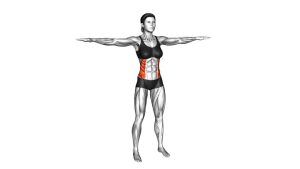
Band Side Bend: Oblique Exercise Guide, Form, Sets & Tips
Learn the Band Side Bend for stronger obliques, better core control, and cleaner lateral flexion. Includes setup, form, sets, mistakes, FAQ, and equipment.
Band Side Bend
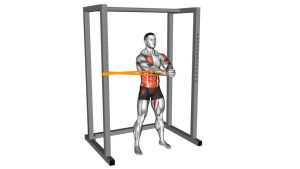
This exercise works best when the movement stays slow, narrow, and deliberate. Because the band pulls from a low angle, your obliques must resist and control the sideways bend during both the lifting and lowering phases. As a result, the drill helps build stronger side-core control without needing heavy weights.
Additionally, the Band Side Bend is useful for home workouts, warm-ups, and accessory core training. However, it should not become a fast swinging movement. Keep your shoulders relaxed, maintain a firm stance, and let the side of your torso perform the work instead of pulling with the arm.
Quick Overview
| Body Part | Core |
|---|---|
| Primary Muscle | Obliques, especially internal and external obliques |
| Secondary Muscle | Quadratus lumborum, transverse abdominis, deep spinal stabilizers |
| Equipment | Resistance band with a low anchor point or low cable-style band setup |
| Difficulty | Beginner to intermediate, depending on band tension and range of motion |
Sets & Reps (By Goal)
- Core activation: 2 sets × 10–12 reps per side using light band tension and a slow tempo.
- Oblique strength: 3–4 sets × 10–15 reps per side with moderate resistance and strict control.
- Muscle endurance: 2–3 sets × 15–20 reps per side while avoiding momentum or excessive leaning.
- Warm-up accessory work: 1–2 sets × 8–10 reps per side before heavier core or lower-body training.
- Technique practice: 2 sets × 6–8 slow reps per side with a light band and a brief pause at the top.
Progression rule: First improve control, then add reps, and only then increase band tension. If your hips twist or your arm starts pulling, reduce resistance immediately.
Setup / Starting Position
- Anchor the band low: Secure the resistance band near floor level so it pulls diagonally from the side.
- Stand beside the anchor: Position your body sideways to the anchor with the handle in the hand closest to the band.
- Set your feet: Stand about shoulder-width apart with knees softly unlocked and weight balanced through both feet.
- Hold the handle low: Keep the arm long and passive near the side of your body. The arm should guide the band, not lift it.
- Brace lightly: Keep your ribs stacked over your pelvis and prepare to bend sideways without rotating your torso.
- Start in a slight side bend: Allow the band to pull you gently toward the anchor side while maintaining control.
Setup tip: Step farther from the anchor to increase band tension. However, if the resistance causes twisting or jerking, move closer and use a lighter setup.
Execution (Step-by-Step)
- Begin from the stretched side position: Let your torso lean slightly toward the band while keeping your feet planted.
- Brace your core: Tighten your midsection lightly without holding your breath.
- Bend away from the anchor: Use your obliques to pull your torso upward and sideways against the band tension.
- Keep the movement lateral: Move side to side only. Do not twist, fold forward, or lean backward.
- Keep the arm quiet: Let the handle stay near the thigh while the torso performs the movement.
- Pause briefly at the top: Finish tall or slightly away from the band while feeling the working side of your core contract.
- Lower with control: Slowly return toward the anchor side and allow the obliques to lengthen under tension.
- Repeat smoothly: Complete all reps on one side before turning around and training the opposite side.
Pro Tips & Common Mistakes
Pro Tips
- Move from the waist: Focus on bending through the side of the torso instead of leaning with the whole body.
- Control the lowering phase: The return toward the band is where many people lose tension, so move slowly.
- Keep your hips square: Stable hips help the obliques do the work without turning the exercise into a twist.
- Use moderate range: A clean side bend is more effective than an exaggerated lean with poor control.
- Breathe naturally: Exhale as you bend away from the anchor and inhale as you return.
Common Mistakes
- Pulling with the arm: This reduces oblique work and turns the drill into an arm-assisted movement.
- Rotating the torso: Twisting shifts tension away from pure lateral flexion.
- Swinging through reps: Momentum makes the band easier to move and lowers core engagement.
- Using too much resistance: Heavy tension often causes hip shifting, shoulder shrugging, and uneven posture.
- Collapsing into the lower back: Keep the ribs and pelvis controlled to avoid excessive spinal compression.
FAQ
What muscles does the Band Side Bend work?
The Band Side Bend mainly works the internal and external obliques. In addition, the quadratus lumborum, transverse abdominis, and deep spinal stabilizers assist with control and posture.
Is the Band Side Bend good for beginners?
Yes. It can be beginner-friendly when you use light band tension and a small range of motion. However, beginners should prioritize slow reps, stable hips, and clean lateral movement before increasing resistance.
Should I feel this exercise in my lower back?
You may feel some stabilizer activity near the side of the lower back, but the main effort should come from the obliques. If the lower back feels pinched or overloaded, reduce the range, lighten the band, and keep your ribs stacked.
How do I make the Band Side Bend harder?
You can step farther from the anchor, use a thicker resistance band, slow down the lowering phase, or pause briefly at the top. Nevertheless, only progress if your hips stay stable and your torso does not rotate.
Should I train both sides?
Yes. Train both sides evenly to support balanced core strength. Start with your weaker or less controlled side, then match the same reps and resistance on the other side.
Can I use a cable machine instead of a band?
Yes. A low cable setup can create a similar line of resistance. Even so, a resistance band is more convenient for home training and gives a smooth tension curve when used with control.
Recommended Equipment
- Resistance Bands with Handles — ideal for controlled standing side bends and other banded core exercises.
- Door Anchor for Resistance Bands — helps create a secure low anchor point for home band training.
- Heavy-Duty Resistance Band Set — useful for progressing resistance as your oblique strength improves.
- Cable Attachment Handle / Strap — helpful if you also perform this movement with a cable machine setup.
- Exercise Mat — provides a stable training area for banded core work and floor-based accessories.
Tip: Choose a band that lets you complete clean reps without twisting. For this exercise, control matters more than maximum resistance.