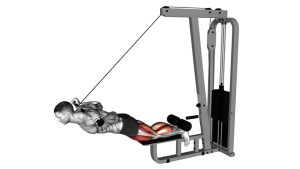
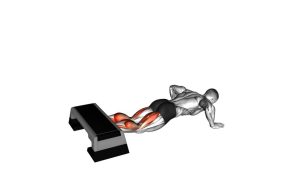
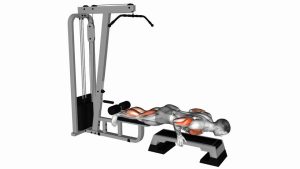
Suspended Leg Curl: Form, Hamstring Benefits, Sets, Tips & FAQ
Learn the Suspended Leg Curl for stronger hamstrings, glutes, and core control. Includes setup, step-by-step form, sets, tips, FAQs, and equipment.
Suspended Leg Curl
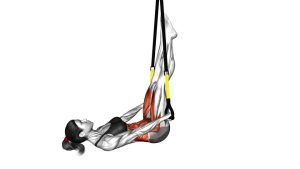
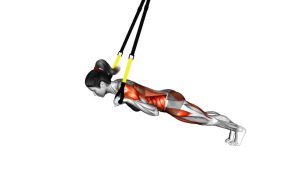
This exercise is more demanding than a basic lying leg curl because the straps create instability. The hamstrings must bend the knees while the glutes and core work to keep the pelvis lifted. The best reps are smooth, controlled, and free from swinging.
Quick Overview
| Body Part | Hamstrings |
|---|---|
| Primary Muscle | Hamstrings — biceps femoris, semitendinosus, semimembranosus |
| Secondary Muscle | Glutes, calves, core stabilizers, lower back stabilizers |
| Equipment | Suspension trainer, anchor point, exercise mat |
| Difficulty | Intermediate to advanced |
Sets & Reps (By Goal)
- Strength: 3–5 sets × 6–10 reps with slow control and full hip stability.
- Muscle growth: 3–4 sets × 8–15 reps with a steady 2–3 second lowering phase.
- Hamstring endurance: 2–4 sets × 12–20 reps using a smooth, moderate tempo.
- Posterior-chain warm-up: 2 sets × 8–12 controlled reps before lower-body training.
Progression rule: First master stable two-leg reps. Progress by slowing the eccentric phase, increasing the hip bridge height, or moving toward single-leg variations.
Setup / Starting Position
- Set the straps: Adjust the suspension handles so the foot cradles hang a few inches above the floor.
- Lie on your back: Position yourself under the anchor point with your heels placed securely inside the straps.
- Extend the legs: Start with both legs straight and the straps under light tension.
- Set the upper body: Keep your arms on the floor beside you with palms down for balance.
- Lift the hips: Brace your core and raise the hips so your body forms a strong line from shoulders to ankles.
Keep the ribs down and avoid overextending the lower back. The hips should be lifted by the glutes, not by excessive lumbar arching.
Execution (Step-by-Step)
- Brace first: Tighten your core lightly and keep the hips elevated before starting the curl.
- Pull the heels in: Bend your knees and draw the heels toward the glutes while keeping the hips high.
- Squeeze at the top: Pause briefly when the knees are bent and the hamstrings are fully engaged.
- Control the return: Slowly extend the legs back out without letting the hips drop suddenly.
- Reset tension: Finish with the legs long, straps tight, hips controlled, and body aligned.
Pro Tips & Common Mistakes
- Keep the hips lifted: Do not let the pelvis sag as the legs extend.
- Move slowly: Avoid bouncing or using strap momentum to pull the heels in.
- Drive through the heels: Think about dragging the heels toward the glutes instead of pulling with the toes.
- Control the eccentric: The lowering phase builds serious hamstring strength, so do not rush it.
- Avoid over-arching: Keep the ribs down and pelvis controlled to protect the lower back.
- Start with easier angles: If the movement is too hard, keep the hips lower or reduce the curl range.
FAQ
What muscles does the Suspended Leg Curl work?
The main target is the hamstrings. The glutes, calves, and core also work to stabilize the body and keep the hips lifted during the curl.
Is the Suspended Leg Curl good for building hamstrings?
Yes. It is excellent for hamstring strength and control because the hamstrings must flex the knees while resisting instability from the straps.
Is this exercise harder than a machine leg curl?
Usually, yes. The machine leg curl provides a fixed path, while the suspended version requires more balance, hip stability, and core control.
Why do my hips drop during the exercise?
Hip drop usually means the hamstrings, glutes, or core are losing tension. Reduce the range of motion, slow down, or practice hip bridges first.
Can beginners do the Suspended Leg Curl?
Beginners can try an easier version with a smaller range of motion and lower hip position, but this exercise is generally better for people who already have basic hamstring and glute strength.
Recommended Equipment
- Suspension Trainer — the main tool needed for suspended leg curls and full-body bodyweight training
- Suspension Trainer Foot Cradles — helps secure the heels comfortably during hamstring curl variations
- Thick Exercise Mat — supports the back, shoulders, and arms during supine floor exercises
- Door Anchor for Suspension Trainer — useful for setting up suspension exercises at home
- Resistance Bands Set — useful for hamstring warm-ups, glute activation, and posterior-chain accessory work
Choose equipment that feels secure and stable. Always check the anchor point and straps before starting suspended exercises.