Assisted Nordic Hamstring Curl: Form, Benefits, Sets, Tips & FAQ
Learn the assisted Nordic hamstring curl for stronger hamstrings, better knee control, safe eccentric training, form tips, sets, mistakes, and equipment.
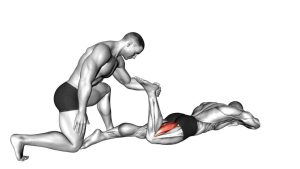
Assisted Nordic Hamstring Curl
This movement is best known for developing eccentric hamstring strength, which means the hamstrings work hard while lengthening. It is more demanding than most machine leg curls because your bodyweight creates a long lever from the knees to the shoulders. Because of that, the assisted version is ideal for learning control before progressing to harder Nordic curl variations.
Quick Overview
| Body Part | Hamstrings |
|---|---|
| Primary Muscle | Hamstrings: biceps femoris, semitendinosus, semimembranosus |
| Secondary Muscle | Glutes, calves, erector spinae, and core stabilizers |
| Equipment | Knee pad or mat, partner for ankle assistance, optional resistance band or Nordic curl strap |
| Difficulty | Intermediate to advanced depending on range of motion and control |
Sets & Reps (By Goal)
- Beginner control: 2–3 sets × 3–5 slow reps, using a short range of motion and early hand support.
- Hamstring strength: 3–4 sets × 4–8 reps with a 3–5 second controlled lowering phase.
- Eccentric overload: 3–5 sets × 3–6 reps with a very slow descent and assisted return.
- Athletic injury-prevention work: 2–3 sets × 4–6 reps after warm-up, 1–2 times per week.
- Advanced progression: 3–4 sets × 5–8 reps with less hand push and a deeper forward lean.
Progression rule: First improve control and range of motion. Then increase lowering time. Only reduce assistance when every rep stays smooth, straight, and pain-free.
Setup / Starting Position
- Place a pad under your knees: Use a thick mat or foam pad to protect the knees from direct pressure.
- Secure the ankles: Have a partner hold your ankles firmly, or use a stable Nordic curl strap if training alone.
- Start tall on your knees: Keep your knees, hips, shoulders, and head in one straight line.
- Brace your core: Gently tighten the abs and glutes so the hips do not fold backward or sag forward.
- Position your hands ready: Keep your hands in front of your chest so you can catch yourself safely at the bottom.
- Keep your neck neutral: Look slightly forward and down without lifting the chin or rounding the upper back.
The setup should feel stable before you begin. If the ankles move, the exercise becomes unsafe and much harder to control.
Execution (Step-by-Step)
- Begin from a tall kneeling position: Keep the torso upright, hips extended, and ankles firmly anchored.
- Brace before moving: Tighten the glutes and core to keep your body in a straight line.
- Lean forward slowly: Let the body move from the knees while the hamstrings resist the fall.
- Keep the hips open: Do not sit the hips back. Your body should move as one long lever.
- Control the eccentric phase: Lower for 3–5 seconds or as long as you can maintain clean control.
- Catch yourself safely: Place your hands on the floor when you can no longer resist the descent.
- Assist the return: Push lightly with your hands and use the hamstrings to help pull your body back to kneeling.
- Reset fully: Return to the tall kneeling position before starting the next repetition.
Pro Tips & Common Mistakes
- Do not hinge at the hips: The movement should come from the knees, not from folding the torso forward.
- Keep the body line straight: Think “knees to shoulders in one line” during the entire lowering phase.
- Use your hands as a safety catch: Catching yourself is correct, especially when learning.
- Avoid dropping quickly: A fast fall reduces hamstring tension and increases strain risk.
- Do not let the ankles lift: The partner must hold the ankles firmly throughout the rep.
- Use enough padding: Knee discomfort can ruin the exercise and change your mechanics.
- Start with partial reps: You do not need full range immediately. Build depth gradually.
- Control the return: Do not bounce off the floor. Push lightly and return with control.
- Warm up first: Perform light hamstring curls, glute bridges, or dynamic leg swings before heavy Nordic work.
FAQ
Is the assisted Nordic hamstring curl the same as an inverse leg curl?
They are closely related, but not always identical. In this version, the movement is a partner-assisted Nordic hamstring curl because the athlete kneels while the partner anchors the ankles. The main action is an eccentric forward lowering controlled by the hamstrings.
What muscles does the assisted Nordic hamstring curl work?
It mainly targets the hamstrings, especially during the eccentric lowering phase. The glutes, calves, lower back, and core also assist by keeping the body stable and aligned.
Should I go all the way to the floor?
Only go as low as you can control. Beginners should use partial range and catch themselves early. A clean short rep is better than a full rep where the hips bend or the body drops suddenly.
Why do I feel this exercise so strongly in my hamstrings?
The Nordic curl loads the hamstrings while they are lengthening. This eccentric demand is very high, especially because your bodyweight creates a long lever from the knees to the shoulders.
Can beginners do assisted Nordic hamstring curls?
Yes, but beginners should use strong assistance, partial range of motion, and low volume. Start with 2–3 sets of 3–5 controlled reps and progress slowly.
How often should I train this exercise?
Most people should start with 1–2 sessions per week. Because the eccentric loading is intense, the hamstrings may need more recovery than with regular machine leg curls.
Is this exercise good for hamstring injury prevention?
It can be very useful because it strengthens the hamstrings under eccentric load. Athletes often use Nordic curl variations to build resilience during sprinting, cutting, and running sports.
Recommended Equipment
- Nordic Hamstring Curl Strap — useful for anchoring the ankles when training without a partner.
- Thick Exercise Knee Pad — protects the knees and improves comfort during kneeling hamstring work.
- Thick Exercise Mat — provides floor cushioning for the knees, hands, and bottom catch position.
- Resistance Bands Set — can provide assistance during Nordic curl progressions and warm-up drills.
- Hamstring Curl Sliders — helpful for easier hamstring curl variations before progressing to Nordic curls.
Choose equipment that improves safety and control. For this exercise, the most important items are a secure ankle anchor and enough knee padding.