Kettlebell Deadlift: Proper Form, Muscles Worked, Sets, Tips & FAQ
Learn the kettlebell deadlift for stronger glutes, hamstrings, and hip hinge control. Includes form steps, sets, mistakes, FAQs, and equipment.
Kettlebell Deadlift
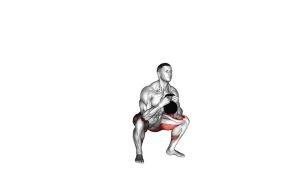
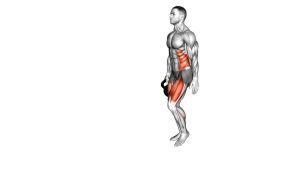
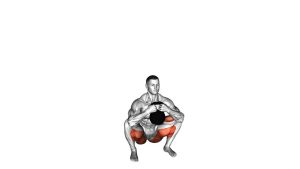
This exercise is one of the best ways to learn the deadlift pattern because the kettlebell starts between the feet and naturally teaches a clean vertical pulling path. It is excellent for beginners, home workouts, posterior-chain training, and improving hip hinge mechanics before progressing to heavier barbell deadlifts.
Quick Overview
| Body Part | Legs |
|---|---|
| Primary Muscle | Glutes, hamstrings |
| Secondary Muscle | Lower back, core, quadriceps, upper back, grip muscles |
| Equipment | Kettlebell |
| Difficulty | Beginner |
Sets & Reps (By Goal)
- Beginner technique: 2–3 sets × 8–10 reps with light weight and slow control.
- Strength building: 3–5 sets × 5–8 reps with a heavier kettlebell and full reset between reps.
- Muscle growth: 3–4 sets × 8–12 reps with controlled lowering and strong hip extension.
- Conditioning: 3–5 rounds × 12–15 reps with moderate weight and clean form.
- Warm-up patterning: 1–2 sets × 8–10 reps before squats, deadlifts, or kettlebell swings.
Progression rule: Add weight only when every rep stays smooth, the kettlebell remains close to the body, and your hips drive the lift without back rounding.
Setup / Starting Position
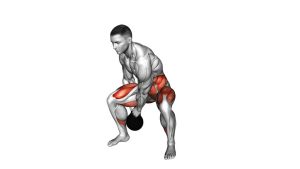
- Place the kettlebell between your feet: The handle should line up near the middle of your stance.
- Set your feet: Stand about hip-width apart with toes slightly turned out if comfortable.
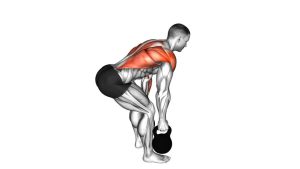
- Hinge at the hips: Push your hips backward while allowing a soft bend in the knees.
- Grip the handle: Keep both arms straight and shoulders slightly in front of the kettlebell.
- Brace your core: Tighten your midsection as if preparing to lift something heavy.
- Set your back: Keep the spine neutral, chest open, and neck aligned with the torso.
Tip: If your hips drop too low and your torso becomes very upright, you are turning the movement into a squat. Push the hips back and keep the kettlebell close.
Execution (Step-by-Step)
- Build tension first: Grip the handle, brace your core, and pull your shoulders slightly down away from your ears.
- Drive through the floor: Push through your feet and begin standing up without jerking the kettlebell.
- Extend the hips: Bring your hips forward as your torso rises.
- Keep the arms straight: The arms should act like hooks. Do not curl or pull with the biceps.
- Stand tall at the top: Finish with hips fully extended, glutes squeezed, ribs stacked, and shoulders relaxed.
- Lower with control: Push the hips back first, then allow the knees to bend slightly as the kettlebell returns to the floor.
- Reset each rep: Let the kettlebell touch the ground under control before starting the next repetition.
Pro Tips & Common Mistakes
- Think “hips back” first: The deadlift starts with a hinge, not a knee-dominant squat.
- Keep the kettlebell close: A close weight path reduces lower-back strain and improves leverage.
- Do not round the spine: Maintain a neutral back from the floor to lockout.
- Avoid leaning back at the top: Stand tall and squeeze the glutes without overextending the lower back.
- Do not shrug: Keep shoulders packed and relaxed instead of pulling them toward your ears.
- Control the descent: Lowering too fast can cause form breakdown and reduce training quality.
- Use the right weight: Choose a kettlebell that feels challenging but does not force compensation.
- Breathe with intention: Inhale and brace before lifting, then exhale after passing the hardest part of the rep.
FAQ
What muscles does the kettlebell deadlift work?
The kettlebell deadlift mainly works the glutes and hamstrings. It also trains the lower back, core, upper back, quadriceps, and grip muscles as stabilizers.
Is the kettlebell deadlift good for beginners?
Yes. It is one of the best beginner deadlift variations because the kettlebell sits between the feet, which makes it easier to learn a safe hip hinge and keep the load close to the body.
Is a kettlebell deadlift the same as a kettlebell swing?
No. A kettlebell deadlift is slow and controlled with the weight moving vertically. A kettlebell swing is explosive and uses momentum. Master the deadlift before learning the swing.
Should I feel the kettlebell deadlift in my lower back?
You may feel your lower back working as a stabilizer, but it should not be the main muscle doing the work. If your lower back dominates, reduce the weight and focus on pushing the hips back and driving through the glutes.
How heavy should my kettlebell be?
Start with a weight you can lift for 8–12 clean reps while keeping your spine neutral. Beginners should prioritize technique before increasing weight.
Recommended Equipment
- Cast Iron Kettlebell — classic option for deadlifts, swings, squats, and strength training.
- Adjustable Kettlebell — useful for progressing weight without buying multiple kettlebells.
- Kettlebell Workout Mat — helps protect floors and provides stable footing during home workouts.
- Weightlifting Gloves — supports grip comfort when training with higher reps or heavier loads.
- Hip Resistance Bands — helpful for glute activation before kettlebell deadlifts and lower-body training.
Tip: Choose equipment that supports clean technique first. A heavier kettlebell is only useful when you can control every rep safely.