Kettlebell Goblet Squat Mobility Drill: Form, Sets, Tips & FAQ
Learn the kettlebell goblet squat mobility drill to improve squat depth, hip opening, ankle mobility, posture, and lower-body control.
Kettlebell Goblet Squat Mobility Drill
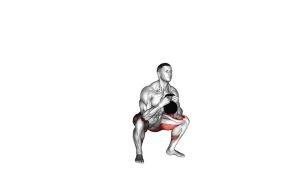
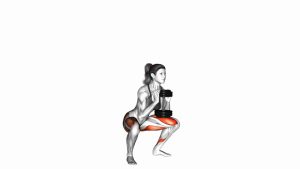
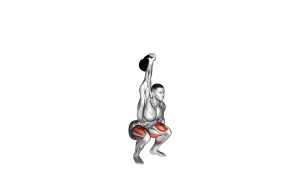
This exercise works best when performed with slow control, clean posture, and a deep but comfortable range of motion. The kettlebell stays close to the chest, the elbows travel inside the knees, and the lifter uses the bottom position to gently open the hips. It is useful as a squat warm-up, mobility drill, beginner squat pattern builder, or lower-body movement prep.
Quick Overview
| Body Part | Legs |
|---|---|
| Primary Muscle | Quadriceps and glutes |
| Secondary Muscle | Adductors, hamstrings, calves, core, upper back, and hip stabilizers |
| Equipment | Kettlebell |
| Difficulty | Beginner to Intermediate |
Sets & Reps (By Goal)
- Mobility warm-up: 2–3 sets × 6–8 slow reps with a 2–3 second bottom pause.
- Squat depth practice: 3–4 sets × 5–6 controlled reps with a 3–5 second hold at the bottom.
- Lower-body strength technique: 3–4 sets × 8–12 reps using a moderate kettlebell.
- Beginner pattern learning: 2–3 sets × 6–10 reps with a light kettlebell and full control.
Progression rule: First improve depth, posture, and control. Then increase pause time. Add weight only when your heels stay down, your knees track cleanly, and your torso remains upright.
Setup / Starting Position
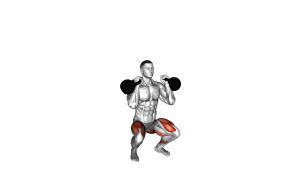
- Hold the kettlebell in goblet position: Grip the horns or sides of the kettlebell and keep it close to your chest.
- Set your stance: Stand slightly wider than shoulder-width with the toes turned slightly outward.
- Brace lightly: Keep your ribs stacked, core active, and shoulders relaxed.
- Keep the chest tall: The kettlebell should help you stay upright, not pull you forward.
- Prepare the knees: Think about tracking your knees in the same direction as your toes.
Tip: A slightly wider stance often makes the mobility version easier because it gives your hips more room to sit between your legs.
Execution (Step-by-Step)
- Start tall: Stand with the kettlebell close to your chest, elbows pointing downward, and feet planted firmly.
- Begin the descent: Bend your knees and hips together while keeping your chest lifted.
- Sit between your hips: Drop straight down instead of sitting far back like a powerlifting squat.
- Let the knees travel naturally: Allow the knees to move forward and outward as long as your heels stay grounded.
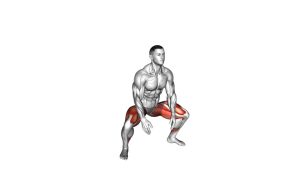
- Reach the deep squat: Lower until you reach your comfortable end range without rounding the lower back.
- Use the elbows gently: At the bottom, place the elbows inside the knees and lightly guide the knees outward to open the hips.
- Pause with control: Hold the bottom position while breathing calmly and keeping the spine long.
- Drive up smoothly: Push through the mid-foot and heels, extend the knees and hips, and return to standing.
- Reset before the next rep: Rebuild posture, brace lightly, and repeat with the same controlled rhythm.
Pro Tips & Common Mistakes
- Use the kettlebell as a counterbalance: Keep it close enough to help you stay upright without letting it pull your shoulders forward.
- Do not rush the bottom: The bottom pause is where the mobility benefit happens.
- Keep the heels grounded: If your heels lift, reduce depth, widen your stance slightly, or use a lighter kettlebell.
- Open the knees, but do not force them: The elbows should guide the knees outward gently, not jam the hips aggressively.
- Avoid lower-back rounding: Stop your descent before your pelvis tucks hard under your spine.
- Do not turn it into a good morning: If your chest drops forward, reduce weight and focus on a taller torso.
- Control the ascent: Stand up smoothly instead of bouncing out of the bottom.
- Match knees with toes: Knees should travel in the same direction as the toes, not collapse inward.
FAQ
What is the kettlebell goblet squat mobility drill good for?
It is useful for improving squat depth, hip mobility, ankle mobility, lower-body control, and upright squat posture. It also helps beginners learn a cleaner squat pattern because the kettlebell provides a helpful counterbalance.
Is this exercise mainly for strength or mobility?
It can support both, but this version is mainly a mobility and technique drill. The deep position, slow tempo, and elbow-assisted hip opening make it different from a standard heavy goblet squat.
Where should I feel this movement?
You should feel the quads, glutes, hips, adductors, and ankles working. At the bottom, you may also feel a gentle stretch around the inner thighs and hips. You should not feel sharp pain in the knees, lower back, or hips.
Should my knees go past my toes?
Yes, knee travel is normal in this drill, especially because it emphasizes squat depth and ankle mobility. The key is to keep the heels grounded and the knees tracking in line with the toes.
How heavy should the kettlebell be?
Start light to moderate. The weight should help your balance without forcing your torso forward. If you cannot pause at the bottom with control, the kettlebell is probably too heavy.
Can beginners do this exercise?
Yes, beginners can use it if they start with a light kettlebell and a comfortable range of motion. They should avoid forcing maximum depth and focus on smooth control first.
Recommended Equipment
- Kettlebell — the main tool for performing the goblet squat mobility drill.
- Adjustable Kettlebell — useful if you want multiple resistance options without buying several kettlebells.
- Exercise Mat — provides a clean, comfortable surface for warm-ups and mobility work.
- Squat Wedge — helpful for lifters with limited ankle mobility while practicing deep squat mechanics.
- Resistance Bands for Mobility — useful for hip activation, ankle drills, and lower-body mobility preparation.
Tip: Choose equipment that supports better movement quality. For this drill, control and range of motion matter more than heavy loading.