Ring Support Hold (Chest Lean): Form, Sets & Tips for Stronger Chest and Ring Stability
Master the Ring Support Hold (Chest-Lean) to build chest strength, shoulder stability, and total-body control. Learn setup, step-by-step form cues, sets & reps by goal, common mistakes, FAQs, and recommended ring gear.
Ring Support Hold
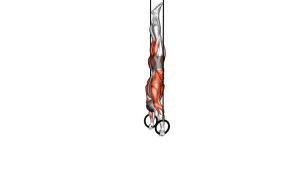
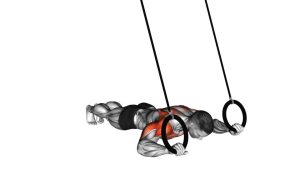
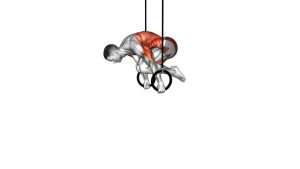
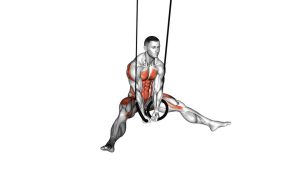
This hold rewards scapular control more than brute force. You should feel strong tension through the chest, triceps, and front shoulder, with deep stabilizers working to keep the rings from drifting. Keep your elbows locked (or nearly locked) and maintain a steady breath—if you can’t breathe calmly, the lean is too aggressive.
Quick Overview
| Body Part | Chest |
|---|---|
| Primary Muscle | Pectoralis major (chest) |
| Secondary Muscle | Triceps, anterior deltoids, serratus anterior, rotator cuff (stability) |
| Equipment | Gymnastic rings + straps/anchor (optional: bands for assistance) |
| Difficulty | Intermediate–Advanced (high shoulder-stability demand) |
Sets & Reps (By Goal)
- Strength & stability (main work): 4–6 sets × 10–20 sec hold (60–120 sec rest)
- Hypertrophy-style tension (chest emphasis): 3–5 sets × 15–30 sec hold (60–90 sec rest)
- Skill / ring control (practice): 5–8 sets × 8–15 sec hold (45–75 sec rest)
- Dip progression (top support mastery): 3–6 sets × 10–25 sec hold (60–120 sec rest)
Progression rule: First increase time (add 2–5 seconds per set) while keeping the rings stable. Then increase the lean slightly. If rings flare out or shoulders shrug, regress.
Setup / Starting Position
- Set ring height: Rings at about hip height when standing (lower can be harder).
- Grip & jump to support: Hands on rings, step/jump into the top support with feet off the floor.
- Lock the arms: Elbows straight, rings held close to the outside of the hips.
- Shoulders down: “Push the rings toward the floor” to keep shoulders away from ears.
- Brace the body: Ribs down, glutes tight, legs together—avoid swinging.
Tip: If stability is the limiter, start with a neutral support (no lean) until the rings stop shaking.
Execution (Step-by-Step)
- Build the support: Arms locked, shoulders down, rings close to hips, body tall and still.
- Turn rings slightly out: Subtle external rotation helps shoulder stability and keeps rings from drifting.
- Add a controlled chest lean: Let shoulders move slightly forward while maintaining the same locked support.
- Hold & breathe: Keep tension through chest/triceps, breathe quietly for the full hold time.
- Exit with control: Reduce the lean first, then step down—don’t drop out of the position.
Pro Tips & Common Mistakes
- Keep rings close: Rings flaring out usually means lost shoulder position or weak stability.
- Shoulders down first: Scapular depression is the foundation—don’t “hang” into the joints.
- Lean is earned: Get a rock-solid neutral support before adding a chest lean.
- No bent elbows: A soft bend becomes a dip—keep it isometric and controlled.
- Don’t over-arch: Ribs down and glutes on—avoid lumbar extension to “fake” the lean.
- Use short sets for quality: Better to do 6 clean 12-second holds than 2 sloppy 30-second holds.
FAQ
Where should I feel the Ring Support Hold (Chest-Lean)?
You’ll feel strong tension in the chest, triceps, and front shoulder, plus deep stabilizers working to keep the rings steady. You should not feel sharp pinching in the shoulder joint.
Do I need to turn the rings out?
A slight turn-out often improves stability by encouraging better shoulder positioning. Keep it subtle—forcing a big turn-out can irritate wrists or shoulders.
How do I make this easier?
Start with a neutral support hold (no lean), shorten the time (8–12 seconds), set rings slightly higher, or use a light resistance band under the knees/feet for assistance.
How do I progress it?
First increase hold time with stable rings. Then add a small lean. Long-term progressions include deeper lean, support-to-dip transitions, or stricter ring turn-out control.
Is this a good dip progression?
Yes—this is one of the best prerequisites for ring dips because it builds the top support strength and shoulder stability needed to dip safely.
Recommended Equipment (Optional)
- Wooden Gymnastic Rings — better grip comfort and less slipping vs plastic for long holds
- Ring Straps (Numbered) + Buckles — faster height adjustments and secure setup
- Liquid Chalk / Grip Aid — improves stability by reducing hand slip during isometric holds
- Wrist Wraps (Calisthenics/Gymnastics) — helpful if wrists fatigue before your chest/shoulders do
- Resistance Bands Set — useful for assistance (band support) and balancing with rows/pull-aparts
Tip: Choose an anchor point that doesn’t sway. Stable setup = safer shoulders and better chest tension.