Ring Straddle L-Sit: Form, Core Strength, Sets & Tips
Learn the Ring Straddle L-Sit to build core strength, hip flexor control, shoulder stability, and ring support power with safe form tips.
Ring Straddle L-Sit
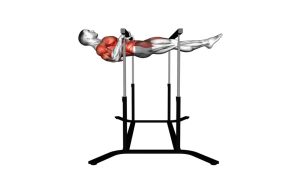
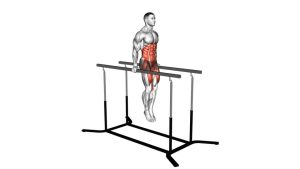
This movement is best used when you already have a strong ring support hold, straight-arm strength, and basic L-sit control. The goal is to keep the arms locked, shoulders pressed down, chest lifted, legs straight, and hips flexed while preventing the rings from shaking or drifting away from the body.
Quick Overview
| Body Part | Core |
|---|---|
| Primary Muscle | Rectus abdominis, hip flexors |
| Secondary Muscle | Obliques, triceps, shoulders, scapular stabilizers, forearms |
| Equipment | Gymnastics rings |
| Difficulty | Advanced |
Sets & Reps (By Goal)
- Skill practice: 4–6 sets × 5–10 second holds
- Core strength: 3–5 sets × 8–15 second holds
- Advanced endurance: 3–4 sets × 15–25 second holds
- Progression work: 3–5 sets using tuck, one-leg, or low-straddle variations
Progression rule: Add hold time only when your arms stay locked, shoulders stay depressed, and the rings remain controlled.
Setup / Starting Position
- Set the rings: Adjust the rings low enough so you can mount safely with control.
- Grip firmly: Hold each ring with a neutral grip and keep the wrists stacked over the rings.
- Press tall: Push down through the rings until your arms are straight and your shoulders are away from your ears.
- Brace your core: Keep the ribs down, chest lifted, and pelvis controlled.
- Prepare the legs: Keep the knees straight and begin opening the legs into a wide straddle.
Execution (Step-by-Step)
- Start in ring support: Lock the elbows and stabilize the rings close to your sides.
- Depress the shoulders: Push your body tall by driving the shoulders down away from the ears.
- Lift the legs: Raise both legs forward while keeping the knees straight.
- Open the straddle: Spread the legs wide to reduce the lever while keeping the toes pointed.
- Hold the position: Keep the thighs lifted, abs tight, hips flexed, and rings steady.
- Lower with control: Bring the legs down slowly without dropping, swinging, or bending the arms.
Pro Tips & Common Mistakes
- Press the rings down: Think about pushing the floor away through the rings to keep your shoulders stable.
- Keep your elbows locked: Bent elbows reduce support strength and make the hold less efficient.
- Do not let the rings drift wide: Keep them close to your hips to improve control.
- Avoid leaning too far back: A slight lean is normal, but excessive lean turns the drill into a compensation.
- Keep the legs active: Straight knees and pointed toes create better body tension.
- Use progressions: Master ring support, tuck L-sit, and single-leg L-sit before the full straddle version.
- Control the exit: Lowering slowly builds strength and protects the shoulders.
FAQ
Is the Ring Straddle L-Sit harder than a regular L-sit?
Yes, because the rings are unstable. Even though the straddle position can make the leg lever easier than a full legs-together L-sit, the moving rings make the upper body and core work much harder.
What muscles does the Ring Straddle L-Sit work?
It mainly trains the abs and hip flexors. It also works the triceps, shoulders, forearms, obliques, and scapular stabilizers because you must hold a strong straight-arm support on unstable rings.
How long should I hold the Ring Straddle L-Sit?
Start with short 5–10 second holds. Build toward 15–25 seconds only when you can keep clean form without ring swing, bent elbows, or dropping legs.
Why do my rings shake during the exercise?
Ring shaking usually means your support strength, shoulder stability, or core tension needs more work. Practice ring support holds, tuck L-sits, and scapular depression drills before increasing difficulty.
Is this exercise good for beginners?
No. Beginners should start with floor tuck holds, parallel-bar L-sit progressions, ring support holds, and tuck L-sits before attempting a full Ring Straddle L-Sit.
Recommended Equipment
- Gymnastics Rings with Adjustable Straps — essential equipment for ring L-sits, support holds, dips, rows, and calisthenics progressions
- Wooden Gymnastics Rings — offers a strong grip feel and better control during static holds
- Liquid Chalk — helps improve grip security during ring support and L-sit holds
- Parallettes — useful for building L-sit strength before progressing to rings
- Exercise Mat — provides safer landing support during ring skill practice
Tip: Use strong, well-mounted rings and always check strap security before starting advanced ring holds.