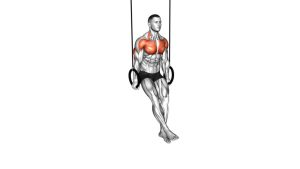
Ring Russian Push-Up on Rings: Form, Sets, Tips & FAQ
Master the Ring Russian Push-Up (ring fly push-up) to build chest strength, shoulder stability, and core control. Learn setup, step-by-step form, sets by goal, mistakes to avoid, FAQs, and recommended ring gear.
Ring Russian Push-Up (Gymnastic Rings Chest Fly Push-Up)
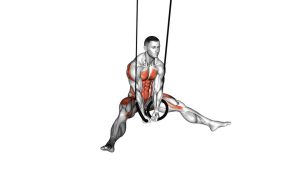
This movement is best treated as a high-skill ring press. You’ll get the most out of it when you keep the rings stable, lower under control, and only use a range of motion you can own. Expect a deep chest stretch at the bottom and a strong squeeze as you pull the rings back toward the midline.
Quick Overview
| Body Part | Chest |
|---|---|
| Primary Muscle | Pectoralis major (chest) |
| Secondary Muscle | Anterior deltoids, triceps, serratus anterior, rotator cuff (stability), core |
| Equipment | Gymnastic rings + secure anchor (optional: mat, chalk) |
| Difficulty | Advanced (deep range + high instability) |
Sets & Reps (By Goal)
- Strength (low reps, high control): 4–6 sets × 3–6 reps (2–3 min rest)
- Hypertrophy (muscle growth): 3–5 sets × 6–10 reps (90–150 sec rest)
- Skill + stability focus: 3–4 sets × 4–8 reps (slow tempo, 90–120 sec rest)
- Finisher (only if form stays clean): 2–3 sets × 8–12 reps (controlled, stop 1–2 reps before failure)
Progression rule: First improve ring control (less shaking) and depth. Next increase reps. Only then lower the rings closer to the floor (harder angle).
Setup / Starting Position
- Set ring height: Start with rings around knee to mid-thigh height (easier) before progressing lower.
- Choose hand position: Neutral grip on the rings; wrists straight; grip firm but not death-grip.
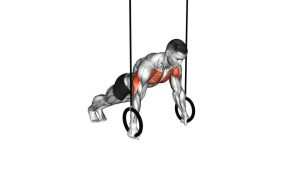
- Walk into a plank: Body long and rigid—glutes tight, ribs down, head neutral.
- Ring position: Rings under shoulders, slightly turned out if comfortable. Keep them from drifting forward.
- Brace: Inhale, tighten core, and “lock” your torso like a moving plank.
Tip: If your rings swing a lot, widen your stance slightly and start with a smaller range until stability improves.
Execution (Step-by-Step)
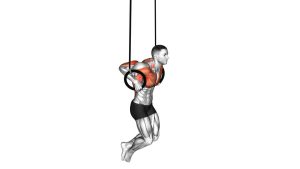
- Lower with control: Bend elbows and descend while maintaining a straight body line.
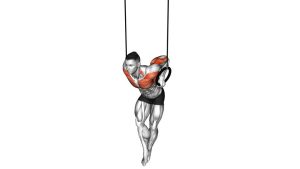
- Let the rings open slightly: As you descend, allow the hands to move outward into a fly-like position—no sudden drops.
- Own the bottom: Pause briefly where you feel a strong chest stretch but still have shoulder control (don’t collapse).
- Pull the rings inward: Initiate the ascent by squeezing the chest and bringing the rings back toward the midline.
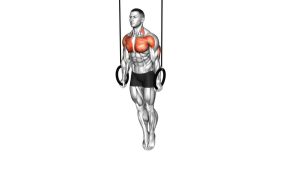
- Press to lockout: Finish the rep by extending the elbows and stabilizing the rings under your shoulders.
Pro Tips & Common Mistakes
Pro Tips
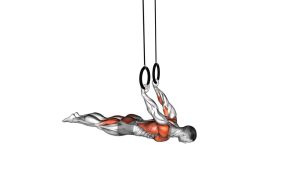
- Keep the body rigid: Treat this like a moving plank—no hip sag or pike.
- Control the rings, don’t chase depth: Depth is earned by stability, not forced by stretching.
- Use a slow tempo: 2–4 seconds down, small pause, controlled drive up.
- Think “squeeze + press”: Pull rings inward first, then finish with a press to lockout.
- Own your shoulder blades: Avoid shrugging; keep scapula stable and strong.
Common Mistakes
- Diving too deep: Collapsing into an extreme stretch can irritate the shoulder.
- Rings drifting forward: This increases shoulder stress—keep rings under the shoulders.
- Elbows flaring wildly: Some flare is normal, but uncontrolled flare usually means too much depth.
- Loose core: If the hips drop, your shoulders take the load and stability suffers.
- Rushing reps: Speed makes rings unstable—slow is strong.
FAQ
Where should I feel the Ring Russian Push-Up?
Mostly in the chest—especially through a deep stretch at the bottom and a strong squeeze as you pull the rings inward. You’ll also feel the front shoulders, triceps, and significant work in the core and shoulder stabilizers.
Is this safe for my shoulders?
It can be safe if you have solid ring control and use a range you can control. If you feel pinching or instability, reduce depth, raise the rings, or use a regression like ring push-ups or a partial-range ring fly push-up.
How do I make it easier?
Raise the rings (more upright angle), shorten the range of motion, widen your stance, and slow the tempo. Master clean ring push-ups first, then gradually introduce the fly opening.
How do I progress it?
Lower the rings closer to the floor, increase depth slowly, add reps, and use a longer pause at the bottom. Only progress when reps stay stable and smooth.
What’s the best tempo for hypertrophy?
A controlled eccentric works well: 3 seconds down, a brief pause, then a strong but controlled drive up. Stop the set when stability breaks down.
Recommended Equipment (Optional)
- Wooden Gymnastic Rings (with straps) — better grip comfort and stability for pressing and fly variations
- Door Anchor (for rings / suspension straps) — convenient setup option when you don’t have a ceiling beam or pull-up bar
- Thick Non-Slip Exercise Mat — protects knees/hands and reduces slipping during ring work
- Liquid Chalk / Grip Aid — improves ring grip and reduces hand fatigue on longer sets
- Ring Strap Extenders / Longer Straps — helpful if your anchor point is high (beam, tree branch, outdoor rig)
Tip: Prioritize a secure anchor and stable straps before pushing intensity. Ring instability should be a training stimulus—not a safety issue.