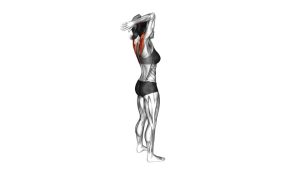
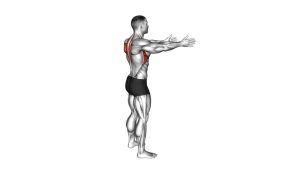
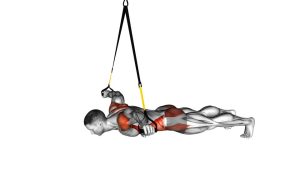
Prone W to T Raise: Proper Form, Sets, Tips & FAQ
Learn how to do the Prone W to T Raise with proper form to strengthen the upper back, rear delts, and scapular stabilizers. Includes setup, execution, sets by goal, mistakes, FAQs, and recommended equipment.
Prone W to T Raise
This exercise works best when you focus on quality contraction instead of trying to lift as high as possible. You should feel the effort mostly across the upper back and back of the shoulders, not in the neck or low back. Keep every rep controlled, and think about spreading the chest gently while the shoulder blades move with purpose.
Quick Overview
| Body Part | Upper Back |
|---|---|
| Primary Muscle | Middle trapezius, lower trapezius, rhomboids |
| Secondary Muscle | Rear deltoids, rotator cuff stabilizers, spinal stabilizers |
| Equipment | None (optional: exercise mat, folded towel, light bench variation) |
| Difficulty | Beginner to intermediate |
Sets & Reps (By Goal)
- Activation / warm-up: 2–3 sets × 8–12 reps, slow tempo, 30–45 sec rest
- Posture and scapular control: 2–4 sets × 10–15 reps, 45–60 sec rest
- Muscular endurance: 3–4 sets × 12–20 reps, 45–75 sec rest
- Rehab-style technique work: 2–3 sets × 6–10 reps with short pauses in both the W and T positions
Progression rule: Add reps first, then add brief pauses at the top of each position, and only later increase difficulty with a bench-supported version or very light resistance.
Setup / Starting Position
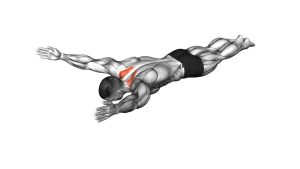
- Lie face down: Position yourself on the floor or a mat with your legs extended and your body relaxed.
- Set the upper body: Keep your forehead lightly hovering or gently resting in a neutral position without cranking the neck up.
- Bring the arms into a W: Bend the elbows and pull them near your sides so the upper arms and forearms create a W-like shape.
- Brace lightly: Tighten the abs just enough to avoid excessive lower-back arching.
- Pack the shoulders: Draw the shoulder blades slightly down and back before the rep begins.
Tip: If the floor feels uncomfortable, place a folded towel under the chest or forehead so you can stay relaxed and consistent.
Execution (Step-by-Step)
- Start in the W position: Lift the elbows and hands slightly off the floor while keeping the shoulders away from the ears.
- Squeeze the upper back: Initiate the movement by pulling the shoulder blades together with control.
- Extend into the T: Straighten the arms outward to shoulder level until your body forms a T shape.
- Pause briefly: Hold the T position for a moment while maintaining tension through the rear delts and mid-back.
- Return to W: Bend the elbows and guide the arms back in under control without dropping them.
- Repeat smoothly: Keep the tempo steady and make each rep look identical.
Pro Tips & Common Mistakes
- Lead with the scapulae: Think “move the shoulder blades first, then the arms.”
- Keep the neck neutral: Avoid lifting the chin too high or staring forward.
- Use a small clean range: Better reps beat higher reps done with momentum.
- Do not shrug: Keep the traps from creeping toward the ears.
- Do not overarch: Maintain light core tension so the lower back does not dominate.
- Control both directions: The return to W should be just as deliberate as the move into T.
- Pause for more challenge: A 1–2 second hold in each position can make the drill much more effective without adding load.
FAQ
What muscles should I feel during the Prone W to T Raise?
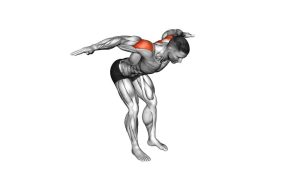
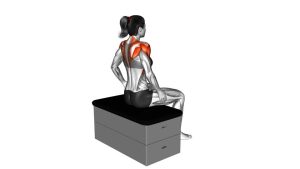
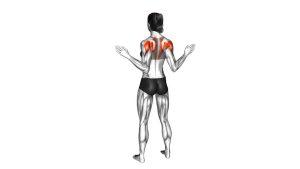
You should mainly feel the upper back working—especially the mid traps, lower traps, rhomboids, and rear delts. A little effort through the spinal stabilizers is normal, but the neck should not dominate.
Is this a strength exercise or a posture exercise?
It is primarily an activation and control exercise. It helps improve posture, scapular mechanics, and shoulder stability, though it can also build muscular endurance in the upper back.
Can beginners do this movement?
Yes. Beginners can shorten the range of motion, reduce the arm lift, or pause less at the top. The exercise is highly scalable as long as technique stays clean.
Should I lift my chest off the floor?
A slight chest lift is acceptable, but it should be subtle. The exercise is not meant to become a big spinal extension movement. Most of the work should still come from the upper back and shoulders.
Where should I place this in a workout?
It works well in a warm-up, posture circuit, shoulder-prep sequence, or as a finisher after rows and other pulling exercises.
Recommended Equipment (Optional)
- Exercise Mat — adds comfort for prone floor work and keeps your setup stable
- Resistance Bands — useful for pairing with rows, pull-aparts, and other upper-back activation drills
- Foam Roller — helpful before training to improve upper-back mobility and tissue readiness
- Yoga Mat — a good option if you want a thinner, grippy surface for bodyweight mobility and activation work
- Door-Anchor Resistance Band Set — useful for progressing into band rows, face pulls, and posture-focused accessory work at home
Tip: For this movement, comfort and control matter more than heavy equipment. A simple mat and a good resistance-band setup usually cover most home training needs.