Back Squeeze: Proper Form, Benefits, Sets, Tips & FAQ
Learn how to perform the Back Squeeze with proper form to improve shoulder posture, activate the rear delts and upper back, and build better scapular control. Includes setup, execution, sets by goal, tips, FAQs, and recommended equipment.
Back Squeeze
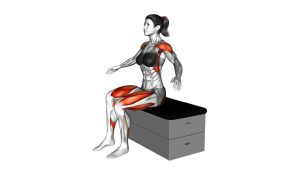
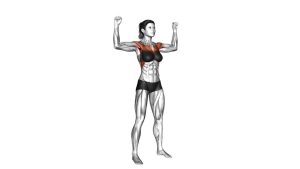
This exercise is ideal as a warm-up, posture reset, or light activation drill before shoulder and upper-back training. The movement should feel clean and deliberate, with tension centered around the back of the shoulders and between the shoulder blades. You should not feel aggressive neck tension, lower-back arching, or shrugging through the upper traps.
Quick Overview
| Body Part | Shoulders |
|---|---|
| Primary Muscle | Rear deltoids |
| Secondary Muscle | Rhomboids, middle trapezius, scapular stabilizers |
| Equipment | None |
| Difficulty | Beginner |
Sets & Reps (By Goal)
- Activation before upper-body training: 2–3 sets × 10–15 reps (1–2 second squeeze, 30–45 sec rest)
- Posture practice: 2–4 sets × 12–20 reps (slow tempo, light effort, 30–60 sec rest)
- Shoulder control / rehab-style work: 2–3 sets × 8–12 reps (2–3 second squeeze, 45–60 sec rest)
- Desk break reset: 1–2 sets × 8–12 reps (easy effort, no strain)
Progression rule: Increase control, pause quality, and rep smoothness before adding difficulty. This exercise works best when the shoulder blades move well and the neck stays relaxed.
Setup / Starting Position
- Choose your position: Sit or stand tall with your spine neutral and ribs stacked over the hips.
- Raise the arms forward: Extend both arms in front of you around shoulder height with elbows mostly straight.
- Set the shoulders: Keep them down and relaxed—avoid shrugging toward the ears.
- Brace lightly: Engage the core just enough to avoid leaning back or arching the lower back.
- Start long: Reach forward slightly so the upper back is neutral, not rounded aggressively.
Tip: Keep the chin neutral and chest tall. The goal is to move from the shoulder blades, not from the lower back.
Execution (Step-by-Step)
- Begin from the start position: Arms extended in front, shoulders relaxed, chest open.
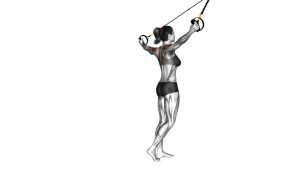
- Pull the shoulder blades together: Move the arms slightly outward and back as you retract the scapulae.
- Keep the elbows nearly straight: Do not bend too much or turn the exercise into a row.
- Squeeze the upper back: Pause briefly when the shoulder blades come together.
- Return with control: Slowly reach back to the starting position without losing posture.
Pro Tips & Common Mistakes
- Lead with the shoulder blades: Think about pulling the scapulae together rather than flinging the arms backward.
- Keep the neck relaxed: Avoid forward-head posture and shrugging.
- Use a small-to-moderate range: Bigger is not always better—quality beats range.
- Do not arch the lower back: Stay tall through the torso and avoid leaning.
- Pause at the squeeze: A brief hold improves awareness and muscle activation.
- Use smooth reps: Fast, jerky movement reduces the training effect.
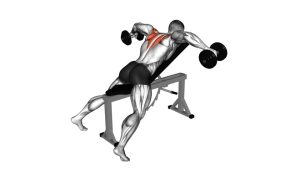
- Pair it well: This drill works great before reverse flys, rows, face pulls, or shoulder rehab work.
FAQ
What muscles does the Back Squeeze work?
The Back Squeeze primarily targets the rear deltoids, while also training the rhomboids, middle trapezius, and other small muscles that help control the shoulder blades.
Is the Back Squeeze good for posture?
Yes. It can be very useful for improving awareness of scapular position and helping counter the rounded-shoulder posture many people develop from desk work or screen time.
Should I bend my elbows during the movement?
Only slightly. Too much elbow bend usually turns the exercise into more of a rowing pattern. For this version, keep the arms mostly straight and focus on the shoulder blades.
Can I use this as a warm-up before shoulder workouts?
Absolutely. It is a great low-fatigue drill before exercises like reverse flys, rows, lateral raises, or pressing work when you want better shoulder positioning and upper-back engagement.
What should I avoid during Back Squeezes?
Avoid shrugging, over-arching your lower back, forcing a huge range, or snapping through the reps. This exercise should feel controlled, light, and deliberate.
Recommended Equipment (Optional)
- Resistance Bands Set — useful for progressing posture drills, rows, pull-aparts, and shoulder activation work
- Foam Roller — helpful for upper-back mobility and soft-tissue prep before posture or shoulder sessions
- Exercise / Yoga Mat — gives you a comfortable surface for floor-based shoulder and mobility work
- Posture Corrector — a light reminder tool that may help reinforce better shoulder positioning between workouts
- Shoulder Mobility Strap — useful for mobility drills, shoulder opening, and warm-up flows
These product categories are commonly available on Amazon, including resistance band sets, foam rollers, posture braces, yoga mats, and shoulder mobility tools.