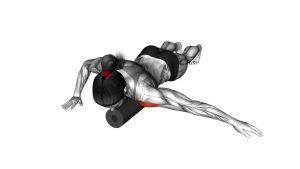
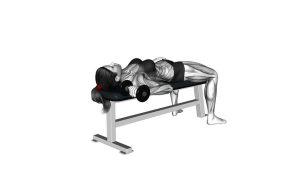
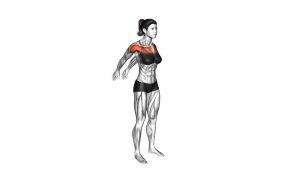
Seated Ballerina: Proper Form, Muscles Worked, Sets, Tips & FAQ
Learn how to do the Seated Ballerina with proper form to improve shoulder mobility, posture, and scapular control. Includes muscles worked, setup, execution, sets and reps, mistakes, FAQs, and recommended equipment.
Seated Ballerina
This exercise is most effective when the arms move with control and the shoulders remain relaxed. You should feel light work through the rear delts, mid traps, rhomboids, and other scapular stabilizers rather than tension in the neck. The goal is to improve movement quality, not to chase fatigue.
Quick Overview
| Body Part | Shoulders |
|---|---|
| Primary Muscle | Posterior deltoids and scapular stabilizers |
| Secondary Muscle | Middle trapezius, rhomboids, upper back, rotator cuff |
| Equipment | None |
| Difficulty | Beginner |
Sets & Reps (By Goal)
- Mobility practice: 2–3 sets × 8–12 slow reps
- Warm-up activation: 1–3 sets × 6–10 controlled reps before upper-body training
- Posture / shoulder control: 2–4 sets × 10–15 reps with smooth tempo
- Recovery / movement quality: 1–2 easy sets × 6–8 reps, staying well short of fatigue
Progression rule: Increase range of motion and control before increasing total volume. Cleaner reps with better scapular movement are more valuable than simply doing more repetitions.
Setup / Starting Position
- Sit tall on the floor: Use a comfortable cross-legged or butterfly-style position that lets you stay upright.
- Lengthen the spine: Keep the chest open, ribs stacked, and head centered over the torso.
- Relax the shoulders: Let them settle down away from the ears before starting the arm motion.
- Set the arms: Extend the arms softly out to the sides with a slight bend at the elbows.
- Start with control: Brace lightly through the core so the shoulders can move without excessive torso sway.
Tip: If sitting on the floor makes it hard to stay tall, sit on a folded mat, yoga block, or cushion to improve posture.
Execution (Step-by-Step)
- Begin tall: Keep the spine upright and the chest gently lifted without arching the lower back.
- Sweep the arms with control: Move the arms in a smooth, flowing pattern as if tracing a soft ballet-style path.
- Rotate through the shoulders: Let the shoulders move through a comfortable range while keeping the motion fluid and balanced.
- Guide the shoulder blades: Allow the scapulae to glide naturally rather than forcing them into a hard squeeze.
- Return slowly: Finish each rep under control and reset your tall posture before the next repetition.
Pro Tips & Common Mistakes
- Stay tall: Do not slump the chest or round the upper back as the arms move.
- Keep the shoulders low: Avoid shrugging toward the ears.
- Use smooth tempo: This drill is about control, not speed.
- Do not force range: Use only the motion you can control without pinching.
- Keep the neck relaxed: The shoulders and upper back should work more than the neck muscles.
- Match both sides: Try to keep the arm path even and symmetrical.
FAQ
What does the Seated Ballerina work the most?
It mainly targets the rear delts, middle traps, rhomboids, and smaller muscles that help stabilize the shoulder blades. It is more of a mobility and control drill than a strength-builder.
Is this exercise good for posture?
Yes. It can help reinforce better shoulder positioning and upper-back awareness when performed with an upright torso and relaxed neck. It works especially well as part of a broader posture routine.
Should I use weights for this movement?
Most people should begin with bodyweight only. The goal is smooth shoulder motion and scapular control. Adding load too early often makes the movement sloppy.
When should I use the Seated Ballerina in a workout?
It fits well in a warm-up, mobility circuit, posture session, or recovery-focused routine. It can also be used between strength sets to keep the shoulders moving well.
What if sitting on the floor is uncomfortable?
Sit on a folded towel, yoga block, or cushion, or use a chair while keeping the same tall posture and controlled arm pattern.
Recommended Equipment (Optional)
- Shoulder Resistance Bands — useful for pairing with light activation and shoulder stability work
- Exercise Bands Set — versatile for posture drills, pull-aparts, and rotator cuff training
- Yoga Mat — adds comfort and stability for seated floor-based mobility work
- Foam Roller — helpful for thoracic mobility work that supports better shoulder movement
- Yoga Block — can elevate the hips to make tall seated posture easier to maintain
Tip: For this exercise, comfort and clean movement matter more than resistance. Start with simple support tools before adding anything more advanced.