Kettlebell Seesaw Press: Proper Form, Sets, Benefits, Tips & FAQ
Learn how to do the Kettlebell Seesaw Press with proper form. Discover muscles worked, setup, step-by-step execution, sets by goal, common mistakes, FAQs, and recommended equipment.
Kettlebell Seesaw Press
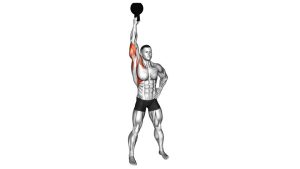
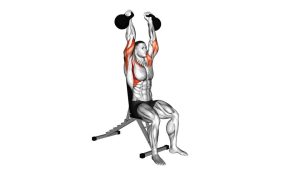
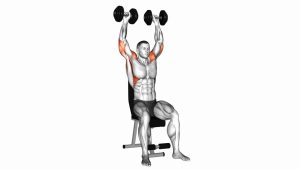
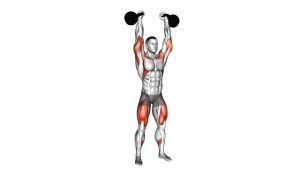
The Kettlebell Seesaw Press is more than a simple shoulder exercise. Because the arms move in opposite directions, your trunk has to resist shifting, twisting, and overextending while each kettlebell changes position. That makes it a strong choice for lifters who want to build pressing strength with an added stability demand. The best reps look smooth, balanced, and controlled rather than rushed or forceful.
Quick Overview
| Body Part | Shoulders |
|---|---|
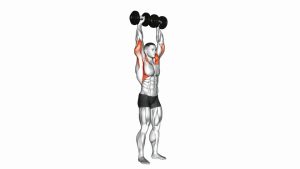
| Primary Muscle | Deltoids (front and lateral heads) |
| Secondary Muscle | Triceps, upper chest, serratus anterior, core stabilizers, upper back |
| Equipment | Two kettlebells |
| Difficulty | Intermediate |
Sets & Reps (By Goal)
- Strength: 4–5 sets × 4–6 reps per side with 90–150 seconds of rest
- Muscle growth: 3–4 sets × 6–10 reps per side with 60–90 seconds of rest
- Shoulder endurance: 2–4 sets × 10–15 reps per side with 45–75 seconds of rest
- Technique practice: 2–3 sets × 5–8 smooth reps per side using moderate load and controlled tempo
Progression rule: Build quality before load. Add weight only when you can keep both kettlebells under control, maintain a stable torso, and lock out cleanly without leaning backward.
Setup / Starting Position
- Stand tall: Place your feet about shoulder-width apart and spread the floor evenly under both feet.
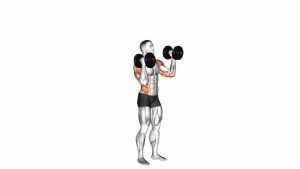
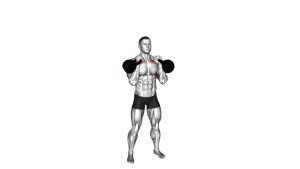
- Clean both kettlebells into the rack: The bells should sit close to the forearms with elbows slightly forward and tucked.
- Brace your trunk: Tighten your abs, keep the ribs down, and avoid arching the lower back.
- Set your shoulders: Keep the upper back engaged and shoulders packed rather than shrugged.
- Start from control: Both bells begin in the rack before the first side presses overhead.
Tip: A solid rack position makes the entire set easier. If the bells feel unstable before the first press, reset before you begin alternating.
Execution (Step-by-Step)
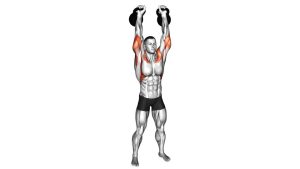
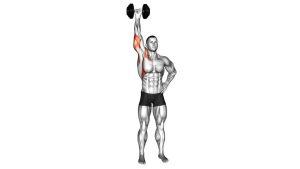
- Press one kettlebell overhead: Drive one arm upward until the elbow is fully extended and the bell is stacked over the shoulder.
- Keep the opposite bell racked: The other arm stays tight near the body, ready for the next transition.
- Begin the seesaw exchange: As the raised kettlebell lowers back to the rack, the opposite kettlebell begins pressing upward.
- Alternate continuously: One side rises while the other side descends, creating a steady rhythm without losing posture.
- Finish under control: Complete all reps with both bells returning to the rack before lowering or resetting.
Pro Tips & Common Mistakes
- Press in a controlled path: Keep the kettlebell close and finish with the wrist stacked over the elbow and shoulder.
- Do not rush the transition: The seesaw pattern should look smooth, not frantic.
- Keep the ribs down: Excessive back arching turns the movement into a compensation pattern.
- Stay balanced on both feet: Avoid shifting hard from side to side during the alternation.
- Maintain a strong rack: A loose non-working arm often causes the whole set to fall apart.
- Use a manageable weight: This exercise rewards control and rhythm more than maximal loading.
- Lock out fully: Finish each press overhead with the arm vertical rather than stopping short.
FAQ
What muscles does the kettlebell seesaw press work?
It mainly targets the deltoids, especially the front shoulders, while the triceps, upper chest, and core stabilizers assist throughout the movement.
Is the kettlebell seesaw press better than a standard double press?
It is not necessarily better, but it adds a stronger coordination and anti-rotation challenge. A standard double press is simpler for pure bilateral pressing strength, while the seesaw version demands more control.
Should I use the same kettlebell weight in both hands?
In most cases, yes. Using matching kettlebells keeps the rhythm balanced and makes technique easier to learn. Uneven loading is usually better saved for more advanced variation work.
How fast should I perform the seesaw press?
Use a moderate, controlled tempo. Each transition should feel smooth, with no jerking or dropping into the rack. Fast reps often reduce shoulder control and increase torso compensation.
Can beginners do the kettlebell seesaw press?
Most beginners should first master the single-arm kettlebell press and a stable double kettlebell rack position. After that, they can introduce the seesaw pattern with light weights.
Recommended Equipment (Optional)
- Adjustable Kettlebell — useful if you want one space-saving kettlebell with multiple weight options for pressing progressions
- Competition Kettlebell — consistent shape and handle sizing can make rack position and overhead pressing feel more predictable
- Lifting Wrist Wraps — extra wrist support can help some lifters stay more comfortable during overhead work
- Gym Chalk — helps improve grip when your hands get sweaty during kettlebell sessions
- Exercise Mat — gives you a more defined training area and can help protect flooring in a home gym setup
Choose equipment that helps you keep a stable rack, clean pressing mechanics, and safe control from rep to rep.