Kettlebell Two-Arm Clean: Proper Form, Sets, Tips & FAQ
Learn how to perform the Kettlebell Two-Arm Clean with proper form. Discover muscles worked, setup, step-by-step execution, sets and reps by goal, common mistakes, FAQs, and recommended equipment.
Kettlebell Two-Arm Clean
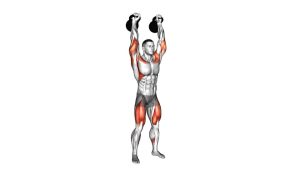
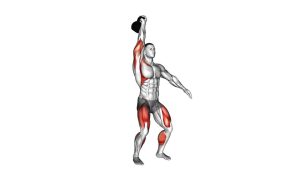
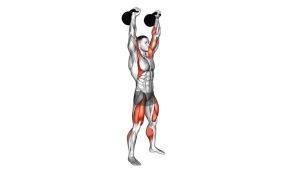
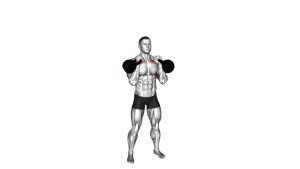
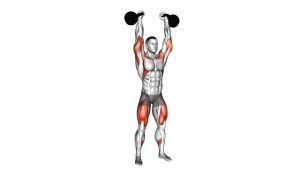
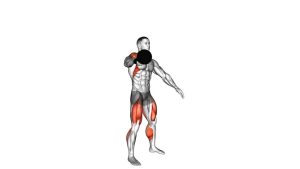
This exercise blends a hinge pattern, explosive extension, and upper-body control into one efficient movement. Performed correctly, the two-arm clean develops power, improves kettlebell handling, strengthens the rack position, and prepares you for other advanced kettlebell lifts such as the push press, jerk, and front squat. Focus on crisp hip extension, relaxed arms, and a smooth turnover rather than muscling the bells upward.
Quick Overview
| Body Part | Shoulders |
|---|---|
| Primary Muscle | Deltoids (especially shoulder stabilizers in the rack position) |
| Secondary Muscle | Glutes, hamstrings, quads, traps, core, forearms, upper back |
| Equipment | Two kettlebells |
| Difficulty | Intermediate |
Sets & Reps (By Goal)
- Power development: 4–6 sets × 3–5 reps with full rest between sets
- Technique practice: 3–5 sets × 5–8 controlled reps
- Conditioning: 3–4 sets × 8–12 reps with moderate rest
- Kettlebell sport preparation: 4–6 sets of timed work using smooth, efficient cycles
Progression rule: Master a soft catch and stable rack position before increasing weight, rep count, or speed.
Setup / Starting Position
- Stand tall with two kettlebells: Place the bells in front of you and set your feet about shoulder-width apart or slightly wider.
- Grip both handles firmly: Hinge at the hips, keep the chest lifted, and take a secure but not overly tense grip.
- Set your posture: Brace the core, keep the spine neutral, and pack the shoulders down and back.
- Load the hips: Shift the bells slightly back between the legs by hinging, not squatting deeply.
- Prepare for an explosive drive: Keep the bells close to the body and your arms relaxed enough to guide rather than pull.
Tip: The cleaner your hinge pattern is, the smoother and more powerful the clean will feel.
Execution (Step-by-Step)
- Hike the kettlebells back: Let the bells move slightly behind you as you hinge at the hips and load the posterior chain.
- Drive explosively through the floor: Extend the hips and knees powerfully to send the kettlebells upward.
- Guide, don’t yank: Keep the arms relatively relaxed while the lower body creates momentum.
- Rotate the hands around the bells: As the kettlebells rise, let them wrap around the forearms instead of flipping over harshly.
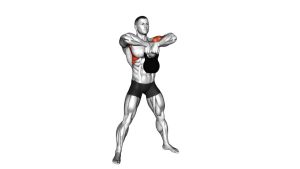
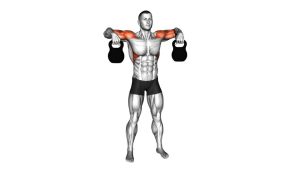
- Receive in the rack position: Finish tall with elbows tucked close to the torso, wrists neutral, and kettlebells resting softly on the forearms and upper chest.
- Reset under control: Either pause in the rack or guide the kettlebells back down into the next rep with a smooth hinge.
Pro Tips & Common Mistakes
- Use hip power first: The clean starts from the hips, not from an arm curl.
- Keep the bells close: A wide bell path wastes energy and makes the catch harsher.
- Avoid over-gripping: Squeezing too hard can make the turnover stiff and inefficient.
- Do not let the bells crash: Rotate your hands around the handles so the kettlebells settle smoothly into rack.
- Stay tall at the top: Do not lean back excessively once the bells reach the rack position.
- Maintain a hinge, not a squat: The loading phase should come from the hips moving back.
- Brace the core: A stable trunk helps transfer force and keeps the movement safer.
FAQ
What muscles does the kettlebell two-arm clean work most?
It heavily involves the glutes and hamstrings for power, while the shoulders, upper back, core, and forearms help guide and stabilize the kettlebells in the rack position.
Is the two-arm clean more of a shoulder exercise or a lower-body exercise?
It is primarily a hip-driven full-body movement. The lower body creates the force, while the shoulders and upper body stabilize and control the catch.
Why do the kettlebells hit my forearms?
This usually happens when you pull with the arms too much or let the bells flip over instead of rotating your hands around them. Practice a smoother turnover and keep the bell path close.
Can beginners do the kettlebell two-arm clean?
Beginners can learn it, but it is usually better to first master the kettlebell deadlift, swing, and single clean mechanics before performing double-bell cleans.
What exercises pair well with the two-arm clean?
It pairs well with front squats, push presses, jerks, rows, and loaded carries. The clean is also a strong transition lift into more advanced kettlebell complexes.
Recommended Equipment
- Cast Iron Kettlebell Pair — essential for practicing balanced two-arm clean work with matching loads
- Competition Kettlebells — uniform shape and handle size can improve consistency for double kettlebell drills
- Weightlifting Chalk — helps maintain grip security during explosive reps without over-squeezing
- Rubber Workout Floor Mat — protects your training surface and gives a more stable base for kettlebell work
- Wrist Support Wraps — optional support if your wrists need extra comfort while learning the rack position
Tip: Start with kettlebells you can control cleanly. Better technique with moderate weight will build more useful skill than forcing heavy reps too soon.