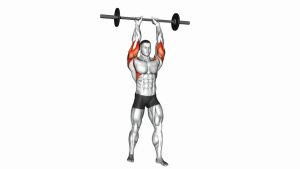
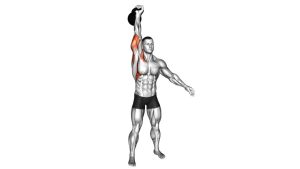
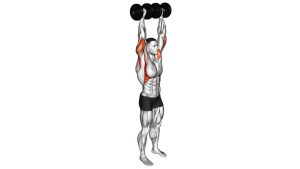
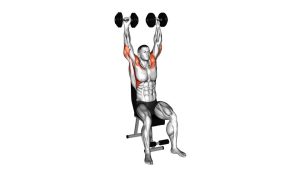
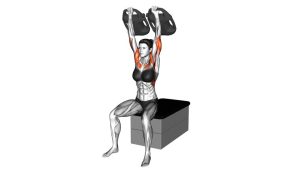
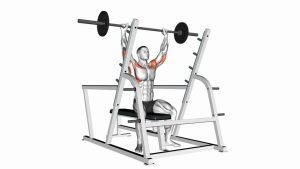
Kettlebell Two-Arm Military Press: Form, Sets, Benefits & FAQ
Learn how to perform the Kettlebell Two-Arm Military Press with proper form. Discover setup, execution tips, sets and reps by goal, common mistakes, FAQs, and recommended equipment for stronger shoulders.
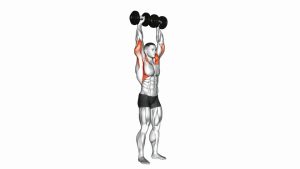
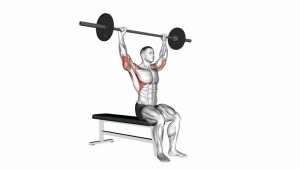
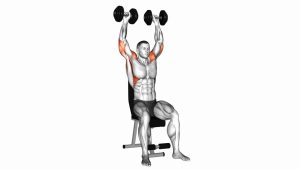
Kettlebell Two-Arm Military Press
This movement is excellent for lifters who want to develop powerful shoulders while reinforcing strict overhead mechanics. Because kettlebells sit differently than dumbbells, they demand more stabilization through the shoulders, upper back, and trunk. The goal is not just to move the weight overhead, but to do it with balance, control, and consistent positioning from start to finish.
Quick Overview
| Body Part | Shoulders |
|---|---|
| Primary Muscle | Deltoids (especially anterior delts, with strong overall shoulder involvement) |
| Secondary Muscle | Triceps, upper chest, upper traps, serratus anterior, core stabilizers |
| Equipment | Two kettlebells |
| Difficulty | Intermediate |
Sets & Reps (By Goal)
- Strength: 4–6 sets × 3–6 reps with 90–150 sec rest
- Muscle growth: 3–4 sets × 6–10 reps with 60–90 sec rest
- Technique & overhead control: 3–5 sets × 5–8 reps with moderate load and perfect tempo
- Conditioning / kettlebell flow support: 2–4 sets × 8–12 reps with lighter load and controlled form
Progression rule: Increase load only when you can press both kettlebells evenly without leaning back, losing the rack position, or cutting the lockout short.
Setup / Starting Position
- Stand tall: Place your feet about shoulder-width apart and distribute your weight evenly across both feet.
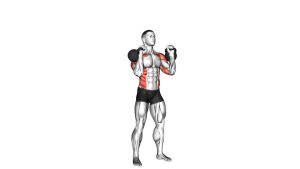
- Clean the kettlebells into the rack: Bring both kettlebells to shoulder level so the bells rest against the outside of the forearms.
- Stack your posture: Keep your chest tall, ribs down, glutes lightly engaged, and core braced.
- Set the elbows: Keep them slightly in front of the body instead of flaring wide to the sides.
- Neutral head and wrists: Look forward, keep the neck neutral, and maintain straight wrists so the handles stay aligned over the forearms.
Tip: Before pressing, think “brace first, then press.” The tighter your torso is, the cleaner your overhead path will be.
Execution (Step-by-Step)
- Start from the rack: Take a breath, brace your core, and lock in your upper-back position.
- Press both kettlebells upward: Drive them overhead in a controlled vertical path without using your legs.
- Move your head naturally: As the bells pass your face, allow the head to move slightly back, then return under the load at the top.
- Reach full lockout: Finish with straight elbows, active shoulders, and the kettlebells balanced directly over the body.
- Lower under control: Bring both kettlebells back down to the rack position smoothly, without dropping or crashing them into the forearms.
- Reset and repeat: Re-brace before each rep to keep the movement strict and symmetrical.
Pro Tips & Common Mistakes
- Brace before every rep: A strong core keeps the torso upright and protects the lower back.
- Do not turn it into a push press: Avoid knee dip or leg drive if your goal is a true military press.
- Keep wrists stacked: Bent wrists waste force and can make the rack position uncomfortable.
- Press in a tight path: The bells should travel up efficiently, not out in a wide arc.
- Lock out fully: Finish each rep with stable elbows and active shoulders overhead.
- Control the eccentric: Lowering the kettlebells with intent builds more stability and keeps the rack position clean.
- Avoid over-arching: One of the most common mistakes is leaning back to compensate for limited strength or mobility.
- Match both sides: Uneven tempo or lockout often reveals a strength imbalance that should not be ignored.
FAQ
What muscles does the Kettlebell Two-Arm Military Press work?
It primarily targets the shoulders, especially the deltoids, while also training the triceps, upper chest, upper traps, and core stabilizers.
Is this exercise better for strength or muscle building?
It works well for both. Lower reps with heavier kettlebells are great for strength, while moderate reps with controlled tempo can be very effective for hypertrophy.
What makes kettlebells different from dumbbells for pressing?
Kettlebells shift the load differently because the center of mass sits below the handle. That creates a unique stability challenge and often demands more control through the shoulder and rack position.
Should I press both kettlebells at the same time or one at a time?
This variation is performed with both kettlebells pressing together. If you are still developing overhead stability, single-arm pressing may help you build control before moving to the double version.
Who should be careful with this exercise?
Anyone with shoulder pain, limited overhead mobility, or poor core control should start lighter and focus on mechanics first. If pressing overhead causes sharp pain, stop and reassess your movement or seek guidance.
Recommended Equipment
- Cast Iron Kettlebell — a durable staple for strict presses, cleans, and foundational strength work
- Competition Kettlebell — consistent size across weights makes rack and overhead positioning more predictable
- Weightlifting Belt — optional support for lifters performing heavier strict overhead work
- Grip Chalk — improves handle control and helps keep the press stable as loads increase
- Resistance Bands Set — useful for shoulder warm-ups, activation drills, and extra upper-back work
Tip: Choose kettlebells that let you maintain a clean rack position and a strict overhead line. Stable technique matters more than forcing heavy reps.