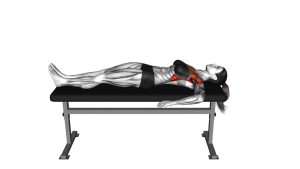
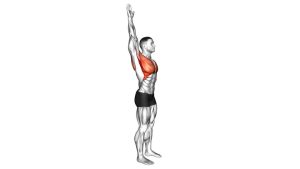
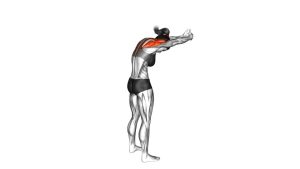
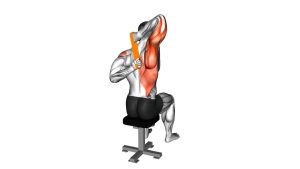
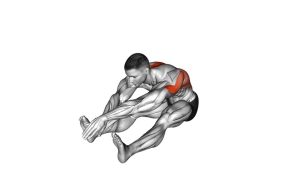
Rear Deltoid Stretch: Proper Form, Benefits, Tips & FAQ
Learn how to do the Rear Deltoid Stretch with proper form to improve shoulder mobility, reduce tightness, and target the back of the shoulder. Includes setup, execution, tips, FAQ, and recommended equipment.
Rear Deltoid Stretch
This stretch works best when performed with gentle pressure and controlled breathing. It can be used before training as part of a warm-up, after workouts to reduce muscle tightness, or during recovery sessions to maintain shoulder mobility. Keep the movement smooth and avoid forcing the arm too aggressively across the body.
Quick Overview
| Body Part | Rear Shoulders |
|---|---|
| Primary Muscle | Rear Deltoid (Posterior Deltoid) |
| Secondary Muscle | Rotator cuff stabilizers, middle trapezius, rhomboids |
| Equipment | None |
| Difficulty | Beginner |
Sets & Reps (By Goal)
- Warm-up before upper-body training: 1–2 sets per side, hold 15–20 seconds
- Mobility improvement: 2–4 sets per side, hold 20–30 seconds
- Post-workout recovery: 2–3 sets per side, hold 20–40 seconds
- Daily flexibility routine: 1–3 sets per side, hold 20–30 seconds with easy intensity
Progression rule: Increase hold time gradually before increasing stretch intensity. Better mobility comes from consistency and control, not from pulling harder.
Setup / Starting Position
- Stand or sit tall: Keep your spine neutral, chest up, and shoulders relaxed.
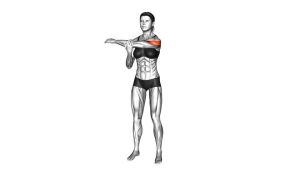
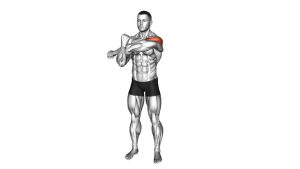
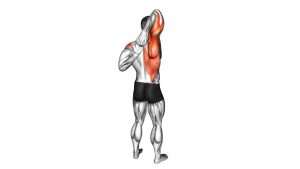
- Raise one arm: Bring the working arm straight across the front of your body at about chest height.
- Support the stretch: Use your opposite hand or forearm to hold the upper arm just above the elbow.
- Keep the shoulder down: Avoid shrugging or letting the working shoulder lift toward your ear.
- Brace lightly: Keep your torso square and avoid rotating your body to fake extra range.
Tip: The arm should stay roughly parallel to the floor. A slightly lower arm position often feels more comfortable for people with tight shoulders.
Execution (Step-by-Step)
- Move the arm across the body: Bring one arm horizontally across your chest.
- Apply gentle pressure: Use the opposite arm to pull the working arm a little closer to your body.
- Hold the stretch: Maintain the position while breathing slowly and keeping the shoulder relaxed.
- Feel the target area: You should notice tension in the back of the shoulder, especially around the rear delt.
- Release with control: Slowly return to the start position and repeat on the other side.
Pro Tips & Common Mistakes
- Keep the shoulder relaxed: Do not shrug as you pull the arm across the body.
- Do not force range: Gentle pressure is enough to create an effective stretch.
- Keep the torso still: Avoid twisting to make the stretch look deeper than it is.
- Breathe normally: Slow breathing helps the muscle relax and improves stretch quality.
- Adjust arm height if needed: Small changes in angle can make the stretch more comfortable and targeted.
- Use it strategically: This stretch pairs well with shoulder warm-ups, upper-back work, and post-training recovery sessions.
FAQ
Where should I feel the rear deltoid stretch?
You should feel it mainly in the back of the shoulder. The sensation should be mild to moderate and centered around the rear delt area, not the neck or elbow.
How long should I hold this stretch?
Most people do well with 15 to 30 seconds per side. For mobility or recovery work, you can extend holds slightly as long as the stretch stays comfortable.
Should I do this before or after a workout?
It can work in both settings. Shorter, easier holds fit well in a warm-up, while slightly longer holds are better after training or during recovery sessions.
Can this help with tight shoulders from desk work?
Yes. It can be useful for people who feel stiffness in the shoulders from long periods of sitting, typing, or rounded posture. Pairing it with upper-back strengthening often works even better.
What should I avoid during this stretch?
Avoid jerking the arm, pulling too hard, lifting the shoulder, or twisting your torso. The best results come from a controlled stretch with steady breathing and relaxed posture.
Recommended Equipment (Optional)
- Stretching Strap — useful for general shoulder mobility work and flexibility routines
- Resistance Bands Set — ideal for pairing mobility work with shoulder activation and upper-back exercises
- Foam Roller — helpful for surrounding upper-back and shoulder tissue recovery
- Massage Ball — good for targeted soft-tissue work around the shoulder and upper back
- Yoga Mat — provides a comfortable surface for mobility, stretching, and recovery sessions
Tip: Accessories should support better movement quality, not replace good technique. Use tools that help you stay consistent and comfortable.