Kettlebell Seated Two-Arm Military Press: Form, Sets, Tips & FAQ
Learn how to do the Kettlebell Seated Two-Arm Military Press with proper form. Discover muscles worked, setup, step-by-step execution, sets and reps by goal, common mistakes, FAQs, and recommended equipment.
Kettlebell Seated Two-Arm Military Press
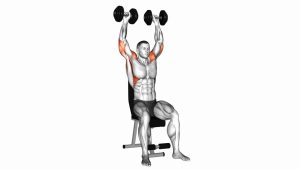
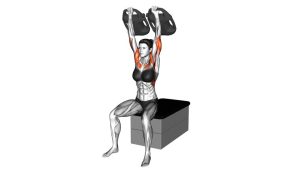
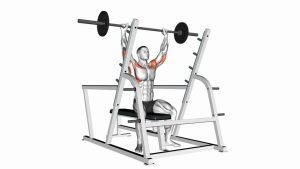
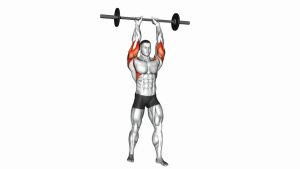
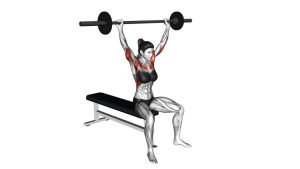
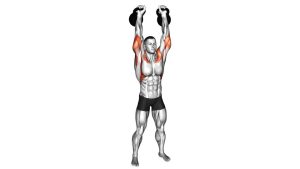
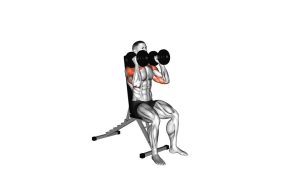
This variation works best when you stay tall, brace the torso, and move the kettlebells with control. In the video, the lift is performed with both kettlebells pressing at the same time, a steady tempo, and a smooth return to the rack. You should feel the front and side delts working hard, with the triceps assisting at the top. Since the seated position limits leg drive, this exercise rewards strict technique and exposes any weakness in shoulder stability or overhead control.
Quick Overview
| Body Part | Shoulders |
|---|---|
| Primary Muscle | Anterior deltoids, medial deltoids |
| Secondary Muscle | Triceps, upper chest, upper traps, serratus anterior, core stabilizers |
| Equipment | Two kettlebells and a flat or upright bench |
| Difficulty | Intermediate |
Sets & Reps (By Goal)
- Strength: 4–5 sets × 4–6 reps, 90–150 seconds rest
- Muscle building: 3–4 sets × 6–10 reps, 60–90 seconds rest
- Technique and control: 2–4 sets × 5–8 reps, slow eccentric, 60–90 seconds rest
- Shoulder stability / accessory work: 2–3 sets × 10–12 reps, moderate load, 45–75 seconds rest
Progression rule: Add reps before increasing load. Only move to heavier kettlebells when you can keep the torso upright, wrists neutral, and both bells moving evenly through every rep.
Setup / Starting Position
- Sit tall on the bench: Plant both feet firmly on the floor and keep your torso upright with your chest tall but ribs down.
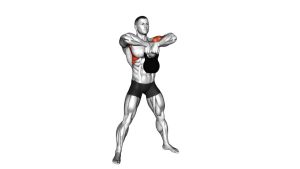
- Clean or place the kettlebells into the rack: Hold one kettlebell in each hand with the bells resting against the outside of the forearms and upper arms.
- Set elbow position: Keep the elbows slightly in front of the body instead of flaring them straight out to the sides.
- Brace your core: Tighten the abs and glutes lightly so the lower back does not overextend during the press.
- Stack the wrists: Keep the wrists neutral and the handles seated deep in the palms for stable overhead pressing.
Tip: Think of the starting position as “tall, tight, and ready to press.” A sloppy rack position usually leads to a sloppy lockout.
Execution (Step-by-Step)
- Start from the double rack: Hold both kettlebells close to the body with the forearms vertical and shoulders packed.
- Press both kettlebells overhead: Drive them upward at the same time in a smooth path while keeping the torso upright.
- Move slightly back into alignment: As the bells rise, allow the arms to finish in line with the shoulders and hips for a stacked overhead position.
- Lock out without overreaching: Straighten the elbows at the top, but do not shrug excessively or jam the shoulders upward.
- Lower under control: Bring both kettlebells back down slowly to the rack position instead of letting them drop.
- Reset and repeat: Re-brace the core before starting the next repetition.
Pro Tips & Common Mistakes
- Stay tall on the bench: Avoid turning the press into a standing lean-back pattern while seated.
- Keep ribs down: Overhead pressing gets much safer and stronger when the ribcage and pelvis stay stacked.
- Press in a controlled path: Let the bells travel naturally overhead instead of forcing them too far forward.
- Do not flare the elbows too early: A slightly forward elbow position usually creates a stronger pressing line.
- Use the eccentric: Lowering the kettlebells slowly builds shoulder stability and reinforces better technique.
- Do not slam the lockout: Finish strong, but do not hyperextend the elbows or lose shoulder control.
- Avoid wrist collapse: Neutral wrists help transfer force cleanly from the arms into the kettlebells.
- Reduce load if symmetry breaks: If one side rises faster or drifts outward, lighten the kettlebells and clean up the pattern.
FAQ
What muscles does the kettlebell seated two-arm military press work?
It mainly targets the front and side delts. The triceps help extend the elbows, while the upper back and core stabilize the body during the overhead press.
Why do this press seated instead of standing?
The seated position reduces help from the legs and makes the press more strict. That usually increases the challenge on the shoulders and highlights any weakness in trunk stability or overhead control.
Should I use a bench with back support?
You can, but many lifters prefer a bench with minimal or no back support to train more active trunk control. Whichever setup you choose, keep your torso upright and avoid leaning back hard into the press.
Is it better to press both kettlebells together or one at a time?
Pressing both together lets you load the movement more directly and train symmetrical overhead strength. Single-arm versions are excellent too, especially for fixing side-to-side imbalances or increasing anti-rotation demand.
How heavy should I go?
Choose kettlebells you can control for full, clean reps. If you must arch your back, lose the rack position, or grind every rep with poor form, the load is too heavy for quality training.
Recommended Equipment
- Adjustable Kettlebell — practical for progressive overload without needing multiple separate kettlebells
- Competition Kettlebell — consistent handle size and bell shape can improve comfort and pressing consistency
- Flat Weight Bench — gives you a stable seated base for strict pressing practice
- Wrist Wraps for Weightlifting — useful for lifters who want extra wrist support during heavy overhead work
- Weightlifting Chalk — helps improve grip security when handling kettlebells for multiple sets
Tip: For most lifters, the best setup is simple: a stable bench, a comfortable kettlebell pair, and enough load to challenge the press without sacrificing control.