Dumbbell Incline Rear Fly : Form, Rear Delt Tips, Sets & FAQ
Learn how to perform the Dumbbell Incline Rear Fly with proper form to target the rear delts, improve shoulder balance, and build upper-back control. Includes setup, execution, sets and reps, mistakes, FAQs, and recommended equipment.
Dumbbell Incline Rear Fly
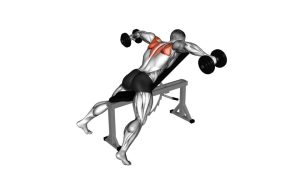
This variation is especially useful when you want cleaner rear-delt isolation than a standing reverse fly. Because your chest stays supported on the bench, it is easier to control the range of motion, reduce body swing, and keep tension on the target muscles. Use a light-to-moderate load and prioritize form over weight.
Quick Overview
| Body Part | Rear Shoulders |
|---|---|
| Primary Muscle | Posterior deltoids (rear delts) |
| Secondary Muscle | Rhomboids, middle trapezius, rotator cuff stabilizers |
| Equipment | Dumbbells, incline bench |
| Difficulty | Beginner to Intermediate |
Sets & Reps (By Goal)
- Muscle growth: 3–4 sets × 10–15 reps with controlled tempo and 45–75 sec rest
- Shoulder balance / accessory work: 2–4 sets × 12–20 reps with light-to-moderate weight
- Technique practice: 2–3 sets × 8–12 reps using strict form and a lighter load
- Finisher burn set: 2–3 sets × 15–20 reps with short rest and perfect control
Progression tip: Add reps before adding load. If the upper traps take over or you start swinging, the weight is too heavy for clean rear-delt work.
Setup / Starting Position
- Set the bench: Adjust an incline bench to a moderate angle, usually around 30–45 degrees.
- Lie chest-supported: Position your chest firmly against the pad with your head in a neutral position.
- Plant your feet: Keep both feet stable on the floor for balance and full-body control.
- Hold the dumbbells: Let the arms hang down under the shoulders with a neutral grip and a slight bend in the elbows.
- Brace lightly: Keep the core engaged, chest supported, and shoulders pulled away from the ears.
Tip: Start with lighter dumbbells than you think you need. Rear delts respond better to precision than to heavy cheating reps.
Execution (Step-by-Step)
- Start under control: Begin with the dumbbells hanging below the shoulders and the chest fully supported on the bench.
- Raise the arms outward: Lift both dumbbells out to the sides in a wide arc, keeping the elbows softly bent.
- Lead with the rear delts: Think about moving the upper arms rather than throwing the weights with the hands.
- Pause near the top: Stop when the arms reach about shoulder level or slightly below, then briefly squeeze the rear delts.
- Lower slowly: Return the dumbbells to the start position with control, maintaining tension the entire time.
Pro Tips & Common Mistakes
- Use lighter weights: Heavy dumbbells often turn this into an upper-trap swing instead of a rear-delt fly.
- Keep a soft elbow bend: Do not fully straighten or excessively bend the arms during the lift.
- Avoid shrugging: Keep the shoulders down so the rear delts stay dominant.
- Lift in a wide path: Think “out and slightly back,” not straight up.
- Control the eccentric: Lowering too fast removes tension and reduces the training effect.
- Do not slam reps: Smooth, repeatable motion gives better rear-shoulder activation than momentum.
- Keep the neck neutral: Do not crank the head up while lying on the bench.
FAQ
What muscles does the Dumbbell Incline Rear Fly work?
The main target is the rear deltoid. The rhomboids, middle traps, and smaller shoulder stabilizers also assist.
Is this better than a standing rear fly?
For strict isolation, many lifters find the incline version easier to control because the bench support reduces momentum and lower-back involvement.
How heavy should I go on rear delt flies?
Usually lighter than pressing or rowing movements. Choose a weight that allows clean reps without shrugging, swinging, or losing chest contact with the bench.
Should I squeeze my shoulder blades together?
A light natural squeeze is fine, but do not over-pinch so much that the upper back takes over completely. The rear delts should still drive the movement.
Can beginners do this exercise?
Yes. It is beginner-friendly when done with light dumbbells and controlled range of motion. Chest support makes the exercise easier to learn safely.
Recommended Equipment
- Adjustable Dumbbells — ideal for progressive overload while saving space in a home gym
- Adjustable Weight Bench — needed to create the chest-supported incline position for strict rear-delt work
- Resistance Band Set — useful for warm-ups, shoulder activation, and lighter rear-delt accessory work
- Fitness Gloves — can improve grip comfort during higher-rep dumbbell shoulder sessions
- Lifting Straps — optional for lifters whose grip gives out before the rear delts on longer sets
Choose equipment that supports clean mechanics first: a stable bench and comfortable dumbbells matter more than using heavier weights.