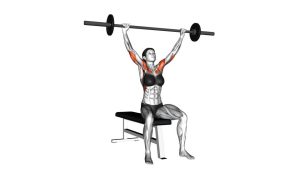
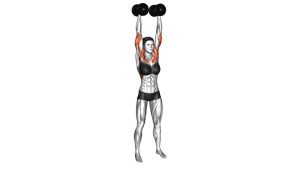
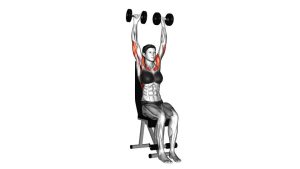
Dumbbell Seated Alternate Press : Form, Sets, Muscles Worked & Tips
Learn how to do the Dumbbell Seated Alternate Press with proper form. Discover muscles worked, setup, execution steps, sets and reps by goal, common mistakes, FAQs, and recommended equipment.
Dumbbell Seated Alternate Press
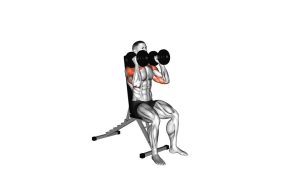
This exercise is ideal for lifters who want a more controlled alternative to standing presses or bilateral seated presses. The alternating pattern helps you focus on each shoulder independently, clean up form, and reduce the tendency to rush through reps. Keep your torso tall, wrists stacked over elbows, and press in a smooth vertical path without leaning back excessively.
Quick Overview
| Body Part | Shoulders |
|---|---|
| Primary Muscle | Anterior deltoids, lateral deltoids |
| Secondary Muscle | Triceps, upper chest, upper traps, core stabilizers |
| Equipment | Dumbbells, flat or adjustable bench with back support |
| Difficulty | Beginner to Intermediate |
Sets & Reps (By Goal)
- Muscle growth: 3-4 sets × 8-12 reps per arm, 60-90 sec rest
- Strength focus: 4-5 sets × 5-8 reps per arm, 90-120 sec rest
- Technique and control: 2-3 sets × 10-15 reps per arm, 45-75 sec rest
- Shoulder endurance: 2-4 sets × 12-15 reps per arm, controlled tempo, 45-60 sec rest
Progression rule: Add reps before adding weight. Increase the load only when you can keep both sides even, maintain bench contact, and press without torso sway or uneven lockout.
Setup / Starting Position
- Set the bench: Use an upright or slightly inclined bench that gives your upper back solid support.
- Sit tall: Place both feet flat on the floor and keep your glutes, upper back, and head comfortably supported.
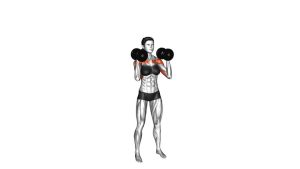
- Bring the dumbbells up: Hold one dumbbell in each hand at shoulder level with palms facing forward or slightly inward.
- Stack the joints: Keep wrists neutral and elbows positioned under or slightly in front of the dumbbells.
- Brace lightly: Tighten your core and keep your ribs down so the press comes from the shoulders instead of the lower back.
Tip: A slight natural elbow angle in front of the body usually feels better on the shoulders than forcing the elbows straight out to the sides.
Execution (Step-by-Step)
- Start from the rack position: Both dumbbells begin at shoulder height with your torso stable against the bench.
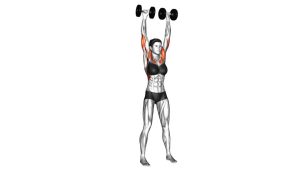
- Press one arm: Drive one dumbbell overhead until the elbow is nearly straight, keeping the wrist stacked and the path vertical.
- Hold the opposite side steady: Do not let the non-working arm drift, collapse, or drop too early.
- Lower with control: Bring the pressed dumbbell back down to shoulder height without bouncing.
- Switch arms: Press the opposite dumbbell while maintaining the same body position and tempo.
- Continue alternating: Repeat side to side until all programmed reps are complete on each arm.
Pro Tips & Common Mistakes
- Keep your ribs down: Avoid turning the press into a leaning back chest-up motion.
- Press one arm fully before switching: Don’t rush the transition or shorten the range.
- Control the non-working arm: Keeping it stable improves tension and shoulder endurance.
- Use a natural pressing path: Press up and slightly inward rather than forcing a wide arc.
- Don’t slam the dumbbells together overhead: Finish the rep under control.
- Avoid shrugging excessively: Let the shoulders move naturally, but don’t turn the lift into an upper-trap heave.
- Match both sides: Start with your weaker arm if one shoulder lags behind.
FAQ
What muscles does the Dumbbell Seated Alternate Press work?
The main muscles are the anterior deltoids and lateral deltoids. The triceps, upper chest, and stabilizing muscles of the core and upper back also assist.
Is alternating better than pressing both dumbbells together?
Not always better, but different. Alternating reps can improve control, expose left-to-right imbalances, and increase time under tension because one side stays working while the other presses.
Should I use a bench with back support?
Yes, especially for beginners and intermediate lifters. Back support helps reduce lower-back compensation and lets you focus more directly on the shoulders.
How low should I lower the dumbbells?
Lower them until they return to a strong shoulder-height start position with your wrists stacked and shoulders controlled. Do not force an excessively deep bottom position if it causes shoulder discomfort.
Can this exercise help fix shoulder imbalances?
It can help identify and improve side-to-side differences because each arm must press independently. Use controlled reps, match your form on both sides, and avoid letting the stronger arm dictate the pace.
Recommended Equipment
- Adjustable Dumbbells — ideal for progressive overload without needing multiple pairs
- Adjustable Weight Bench — gives you stable back support for seated pressing variations
- Weightlifting Gloves with Wrist Support — can improve grip comfort and reduce wrist irritation during pressing
- Resistance Bands Set — useful for shoulder warm-ups, activation drills, and accessory work
- Dumbbell Storage Rack — keeps your training area organized and makes weight changes easier
Choose equipment that supports stable pressing mechanics, progressive loading, and safe setup. Adjustable dumbbells and a supportive bench are the most useful pair for this exercise.