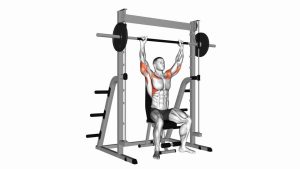
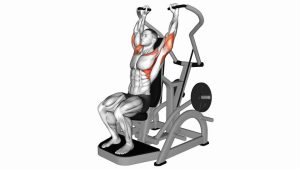
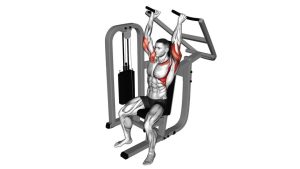
Lever Military Press (Plate-Loaded): Proper Form, Sets, Muscles Worked & FAQ
Learn how to perform the Lever Military Press (Plate-Loaded) with proper form for stronger, fuller shoulders. Includes muscles worked, setup, execution, sets and reps by goal, common mistakes, FAQ, and recommended equipment.
Lever Military Press (Plate-Loaded)
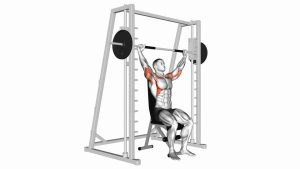
This exercise is ideal for lifters who want a more stable overhead press pattern without sacrificing shoulder loading. The machine helps you focus on deltoid output, consistent range of motion, and controlled tempo. It works well in hypertrophy-focused shoulder sessions, upper-body days, or as a safer alternative when barbell overhead pressing feels uncomfortable.
Quick Overview
| Body Part | Shoulders |
|---|---|
| Primary Muscle | Anterior deltoids, lateral deltoids |
| Secondary Muscle | Triceps, upper chest, upper traps |
| Equipment | Plate-loaded shoulder press / lever military press machine |
| Difficulty | Beginner to Intermediate |
Sets & Reps (By Goal)
- Muscle growth: 3–4 sets × 8–12 reps, 60–90 sec rest
- Strength focus: 4–5 sets × 4–8 reps, 90–150 sec rest
- Technique practice: 2–3 sets × 10–15 reps, light-to-moderate load, 45–75 sec rest
- Shoulder finisher: 2–3 sets × 12–15 reps with controlled tempo
Progression rule: Add reps first, then increase load when you can complete all working sets with steady form and no excessive torso compensation.
Setup / Starting Position
- Adjust the seat: Set the seat so the handles start around lower ear to shoulder height.
- Sit tall: Keep your back against the pad with chest up and ribs stacked.
- Plant the feet: Feet stay flat on the floor to create full-body stability.
- Grip the handles firmly: Keep wrists neutral and aligned with the forearms.
- Set the elbows: Elbows should sit under or slightly in front of the hands, not flared excessively behind the body.
Tip: Before your first work set, run a light warm-up to check that the bottom position feels smooth and shoulder-friendly.
Execution (Step-by-Step)
- Brace and lock in: Keep your core engaged and upper back lightly pressed into the pad.
- Press upward: Drive the handles overhead in a smooth arc without jerking or bouncing.
- Extend with control: Reach near full elbow extension at the top, but avoid slamming into lockout.
- Pause briefly: Hold the top for a moment to keep tension on the delts.
- Lower under control: Bring the handles back down to the starting position slowly until the shoulders are loaded again.
- Repeat evenly: Maintain the same range, tempo, and posture on every rep.
Pro Tips & Common Mistakes
- Keep wrists stacked: Do not let them bend backward under load.
- Use a controlled descent: The lowering phase helps build more tension and better shoulder control.
- Do not overarch: Excessive lower-back extension turns the press into a torso-driven rep.
- Avoid crashing at the bottom: Lower the arms smoothly instead of dropping the plates.
- Do not shrug too early: Let the delts do the work before the traps take over.
- Train through a safe range: Stop short of any painful depth if your shoulders feel pinchy at the bottom.
FAQ
What muscles does the Lever Military Press work most?
It mainly targets the anterior deltoids and lateral deltoids, while the triceps and upper chest assist the press.
Is this better than a dumbbell shoulder press?
It is not automatically better, but it is often more stable and easier to load progressively. That makes it excellent for focused hypertrophy and safer high-effort sets.
Should I lock out fully at the top?
You can reach near full extension, but avoid aggressively snapping the elbows straight. Stay controlled and keep tension on the shoulders.
Can beginners use this machine?
Yes. The guided path makes it beginner-friendly, especially for learning pressing mechanics and training the shoulders without the balance demands of free weights.
How low should I lower the handles?
Lower until you reach a strong, pain-free stretched position around shoulder level. If the bottom feels uncomfortable, shorten the range slightly and keep control.
Recommended Equipment
- Wrist Wraps for Weightlifting — helpful for extra wrist support on heavier pressing sets
- Weightlifting Belt — useful for bracing support during hard machine press sets
- Resistance Bands Set — great for warm-ups, shoulder activation, and accessory work
- Foam Roller — useful for upper-back and shoulder-girdle recovery between sessions
- Exercise Mat — convenient for mobility drills, band warm-ups, and floor-based shoulder prep work
Tip: Accessories should improve comfort, setup quality, or recovery. They should not replace proper technique and sensible loading.