Barbell Incline Lying Rear Delt Raise: Form, Muscles Worked, Sets, Tips & FAQ
Learn how to perform the Barbell Incline Lying Rear Delt Raise with proper form. Discover muscles worked, setup, step-by-step execution, sets and reps by goal, common mistakes, FAQs, and recommended equipment.
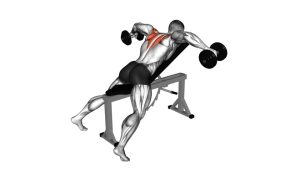
Barbell Incline Lying Rear Delt Raise
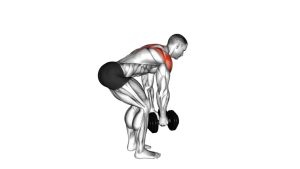
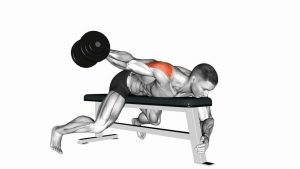
This variation challenges the rear delts with a fixed bilateral load, which makes control and symmetry especially important. Because a barbell connects both arms, it can be harder to fine-tune range and wrist position than dumbbells. Use a light-to-moderate load, avoid shrugging, and focus on clean reps that keep tension in the back of the shoulders from start to finish.
Quick Overview
| Body Part | Shoulders |
|---|---|
| Primary Muscle | Rear deltoids (posterior delts) |
| Secondary Muscle | Rhomboids, middle traps, rotator cuff stabilizers, upper back stabilizers |
| Equipment | Incline bench, barbell, weight plates, collars |
| Difficulty | Intermediate — requires control, shoulder awareness, and careful loading |
Sets & Reps (By Goal)
- Muscle growth: 3–4 sets × 10–15 reps with controlled tempo and 60–90 sec rest
- Technique and control: 2–4 sets × 8–12 reps with light weight and strict form
- Shoulder accessory work: 2–3 sets × 12–20 reps after bigger pulling or pressing movements
- Upper-back endurance: 2–3 sets × 15–20 reps using a lighter load and clean range of motion
Progression rule: Add reps before adding load. Only increase the weight when you can keep the elbows leading, the chest supported, and the shoulders from shrugging.
Setup / Starting Position
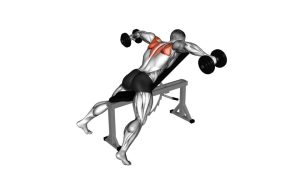
- Set the bench: Adjust an incline bench to a moderate angle, usually around 30–45 degrees.
- Lie face down: Place your chest firmly against the bench with your head in a neutral position.
- Plant your feet: Keep both feet on the floor to create balance and reduce unnecessary movement.
- Grip the barbell: Use a pronated (overhand) grip, typically around shoulder-width or slightly wider.
- Start at full stretch: Let the arms hang below the shoulders with a small bend in the elbows.
- Brace lightly: Keep the ribs and torso stable against the bench without tensing the neck.
Tip: Start lighter than you think. This exercise gets difficult quickly when performed with proper rear-delt mechanics.
Execution (Step-by-Step)
- Set the shoulders: Keep your chest down, neck neutral, and shoulders away from your ears.
- Raise in a wide arc: Lift the barbell outward and upward like a reverse fly, not like a row.
- Lead with the elbows: Think about moving the upper arms out to the sides rather than pulling the bar toward your torso.
- Pause near the top: Stop when your upper arms are roughly in line with your torso or slightly below parallel to the floor.
- Squeeze the rear delts: Hold briefly without jerking, shrugging, or yanking the bar higher.
- Lower under control: Return slowly to the stretched start position while keeping tension on the rear delts.
Pro Tips & Common Mistakes
- Use a light load: Rear delts respond better to precision than ego lifting.
- Keep the chest glued to the bench: Lifting the torso reduces isolation and adds momentum.
- Don’t turn it into a row: The arms should move out wide, not straight back toward the ribs.
- Avoid shrugging: Letting the upper traps dominate takes stress away from the rear delts.
- Maintain a soft elbow bend: Locking out the elbows can make the movement feel awkward and overly joint-driven.
- Control the eccentric: The lowering phase is where a lot of rear-delt stimulus comes from.
- Protect the neck: Keep your gaze down and neck neutral instead of craning the head up.
- Choose the right bar path: Think “wide wings” rather than “pull back.”
FAQ
What muscles does the Barbell Incline Lying Rear Delt Raise work?
It primarily targets the rear delts, while the rhomboids, middle traps, and small shoulder stabilizers assist in controlling the movement.
Is this better than dumbbell rear delt raises?
Not necessarily better—just different. A barbell creates a fixed bilateral pattern that can feel stricter, while dumbbells often allow a more natural arm path and easier wrist positioning.
How heavy should I go?
Lighter than most people expect. This is an isolation movement, so the best results usually come from controlled reps, a clear squeeze, and minimal body English.
Why do I feel this more in my traps than my rear delts?
Usually because the weight is too heavy, the shoulders are shrugging, or the movement has turned into a row. Lower the load and think about moving your elbows out wide.
Can beginners do this exercise?
Yes, but many beginners do better starting with dumbbell rear delt raises or a reverse pec deck first. The barbell version requires more control and cleaner mechanics.
Recommended Equipment
- Adjustable Weight Bench — essential for setting the incline angle and supporting strict chest-down positioning
- Straight Barbell — the main tool for loading this rear-delt raise variation
- Barbell Collars — helps keep plates secure and stable during controlled reps
- Light Resistance Bands — useful for shoulder warm-ups, activation drills, and rear-delt prep
- Fractional Plates / Small Change Plates — ideal for small, realistic load progressions on strict shoulder isolation movements
Tip: For rear-delt work, smart setup matters more than heavy loading. A stable bench angle and small weight jumps usually improve performance more than simply adding more weight.