Prayer Push: Proper Form, Shoulder Activation, Sets, Tips & FAQ
Learn how to do the Prayer Push for stronger, more stable shoulders. Get step-by-step form tips, sets and reps by goal, common mistakes, FAQs, and recommended equipment.
Prayer Push
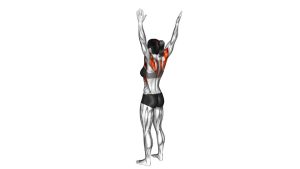
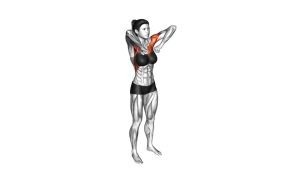
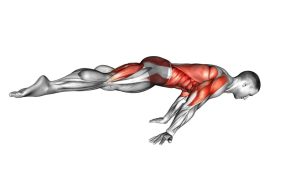
This exercise is best performed with constant tension and a smooth tempo. The palms stay pressed together from start to finish, which creates light resistance and increases shoulder activation. You should feel the front of the shoulders and the muscles around the shoulder blades working, not excessive low-back arching, neck tension, or aggressive shrugging.
Quick Overview
| Body Part | Shoulders |
|---|---|
| Primary Muscle | Anterior deltoids |
| Secondary Muscle | Lateral deltoids, upper trapezius, serratus anterior, rotator cuff stabilizers |
| Equipment | None |
| Difficulty | Beginner |
Sets & Reps (By Goal)
- Warm-up / activation: 2–3 sets × 8–12 reps, slow tempo, 30–45 sec rest
- Shoulder endurance: 2–4 sets × 12–20 reps, steady tension, 30–60 sec rest
- Mobility-control practice: 2–3 sets × 6–10 reps with a 2–3 sec pause overhead
- Posture / movement prep: 1–2 sets × 8–10 reps before pressing or upper-body training
Progression rule: First improve control, range, and overhead pause quality. Then add reps or time under tension before making the drill harder.
Setup / Starting Position
- Stand tall: Place your feet about hip-width apart and keep a neutral spine.
- Bring hands together: Press the palms together in front of your chest in a prayer position.
- Set the shoulders: Relax the neck, keep the shoulders controlled, and avoid shrugging before the movement begins.
- Brace lightly: Keep the ribs down and core engaged so the lower back does not arch during the overhead phase.
- Create pressure: Squeeze the palms together firmly but not maximally.
Tip: Start with a smaller range if overhead mobility is limited. Smooth mechanics matter more than height.
Execution (Step-by-Step)
- Press the palms together: Begin by creating steady inward pressure with the hands.
- Raise the hands upward: Move the hands along the midline from chest level toward overhead.
- Keep posture stacked: Maintain a tall torso, ribs down, and head neutral as the arms travel upward.
- Reach overhead: Bring the hands as high as you can with control while keeping the palms in contact.
- Pause briefly: Hold the top position for 1–3 seconds and feel the shoulders and scapular muscles working.
- Lower with control: Return to the starting position along the same path without losing palm pressure.
- Repeat smoothly: Use controlled reps with no bouncing or rushing.
Pro Tips & Common Mistakes
- Keep constant palm pressure: This is what turns the movement into an activation drill instead of a simple arm raise.
- Don’t arch the lower back: Keep your ribs tucked and core lightly braced.
- Move slowly: Controlled tempo improves time under tension and shoulder awareness.
- Don’t force overhead range: Stop where you can still maintain good alignment.
- Avoid aggressive shrugging: Some natural elevation is fine, but don’t let the neck dominate the movement.
- Use it before pressing workouts: It works well before overhead press, push-ups, or shoulder-focused training.
- Stay symmetrical: Keep both elbows and hands moving evenly so one side does not take over.
FAQ
What does the Prayer Push work?
It primarily targets the front deltoids while also training the muscles that help control shoulder blade motion, especially during upward reaching patterns.
Is the Prayer Push a strength exercise or a warm-up drill?
It is mostly an activation and control drill, but it can also build muscular endurance when done with slow reps and steady tension.
Should my palms stay pressed together the whole time?
Yes. Keeping the palms pressed together adds isometric tension and makes the exercise much more effective.
What if I cannot raise my arms fully overhead?
Use a smaller range and focus on smooth mechanics. Over time, controlled practice can help improve overhead comfort and coordination.
Can I include this in a shoulder warm-up?
Yes. It works well before overhead pressing, upper-body sessions, posture drills, and mobility-focused routines.
Recommended Equipment (Optional)
- Fit Simplify Resistance Loop Exercise Bands — useful for shoulder activation, warm-ups, and adding light resistance to mobility work
- Gaiam Yoga Mat — provides a comfortable surface for floor-based shoulder mobility and warm-up routines
- Vive Massage Ball Set — helpful for soft-tissue work around the chest, upper back, and shoulders before training
- RAD Rounds Massage Ball Set — a compact recovery tool for targeted mobility and trigger-point work
- Adjustable Posture Corrector — optional reminder tool for upper-back and shoulder positioning, but not a substitute for exercise
Tip: Optional tools should support comfort, posture awareness, and mobility work. They should never replace good movement quality and consistent training.