Shoulder Transverse Adduction: Form, Muscles Worked, Sets, Tips & FAQ
Learn how to perform shoulder transverse adduction with proper form. Discover muscles worked, setup, execution steps, sets and reps by goal, common mistakes, FAQs, and recommended equipment.
Shoulder Transverse Adduction
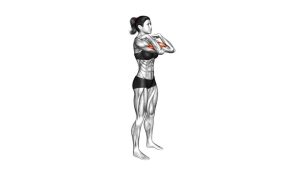
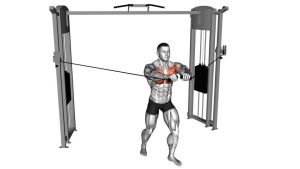
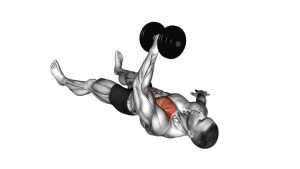
This movement is best trained with smooth control, a slight bend in the elbows, and an emphasis on bringing the upper arms inward rather than turning the exercise into a pressing pattern. Whether you are learning the joint action itself or applying it to chest fly variations, the goal is to keep tension on the chest while maintaining shoulder stability.
Quick Overview
| Body Part | Shoulders |
|---|---|
| Primary Muscle | Pectoralis major |
| Secondary Muscle | Anterior deltoid, coracobrachialis, shoulder stabilizers |
| Equipment | None for movement practice; optional dumbbells, cables, resistance bands, or pec deck machine |
| Difficulty | Beginner to intermediate, depending on loading method |
Sets & Reps (By Goal)
- Movement learning / warm-up: 2–3 sets × 10–15 reps with slow, controlled tempo
- Muscle activation: 2–4 sets × 12–20 reps using light resistance and full control
- Hypertrophy: 3–4 sets × 8–15 reps with cables, dumbbells, or bands
- Technique practice: 2–3 sets × 8–12 reps with a pause at peak contraction
Progression rule: Add range, control, or reps before adding more resistance. The movement should stay smooth and chest-driven, not shoulder-dominant.
Setup / Starting Position
- Stand or sit tall: Keep your chest up, core braced lightly, and shoulders relaxed.
- Raise the arms to shoulder height: Position the arms out to the sides in a wide arc, similar to the starting position of a fly.
- Keep a soft elbow bend: The elbows should stay slightly bent and fixed throughout the rep.
- Set the shoulder blades: Keep them stable without shrugging or over-squeezing.
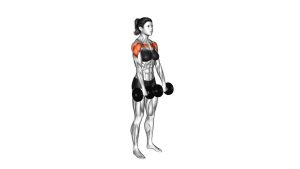
- Choose your resistance: Use no load for movement practice, or add cables, dumbbells, bands, or a machine for training.
Tip: Think of the upper arms moving toward each other rather than the hands simply coming together.
Execution (Step-by-Step)
- Begin from the open position: Arms are out to the sides at roughly shoulder level with a controlled bend in the elbows.
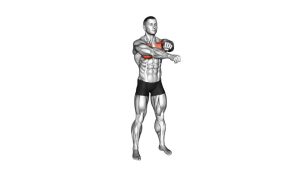
- Move the arms inward: Bring the arms across the body in a wide hugging motion.
- Keep the chest engaged: Focus on the pecs driving the motion instead of pushing with the triceps.
- Pause briefly in front: Stop when the arms meet or nearly meet in front of the chest without losing posture.
- Return under control: Slowly open the arms back to the starting position and maintain shoulder stability.
Pro Tips & Common Mistakes
- Lead with the upper arms: This helps keep the movement chest-focused.
- Use a controlled arc: Fast reps often reduce tension and increase shoulder stress.
- Do not shrug: Keep the upper traps relaxed and shoulders away from the ears.
- Do not over-stretch: Going too far back can irritate the front of the shoulder.
- Keep the chest lifted: Slouching changes the angle and reduces quality tension.
- Use the right load: Too much weight usually causes elbow bend, momentum, and poor shoulder positioning.
FAQ
What muscles work during shoulder transverse adduction?
The main muscle is the pectoralis major. The anterior deltoid and coracobrachialis assist, while the rotator cuff and upper-back stabilizers help keep the shoulder joint controlled.
Is shoulder transverse adduction the same as a chest fly?
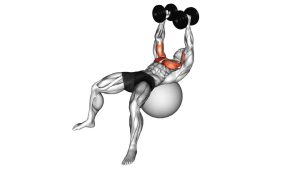
It is the main joint action behind a chest fly. A fly is the exercise; transverse adduction is the shoulder motion that makes it happen.
Should I feel this more in my chest or shoulders?
In most fly-style applications, you should feel it mainly in the chest with some help from the front delts. If the front of the shoulder dominates, reduce the load and improve your setup.
Can beginners practice this without weights?
Yes. Learning the motion without load is a good way to build coordination before using dumbbells, cables, resistance bands, or machines.
What is the most common mistake?
The most common mistake is turning the movement into a press by bending the elbows too much. Another common issue is overstretching the shoulders at the back of the rep.
Recommended Equipment (Optional)
- Resistance Bands Set — useful for learning fly-style transverse adduction at home with adjustable tension
- Exercise Bands with Door Anchor — convenient for chest fly patterns when you do not have access to a cable station
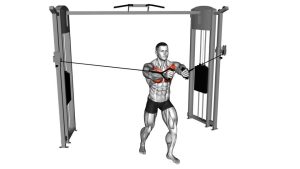
- Cable Machine Handles — ideal for cable crossovers, fly variations, and other horizontal adduction work
- Adjustable Dumbbells — practical for dumbbell fly progressions and general upper-body training
- Adjustable Weight Bench — expands your options for flat, incline, and decline fly variations
Tip: Resistance bands and cable handles are especially practical for home or cable-based chest fly training, while adjustable dumbbells and a bench give you more traditional fly variation options.