Weighted Plate Standing Overhead Press: Form, Muscles Worked, Sets & Tips
Learn how to perform the Weighted Plate Standing Overhead Press with proper form. Discover muscles worked, setup, step-by-step execution, sets and reps by goal, common mistakes, FAQs, and recommended equipment.
Weighted Plate Standing Overhead Press
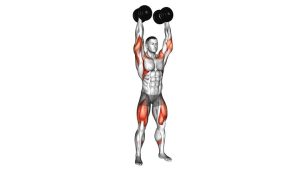
This exercise is best performed with a tall posture, a braced midsection, and a controlled vertical press. The plate should travel from upper chest or face level to directly overhead without drifting too far forward. Keep your ribs down, avoid leaning back, and press with intention rather than momentum.
Quick Overview
| Body Part | Shoulders |
|---|---|
| Primary Muscle | Anterior deltoids |
| Secondary Muscle | Lateral deltoids, triceps, upper chest, core stabilizers |
| Equipment | Weight plate |
| Difficulty | Beginner to Intermediate |
Sets & Reps (By Goal)
- Muscle growth: 3-4 sets × 8-12 reps with 60-90 seconds rest
- Strength emphasis: 4-5 sets × 4-8 reps with 90-150 seconds rest
- Shoulder endurance / conditioning: 2-4 sets × 12-20 reps with 45-75 seconds rest
- Warm-up / activation: 1-3 sets × 8-10 controlled reps using a light plate
Progression rule: Add reps first, then increase plate load only when you can press overhead without rib flare, lower-back compensation, or forward drifting.
Setup / Starting Position
- Stand tall: Place your feet around shoulder-width apart with your weight balanced through the mid-foot.
- Hold the plate securely: Grip the weight plate at the sides using the built-in handles or outer rim.
- Bring the plate to start position: Hold it at upper chest, chin, or face level with elbows slightly in front of the body.
- Brace your torso: Tighten your abs and glutes to keep your ribs down and pelvis neutral.
- Set the shoulders: Keep the shoulders active and stable without shrugging before the press begins.
Tip: A staggered stance is not necessary unless you need extra balance. For most lifters, a square stance works best for a strict press.
Execution (Step-by-Step)
- Start from a strong rack position: Hold the plate close to the upper chest with wrists neutral and elbows under control.
- Press upward: Drive the plate straight overhead in a smooth line while keeping your chest lifted but ribs down.
- Finish overhead: Extend the elbows fully or nearly fully so the plate ends over the shoulders, not in front of them.
- Pause briefly: Stabilize the plate overhead for a moment without leaning back or relaxing the core.
- Lower with control: Bring the plate back to the starting position slowly and repeat for the next rep.
Pro Tips & Common Mistakes
- Keep the plate close: A close pressing path reduces strain and improves shoulder leverage.
- Brace before every rep: Tight abs and glutes help prevent excessive spinal extension.
- Do not rush the lowering phase: The controlled eccentric helps shoulder stability and muscle tension.
- Avoid using the legs: This is a strict press, so do not turn it into a push press unless that is your intention.
- Do not flare the ribs: Overarching the lower back shifts stress away from the shoulders and onto the spine.
- Choose a manageable plate: A lighter plate with perfect form is more productive than a heavier one pressed with compensation.
FAQ
What muscles does the Weighted Plate Standing Overhead Press work?
It mainly targets the front delts, while the side delts and triceps assist. Your core also works hard to keep the torso stable during the overhead press.
Is a plate overhead press good for beginners?
Yes. It can be a useful beginner-friendly pressing variation because the plate is simple to hold and often encourages a controlled range of motion. Start light and focus on posture before increasing load.
How is this different from a dumbbell or barbell overhead press?
A weight plate changes the grip and load distribution, which can make the exercise feel more compact and stability-focused. It is often easier to learn than a barbell press, though it may limit how heavy you can go.
Should I lock out fully overhead?
In most cases, yes—finish with a strong, controlled overhead position as long as your shoulders feel comfortable and you can stay stacked. Avoid forcing an aggressive lockout if mobility is limited.
What if I feel this mostly in my lower back?
That usually means the load is too heavy, your ribs are flaring, or your brace is not solid. Lower the weight, squeeze your glutes, and press with a more vertical arm path.
Recommended Equipment (Optional)
- CAP Barbell Standard 1-Inch Grip Weight Plates — grip-style plate design that works well for plate presses and general home-gym training
- Amazon Basics 2-Inch Olympic Cast Iron Grip Weight Plates — Olympic-size grip plates with grip holes for easier handling and overhead pressing practice
- Fitgriff Wrist Wraps for Weightlifting — useful if you want extra wrist support during pressing sessions
- Schiek Sports Heavy Duty Wrist Wraps — a more supportive wrist-wrap option for heavier strength-focused work
- SUPERJARE Extra-Thick Exercise Equipment Mats — helps protect flooring and improves traction in a home-gym setup
Tip: For this exercise, a grip plate is usually the most practical first purchase. Add wrist wraps only if pressing volume or wrist discomfort becomes a limiting factor.