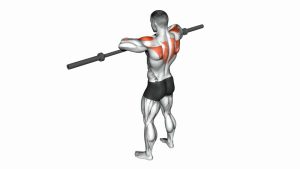
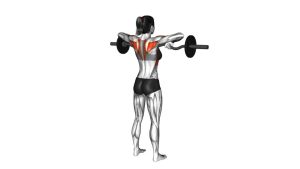
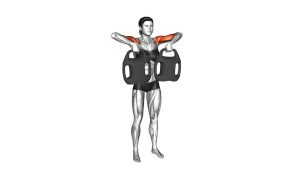
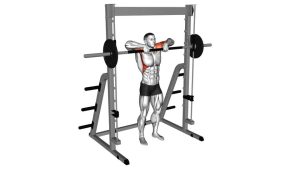
Barbell Wide-Grip Upright Row: Proper Form, Sets, Tips & FAQ
Learn how to perform the Barbell Wide-Grip Upright Row for side delt growth and upper shoulder development. Includes proper form, setup, sets and reps by goal, common mistakes, FAQs, and recommended equipment.
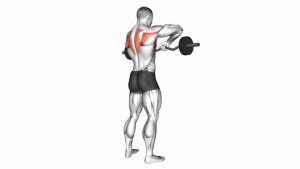
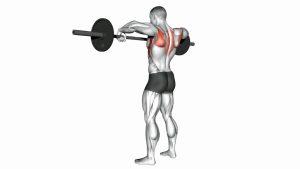
Barbell Wide-Grip Upright Row
This movement works best with a controlled tempo and a shoulder-friendly range of motion. It is not about yanking the bar upward with momentum. Instead, think about raising the elbows out and up while keeping the wrists, shoulders, and torso stable. When performed well, it can be an effective exercise for building fuller shoulders and improving upper-body aesthetics.
Quick Overview
| Body Part | Shoulders |
|---|---|
| Primary Muscle | Lateral deltoids |
| Secondary Muscle | Upper traps, rear delts, biceps |
| Equipment | Barbell |
| Difficulty | Intermediate |
Sets & Reps (By Goal)
- Muscle growth: 3–4 sets × 8–15 reps with controlled form and 60–90 seconds rest
- Shoulder hypertrophy finisher: 2–3 sets × 12–20 reps using lighter weight and strict tempo
- General upper-body training: 3 sets × 8–12 reps with moderate load and smooth technique
- Strength-support accessory: 3–4 sets × 6–10 reps without using momentum
Progression rule: Increase the load only when you can keep your elbows leading, your torso steady, and every rep smooth from bottom to top.
Setup / Starting Position
- Stand tall: Place your feet about hip- to shoulder-width apart and brace your core.
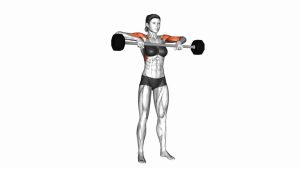
- Grip the bar wide: Take an overhand grip wider than shoulder width to emphasize the delts.
- Start with the bar at thigh level: Let your arms hang straight down with the shoulders relaxed.
- Keep posture solid: Chest up, chin neutral, and avoid leaning backward before the rep begins.
- Prepare to lead with the elbows: Think about lifting the elbows outward rather than curling the bar upward.
Tip: A wide grip generally reduces the cramped feeling some lifters get with close-grip upright rows and can make the exercise feel more shoulder-focused.
Execution (Step-by-Step)
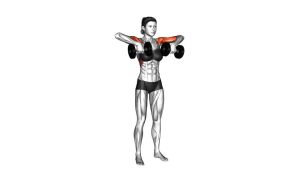
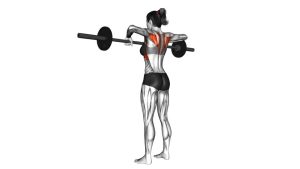
- Start the pull: Raise the bar straight upward while keeping it close to your torso.
- Lead with the elbows: Let the elbows flare outward and rise higher than the wrists.
- Lift under control: Bring the bar to about mid-chest or upper-ab level, depending on your mobility and comfort.
- Pause briefly: Squeeze the shoulders at the top without shrugging excessively or forcing extra height.
- Lower slowly: Bring the bar back down along the same path until your arms are fully extended again.
Pro Tips & Common Mistakes
- Use a wide grip: This usually places more emphasis on the side delts and less on the traps than a narrow grip.
- Lead with elbows, not hands: Think elbows out and up for better shoulder recruitment.
- Keep the bar close: A close bar path improves control and efficiency.
- Do not yank the weight: Swinging with the hips turns this into a momentum-based rep.
- Do not pull unnecessarily high: Go only as high as you can without shoulder discomfort or technique breakdown.
- Avoid excessive shrugging: Let the shoulders work, but do not turn every rep into a trap shrug.
- Use moderate weight: This exercise is usually better with clean reps than heavy cheating.
FAQ
What muscles does the barbell wide-grip upright row work most?
The main target is the lateral deltoid, with support from the upper traps, rear delts, and some assistance from the biceps.
Is a wide-grip upright row better than a narrow-grip upright row?
For many lifters, a wide grip feels more comfortable and puts more emphasis on the shoulders. A narrow grip often increases trap involvement and may feel less natural on the shoulders for some people.
How high should I pull the bar?
Pull until you reach a strong contraction with good control, usually around the mid-chest area. You do not need to force the bar as high as possible.
Can upright rows build wider shoulders?
Yes, when programmed properly, the wide-grip variation can help develop the side delts, which contribute to a broader shoulder appearance.
What if upright rows bother my shoulders?
Reduce the range of motion, lighten the load, or switch to alternatives like dumbbell lateral raises, cable lateral raises, or a wide-grip cable upright row.
Recommended Equipment
- Olympic Barbell — the main tool for performing wide-grip upright rows with stable loading
- Weight Plates Set — lets you scale resistance gradually for hypertrophy or accessory work
- Barbell Collars — helps keep the plates secure during your training sets
- Weightlifting Straps — useful if grip fatigue limits your shoulder-focused sets
- Home Gym Mirror — helpful for checking elbow height, posture, and bar path during reps
Tip: Prioritize controlled reps and shoulder comfort over loading aggressively. This exercise usually performs best as a quality hypertrophy movement, not a max-strength lift.