Bodyweight Rear Lunge: Proper Form, Muscles Worked, Sets, Tips & FAQ
Learn the Bodyweight Rear Lunge for stronger legs, better balance, and safer knee-friendly lunge form with setup, steps, tips, FAQs, and gear.
Bodyweight Rear Lunge
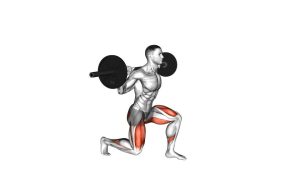
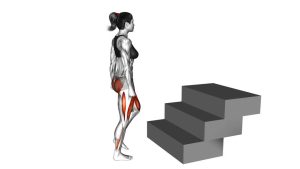
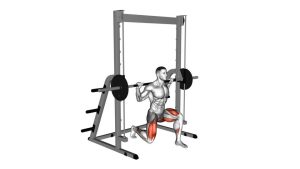
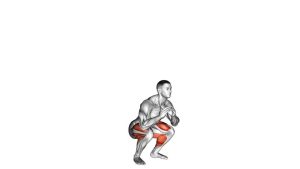
The Bodyweight Rear Lunge is effective because it teaches each leg to work independently while keeping the torso tall and the front foot stable. The front leg performs most of the work, while the rear leg helps with balance and controlled lowering. Use a smooth step back, lower with control, and push through the front heel and mid-foot to stand tall again.
Quick Overview
| Body Part | Legs |
|---|---|
| Primary Muscle | Quadriceps and glutes |
| Secondary Muscle | Hamstrings, calves, hip stabilizers, adductors, and core |
| Equipment | None |
| Difficulty | Beginner to intermediate, depending on depth, balance, and tempo |
Sets & Reps (By Goal)
- Beginner technique: 2–3 sets × 6–8 reps per leg with slow control.
- Muscle building: 3–4 sets × 8–15 reps per leg with full range and steady tempo.
- Strength endurance: 3–5 sets × 12–20 reps per leg with short rest periods.
- Balance and control: 2–4 sets × 6–10 reps per leg using a 3-second lowering phase.
- Warm-up activation: 1–2 sets × 8–10 reps per leg before squats, lunges, or leg training.
Progression rule: First improve balance, depth, and knee tracking. Then add reps, slower tempo, pauses, or external load such as dumbbells.
Setup / Starting Position
- Stand tall: Place your feet about hip-width apart with your chest lifted and core lightly braced.
- Set your posture: Keep your head neutral, shoulders relaxed, and ribs stacked over the pelvis.
- Prepare the working leg: Keep the front foot planted firmly through the heel, big toe, and little toe.
- Use your arms for balance: Keep them at your sides, on your hips, or slightly forward if needed.
- Choose your step length: Step back far enough that both knees can bend comfortably without the front heel lifting.
A good starting stance allows the front knee to bend naturally while the rear knee drops toward the floor. If your stance is too short, the front knee may feel crowded. If it is too long, you may lose balance.
Execution (Step-by-Step)
- Step one leg backward: Move one foot behind you into a split stance while keeping the front foot flat.
- Lower under control: Bend both knees and drop the rear knee toward the floor without touching down hard.
- Keep the torso tall: Avoid leaning forward excessively or rounding your back.
- Track the front knee: Let the front knee travel in line with the toes, not inward across the body.
- Pause briefly: Control the bottom position with the front thigh near parallel if your mobility allows.
- Drive through the front foot: Push through the front heel and mid-foot to return to standing.
- Reset before the next rep: Stand tall, regain balance, then repeat on the same side or alternate legs.
Pro Tips & Common Mistakes
- Step back smoothly: Do not throw the rear leg backward or rush into the bottom position.
- Keep the front heel down: Lifting the heel reduces stability and may shift stress toward the knee.
- Control the rear knee: Lower close to the floor, but avoid banging the knee down.
- Stay tall through the torso: A slight forward lean is normal, but avoid collapsing over the front thigh.
- Do not let the knee cave inward: Keep the front knee aligned with the second and third toes.
- Use a consistent step length: Uneven steps make the movement harder to control and reduce training quality.
- Push from the front leg: Think “front foot drives the floor away” rather than pulling yourself up with momentum.
- Slow down the eccentric phase: A controlled lowering phase improves balance, muscle tension, and joint control.
FAQ
What muscles does the Bodyweight Rear Lunge work?
The Bodyweight Rear Lunge mainly works the quadriceps and glutes. It also trains the hamstrings, calves, hip stabilizers, adductors, and core because the body must control balance and alignment during each step.
Is the rear lunge the same as the reverse lunge?
Yes. The terms rear lunge and reverse lunge usually describe the same movement: stepping one leg backward, lowering into a split stance, then returning to standing.
Is the Bodyweight Rear Lunge good for beginners?
Yes. It is beginner-friendly when performed with a controlled step, shallow depth, and proper balance. Beginners can reduce the range of motion or use a wall, chair, or stable object for light support.
Are rear lunges better for the knees than forward lunges?
Rear lunges are often easier to control because the front foot stays planted while the other leg steps backward. This can make them feel more knee-friendly for many people, especially when the front knee tracks cleanly and the heel stays down.
Should I alternate legs or complete one side first?
Both methods work. Alternating legs is useful for general fitness and rhythm. Completing one side first can increase muscle fatigue and make it easier to focus on balance and technique.
Why do I lose balance during reverse lunges?
Balance problems usually come from stepping too narrow, stepping too far back, rushing the movement, or not bracing the core. Use a slightly wider stance, slow down, and keep the front foot firmly planted.
Recommended Equipment (Optional)
- Exercise Mat — provides floor comfort and support for warm-ups, mobility, and bodyweight leg sessions
- Resistance Bands Set — useful for glute activation, hip stability drills, and lower-body warm-ups
- Adjustable Dumbbells — ideal for progressing the rear lunge once bodyweight reps become easy
- Ankle Weights — optional light resistance for controlled leg training and accessory work
- Balance Pad — useful for advanced balance drills and lower-body stability practice
Start with bodyweight first. Add equipment only when your reps stay smooth, your front knee tracks well, and you can return to standing without wobbling.